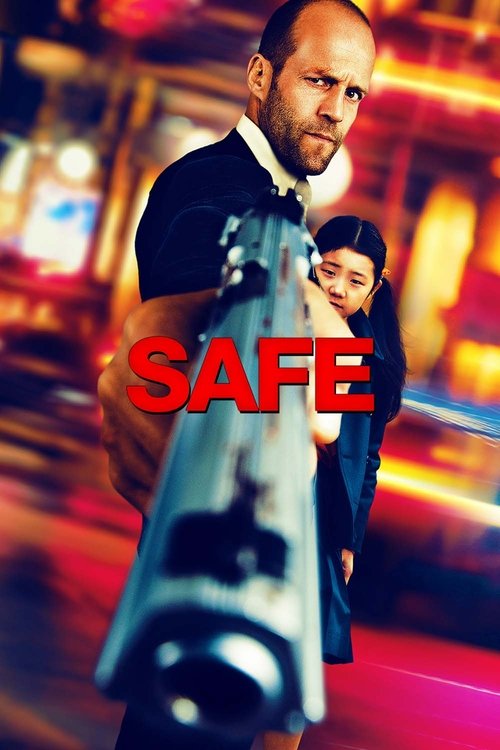
Safe
After a former elite agent rescues a 12-year-old Chinese girl who's been abducted, they find themselves in the middle of a standoff between Triads, the Russian Mafia and high-level corrupt New York City politicians and police.
Working with a mid-range budget of $30.0M, the film achieved a modest success with $40.3M in global revenue (+34% profit margin).


Plot Structure
Story beats plotted across runtime


Narrative Arc
Emotional journey through the story's key moments
Story Circle
Blueprint 15-beat structure
Arcplot Score Breakdown
Weighted: Precision (70%) + Arc (15%) + Theme (15%)
Safe (2012) exemplifies meticulously timed dramatic framework, characteristic of Boaz Yakin's storytelling approach. This structural analysis examines how the film's 15-point plot structure maps to proven narrative frameworks across 1 hour and 34 minutes. With an Arcplot score of 6.5, the film balances conventional beats with creative variation.
Characters
Cast & narrative archetypes

Luke Wright
Mei
Emile Docheski
Han Jiao
Captain Wolf
Alex Rosen
Main Cast & Characters
Luke Wright
Played by Jason Statham
Former elite agent turned cage fighter who protects a young girl with a photographic memory from multiple criminal organizations
Mei
Played by Catherine Chan
11-year-old Chinese girl with extraordinary mathematical abilities who memorizes a critical numerical code
Emile Docheski
Played by Sándor Técsy
Ruthless Russian mobster seeking to recover the code that Mei has memorized
Han Jiao
Played by James Hong
Chinese Triad leader who initially uses Mei for her abilities before she escapes
Captain Wolf
Played by Robert John Burke
Corrupt NYPD captain involved in organized crime and pursuing Mei
Alex Rosen
Played by Chris Sarandon
Luke's former partner and friend, now working against him
Structural Analysis
The Status Quo at 1 minutes (1% through the runtime) establishes Luke Wright, a former cage fighter, lives homeless in New York subway, broken and suicidal after Russian mobsters murdered his pregnant wife and destroyed his life.. The analysis reveals that this early placement immediately immerses viewers in the story world.
The inciting incident occurs at 12 minutes when Luke witnesses Mei being hunted on the subway platform by Russian mobsters. He recognizes the same men who destroyed his life, and sees Mei's terror mirroring his own past helplessness.. At 12% through the film, this Disruption aligns precisely with traditional story structure. This beat shifts the emotional landscape, launching the protagonist into the central conflict.
The First Threshold at 23 minutes marks the transition into Act II, occurring at 25% of the runtime. This demonstrates the protagonist's commitment to Luke makes the active choice to intervene when the Russians corner Mei. He kills her captors in a brutal subway fight, crossing back into the violent world he'd tried to leave behind., moving from reaction to action.
At 48 minutes, the Midpoint arrives at 51% of the runtime—precisely centered, creating perfect narrative symmetry. Notably, this crucial beat False defeat: Luke discovers the conspiracy goes deeper than expected - his former police captain and half the NYPD are involved. The safe deposit box containing evidence of corruption reveals the entire system is against them. Stakes escalate dramatically., fundamentally raising what's at risk. The emotional intensity shifts, dividing the narrative into clear before-and-after phases.
The Collapse moment at 70 minutes (74% through) represents the emotional nadir. Here, Luke is captured and beaten by the corrupt cops. They threaten Mei, and Luke faces the same helplessness he felt when his wife was murdered. The "whiff of death" - he believes he's failed again and Mei will die because of him., demonstrates the protagonist at their lowest point. This beat's placement in the final quarter sets up the climactic reversal.
The Second Threshold at 75 minutes initiates the final act resolution at 80% of the runtime. Luke synthesizes his skills (ex-cop knowledge + fighter instincts + nothing-to-lose mentality) with his new purpose (protecting Mei). He escapes and gains critical information about the main villain's location, choosing to go on the offensive., demonstrating the transformation achieved throughout the journey.
Emotional Journey
Safe's emotional architecture traces a deliberate progression across 15 carefully calibrated beats.
Narrative Framework
This structural analysis employs structural analysis methodology used to understand storytelling architecture. By mapping Safe against these established plot points, we can identify how Boaz Yakin utilizes or subverts traditional narrative conventions. The plot point approach reveals not only adherence to structural principles but also creative choices that distinguish Safe within the action genre.
Boaz Yakin's Structural Approach
Among the 5 Boaz Yakin films analyzed on Arcplot, the average structural score is 6.9, demonstrating varied approaches to story architecture. Safe takes a more unconventional approach compared to the director's typical style. For comparative analysis, explore the complete Boaz Yakin filmography.
Comparative Analysis
Additional action films include The Bad Guys, Puss in Boots and Venom: The Last Dance. For more Boaz Yakin analyses, see Fresh, Uptown Girls and Remember the Titans.
Plot Points by Act
Act I
SetupStatus Quo
Luke Wright, a former cage fighter, lives homeless in New York subway, broken and suicidal after Russian mobsters murdered his pregnant wife and destroyed his life.
Theme
A stranger on the subway platform tells Luke, "Everyone's got a purpose, even if you don't see it yet" - establishing the theme of redemption and finding meaning after loss.
Worldbuilding
Establishment of Luke's broken world: his past as an ex-cop turned cage fighter, his current suicidal state, flashbacks to his wife's murder. Parallel introduction of Mei, a young Chinese girl with photographic memory, enslaved by the Triads to memorize a critical numerical code.
Disruption
Luke witnesses Mei being hunted on the subway platform by Russian mobsters. He recognizes the same men who destroyed his life, and sees Mei's terror mirroring his own past helplessness.
Resistance
Luke debates intervening, knowing it will put him back in the crosshairs. He follows Mei and the mobsters, learning she has something valuable - a code that multiple criminal organizations and corrupt cops are hunting. He hesitates, remembering the cost of getting involved.
Act II
ConfrontationFirst Threshold
Luke makes the active choice to intervene when the Russians corner Mei. He kills her captors in a brutal subway fight, crossing back into the violent world he'd tried to leave behind.
Mirror World
Luke connects with Mei, who represents innocence in need of protection - the mirror opposite of his guilt and self-destruction. She's what he couldn't save (his wife and unborn child), giving him a second chance at redemption.
Premise
The "fun and games" of Luke using his combat skills and street knowledge to protect Mei while evading the Chinese Triads, Russian mob, and corrupt NYPD officers, all hunting the code in Mei's head. Multiple action sequences showcase his lethal efficiency.
Midpoint
False defeat: Luke discovers the conspiracy goes deeper than expected - his former police captain and half the NYPD are involved. The safe deposit box containing evidence of corruption reveals the entire system is against them. Stakes escalate dramatically.
Opposition
All factions close in. The corrupt cops, led by Captain Wolf, coordinate with both criminal organizations. Luke's past secrets are revealed - his history as a cop and why the Russians targeted him. The net tightens as enemies combine forces.
Collapse
Luke is captured and beaten by the corrupt cops. They threaten Mei, and Luke faces the same helplessness he felt when his wife was murdered. The "whiff of death" - he believes he's failed again and Mei will die because of him.
Crisis
Luke's dark night - bloodied and broken, he must confront whether he's truly fighting for Mei or just seeking death. He processes his guilt and grief, finding clarity about his true purpose: protecting the innocent, not punishing himself.
Act III
ResolutionSecond Threshold
Luke synthesizes his skills (ex-cop knowledge + fighter instincts + nothing-to-lose mentality) with his new purpose (protecting Mei). He escapes and gains critical information about the main villain's location, choosing to go on the offensive.
Synthesis
The finale: Luke systematically dismantles the conspiracy, confronting Captain Wolf and the crime bosses. He uses the code to retrieve evidence, exposes the corruption, and ensures Mei's safety. Final confrontations resolve all three antagonistic forces.
Transformation
Luke, once suicidal and broken on a subway platform, now ensures Mei is safe and adopted into a good home. He walks away alive and purposeful - transformed from a man seeking death into a protector who found redemption by saving an innocent life.