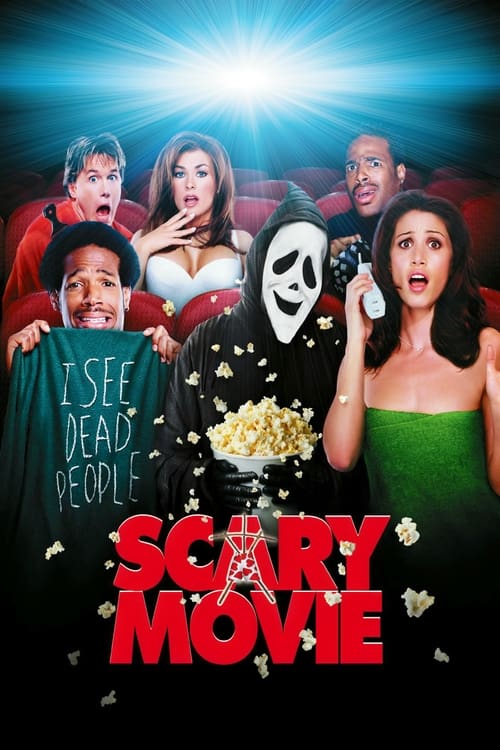
Scary Movie
A familiar-looking group of teenagers find themselves being stalked by a more-than-vaguely recognizable masked killer! As the victims begin to pile up and the laughs pile on, none of your favorite scary movies escape the razor-sharp satire of this outrageously funny parody!
Despite a respectable budget of $19.0M, Scary Movie became a box office phenomenon, earning $278.0M worldwide—a remarkable 1363% return.
7 wins & 7 nominations


Plot Structure
Story beats plotted across runtime


Narrative Arc
Emotional journey through the story's key moments
Story Circle
Blueprint 15-beat structure
Arcplot Score Breakdown
Weighted: Precision (70%) + Arc (15%) + Theme (15%)
Scary Movie (2000) exemplifies carefully calibrated narrative design, characteristic of Keenen Ivory Wayans's storytelling approach. This structural analysis examines how the film's 15-point plot structure maps to proven narrative frameworks across 1 hour and 28 minutes. With an Arcplot score of 7.0, the film balances conventional beats with creative variation.
Characters
Cast & narrative archetypes

Cindy Campbell
Brenda Meeks
Bobby Prinze
Ray Wilkins
Shorty Meeks
Buffy Gilmore
Greg Phillipe
Ghostface
Main Cast & Characters
Cindy Campbell
Played by Anna Faris
Sweet-natured, virginal high school student who becomes the final girl trying to survive a masked killer's rampage.
Brenda Meeks
Played by Regina Hall
Cindy's sassy, outspoken best friend who provides comic relief and street-smart commentary.
Bobby Prinze
Played by Jon Abrahams
Cindy's boyfriend who desperately wants to lose his virginity and harbors a dark secret.
Ray Wilkins
Played by Shawn Wayans
Bobby's best friend and Brenda's boyfriend, a football player with oblivious charm.
Shorty Meeks
Played by Marlon Wayans
Brenda's stoner brother who is perpetually high and surprisingly resilient.
Buffy Gilmore
Played by Shannon Elizabeth
Pageant queen and popular girl in the friend group, vain and self-absorbed.
Greg Phillipe
Played by Lochlyn Munro
Buffy's jock boyfriend and football star, arrogant and aggressive.
Ghostface
Played by Various
The masked killer terrorizing the teenagers, calling victims before striking.
Structural Analysis
The Status Quo at 1 minutes (1% through the runtime) establishes Drew Decker is home alone receiving a mysterious phone call, establishing the horror movie parody world where attractive teens are in danger from a masked killer.. Structural examination shows that this early placement immediately immerses viewers in the story world.
The inciting incident occurs at 11 minutes when Drew Decker is brutally murdered by the masked Ghostface killer, sending shockwaves through the community and putting Cindy's friend group on edge about their buried secret.. At 12% through the film, this Disruption aligns precisely with traditional story structure. This beat shifts the emotional landscape, launching the protagonist into the central conflict.
The First Threshold at 22 minutes marks the transition into Act II, occurring at 25% of the runtime. This indicates the protagonist's commitment to Cindy decides to investigate who is behind the killings rather than remain a passive victim, actively engaging with the mystery and accepting that confronting their past is unavoidable., moving from reaction to action.
At 44 minutes, the Midpoint arrives at 50% of the runtime—precisely centered, creating perfect narrative symmetry. The analysis reveals that this crucial beat Bobby is seemingly attacked and appears to be killed, making Cindy believe her boyfriend is dead. This false defeat raises personal stakes as the killer gets closer to her inner circle., fundamentally raising what's at risk. The emotional intensity shifts, dividing the narrative into clear before-and-after phases.
The Collapse moment at 66 minutes (75% through) represents the emotional nadir. Here, Nearly all of Cindy's friends have been killed at the party. She finds herself alone and cornered by Ghostface, believing she will die for the sins of the past summer., demonstrates the protagonist at their lowest point. This beat's placement in the final quarter sets up the climactic reversal.
The Second Threshold at 70 minutes initiates the final act resolution at 80% of the runtime. Cindy discovers the killer's identity when Bobby and Ray reveal themselves as Ghostface. Armed with this knowledge and newfound resolve, she prepares to fight for her survival., demonstrating the transformation achieved throughout the journey.
Emotional Journey
Scary Movie's emotional architecture traces a deliberate progression across 15 carefully calibrated beats.
Narrative Framework
This structural analysis employs structural analysis methodology used to understand storytelling architecture. By mapping Scary Movie against these established plot points, we can identify how Keenen Ivory Wayans utilizes or subverts traditional narrative conventions. The plot point approach reveals not only adherence to structural principles but also creative choices that distinguish Scary Movie within the comedy genre.
Keenen Ivory Wayans's Structural Approach
Among the 6 Keenen Ivory Wayans films analyzed on Arcplot, the average structural score is 7.1, reflecting strong command of classical structure. Scary Movie takes a more unconventional approach compared to the director's typical style. For comparative analysis, explore the complete Keenen Ivory Wayans filmography.
Comparative Analysis
Additional comedy films include The Bad Guys, Ella Enchanted and The Evening Star. For more Keenen Ivory Wayans analyses, see I'm Gonna Git You Sucka, White Chicks and Scary Movie 2.
Plot Points by Act
Act I
SetupStatus Quo
Drew Decker is home alone receiving a mysterious phone call, establishing the horror movie parody world where attractive teens are in danger from a masked killer.
Theme
The killer asks Drew trivia questions about horror movies, establishing that knowledge of genre conventions and taking responsibility for past actions will determine survival.
Worldbuilding
We meet Cindy Campbell and her friend group including Brenda, Ray, Bobby, and others. We learn they share a dark secret from the previous summer when they accidentally hit a man with their car and disposed of the body.
Disruption
Drew Decker is brutally murdered by the masked Ghostface killer, sending shockwaves through the community and putting Cindy's friend group on edge about their buried secret.
Resistance
The group debates what to do as fear spreads. Cindy receives threatening calls. Deputy Doofy investigates while Gail Hailstorm, an aggressive reporter, covers the story. The teens resist acknowledging their past guilt.
Act II
ConfrontationFirst Threshold
Cindy decides to investigate who is behind the killings rather than remain a passive victim, actively engaging with the mystery and accepting that confronting their past is unavoidable.
Mirror World
Cindy's relationship with Bobby deepens as he becomes her confidant, though she questions whether she can trust him. Their romance represents hope for connection amid the horror.
Premise
The parody delivers on its promise: outrageous deaths, crude humor, and horror movie tropes subverted. Buffy is killed at the pageant. The teens attend school while more murders occur. Cindy navigates her relationship with Bobby.
Midpoint
Bobby is seemingly attacked and appears to be killed, making Cindy believe her boyfriend is dead. This false defeat raises personal stakes as the killer gets closer to her inner circle.
Opposition
The body count rises as friends are picked off. Cindy is increasingly isolated and paranoid. Gail and her cameraman investigate. The house party becomes a death trap as Ghostface stalks the remaining survivors.
Collapse
Nearly all of Cindy's friends have been killed at the party. She finds herself alone and cornered by Ghostface, believing she will die for the sins of the past summer.
Crisis
Cindy processes the horror around her. She mourns her friends and faces her guilt about the hit-and-run. She must find the strength to fight back or become another victim.
Act III
ResolutionSecond Threshold
Cindy discovers the killer's identity when Bobby and Ray reveal themselves as Ghostface. Armed with this knowledge and newfound resolve, she prepares to fight for her survival.
Synthesis
The final confrontation unfolds as Bobby and Ray explain their ridiculous motives. Cindy fights back against her attackers. The killers accidentally harm each other in comedic fashion. Cindy prevails through both luck and determination.
Transformation
Cindy survives as the sole final girl, transformed from passive victim to active survivor. The twist reveals Doofy as the true mastermind who escapes, but Cindy has overcome her past and emerged stronger.