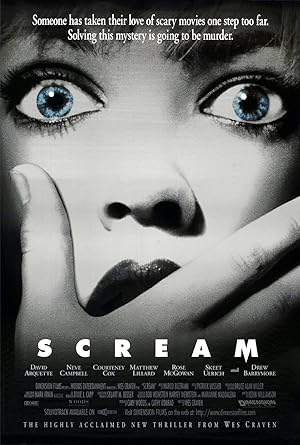
Scream
A year after her mother's death, Sidney Prescott (Neve Campbell) and her friends started experiencing some strange phone calls. They later learned the calls were coming from a crazed serial killer, in a white faced mask and a large black robe, looking for revenge. His phone calls usually consist of many questions, the main one being: What's your favorite scary movie? Along with much scary movie trivia, ending with bloody pieces of innocent lives scattered around the small town of Woodsboro.
Despite its modest budget of $14.0M, Scream became a massive hit, earning $173.0M worldwide—a remarkable 1136% return. The film's fresh perspective resonated with audiences, illustrating how strong storytelling can transcend budget limitations.
12 wins & 11 nominations


Plot Structure
Story beats plotted across runtime


Narrative Arc
Emotional journey through the story's key moments
Story Circle
Blueprint 15-beat structure
Arcplot Score Breakdown
Weighted: Precision (70%) + Arc (15%) + Theme (15%)
Scream (1996) showcases carefully calibrated dramatic framework, characteristic of Wes Craven's storytelling approach. This structural analysis examines how the film's 15-point plot structure maps to proven narrative frameworks across 1 hour and 52 minutes. With an Arcplot score of 7.3, the film balances conventional beats with creative variation.
Characters
Cast & narrative archetypes

Sidney Prescott
Billy Loomis
Gale Weathers
Dewey Riley
Stu Macher
Randy Meeks
Tatum Riley
Main Cast & Characters
Sidney Prescott
Played by Neve Campbell
A teenage girl who becomes the target of a masked killer one year after her mother's murder
Billy Loomis
Played by Skeet Ulrich
Sidney's boyfriend who becomes increasingly suspicious as the killing spree unfolds
Gale Weathers
Played by Courteney Cox
An ambitious tabloid news reporter determined to exploit the murders for her career
Dewey Riley
Played by David Arquette
A well-meaning but bumbling deputy sheriff who tries to protect Sidney
Stu Macher
Played by Matthew Lillard
Billy's best friend, a party-loving teenager with a dark secret
Randy Meeks
Played by Jamie Kennedy
A horror movie-obsessed video store clerk who provides meta-commentary on the killings
Tatum Riley
Played by Rose McGowan
Sidney's loyal best friend and Dewey's younger sister
Structural Analysis
The Status Quo at 1 minutes (1% through the runtime) establishes Casey Becker answers a phone call while home alone, playfully engaging with the anonymous caller about horror movies. This establishes the world's meta-awareness of horror tropes and the false security of suburban isolation.. The analysis reveals that this early placement immediately immerses viewers in the story world.
The inciting incident occurs at 13 minutes when Sidney receives her first call from Ghostface while home alone, who taunts her about her mother's death. She is attacked but escapes. This transforms the murders from community tragedy to personal threat against Sidney specifically.. At 12% through the film, this Disruption aligns precisely with traditional story structure. This beat shifts the emotional landscape, launching the protagonist into the central conflict.
The First Threshold at 28 minutes marks the transition into Act II, occurring at 25% of the runtime. This indicates the protagonist's commitment to Sidney sleeps with Billy, choosing to trust him despite suspicions, then is attacked again at school by Ghostface in the bathroom. She commits to actively hunting the killer rather than being passive prey, telling Tatum she won't hide anymore., moving from reaction to action.
At 56 minutes, the Midpoint arrives at 50% of the runtime—precisely centered, creating perfect narrative symmetry. Of particular interest, this crucial beat Principal Himbry is murdered at school (false defeat). The party at Stu's house is announced despite the curfew. The stakes escalate from isolated attacks to a guaranteed gathering of potential victims, shifting from investigation to survival horror., fundamentally raising what's at risk. The emotional intensity shifts, dividing the narrative into clear before-and-after phases.
The Collapse moment at 84 minutes (75% through) represents the emotional nadir. Here, Billy is "stabbed" and collapses. Ghostface kills Tatum in the garage door. Sidney discovers multiple bodies and realizes the killer has been among them all along. The "whiff of death" is literal: her best friend is dead and her boyfriend appears mortally wounded., demonstrates the protagonist at their lowest point. This beat's placement in the final quarter sets up the climactic reversal.
The Second Threshold at 90 minutes initiates the final act resolution at 80% of the runtime. Billy reveals himself as the killer, joined by Stu. They explain their motive: Billy's mother left because Sidney's mother had an affair with his father. Sidney now understands the truth and must use the horror movie rules to survive the finale., demonstrating the transformation achieved throughout the journey.
Emotional Journey
Scream's emotional architecture traces a deliberate progression across 15 carefully calibrated beats.
Narrative Framework
This structural analysis employs systematic plot point analysis that identifies crucial turning points. By mapping Scream against these established plot points, we can identify how Wes Craven utilizes or subverts traditional narrative conventions. The plot point approach reveals not only adherence to structural principles but also creative choices that distinguish Scream within the horror genre.
Wes Craven's Structural Approach
Among the 14 Wes Craven films analyzed on Arcplot, the average structural score is 7.0, demonstrating varied approaches to story architecture. Scream represents one of the director's most structurally precise works. For comparative analysis, explore the complete Wes Craven filmography.
Comparative Analysis
Additional horror films include Thinner, Mary Reilly. For more Wes Craven analyses, see A Nightmare on Elm Street, Vampire in Brooklyn and The Serpent and the Rainbow.
Plot Points by Act
Act I
SetupStatus Quo
Casey Becker answers a phone call while home alone, playfully engaging with the anonymous caller about horror movies. This establishes the world's meta-awareness of horror tropes and the false security of suburban isolation.
Theme
The killer asks Casey "What's your favorite scary movie?" and later tells her she should never say "who's there" because "you might not like the answer." This articulates the film's central premise: horror movie rules have real consequences when applied to actual life.
Worldbuilding
The brutal murders of Casey and Steve shock Woodsboro. We meet Sidney Prescott, still traumatized by her mother's murder a year prior, her boyfriend Billy, best friend Tatum, and the ensemble of potential suspects and victims at school. Media descends on the town.
Disruption
Sidney receives her first call from Ghostface while home alone, who taunts her about her mother's death. She is attacked but escapes. This transforms the murders from community tragedy to personal threat against Sidney specifically.
Resistance
Sidney debates who to trust as Billy becomes a suspect after climbing through her window post-attack. Gale Weathers arrives to exploit the story. Deputy Dewey provides awkward protection. Sidney resists believing the killer could be close to her.
Act II
ConfrontationFirst Threshold
Sidney sleeps with Billy, choosing to trust him despite suspicions, then is attacked again at school by Ghostface in the bathroom. She commits to actively hunting the killer rather than being passive prey, telling Tatum she won't hide anymore.
Mirror World
Gale Weathers convinces Dewey to help her investigation, and forms an unlikely alliance with Sidney through their shared pursuit of truth. Gale represents the thematic mirror: she exploits tragedy for fame, but her cynical pursuit of facts ultimately aids survival.
Premise
The "promise of the premise" delivers meta-horror thrills: Randy explains horror movie survival rules, the friend group becomes suspects, Sidney navigates romance and danger with Billy, Gale investigates Cotton Weary's innocence, and the curfew creates paranoid tension.
Midpoint
Principal Himbry is murdered at school (false defeat). The party at Stu's house is announced despite the curfew. The stakes escalate from isolated attacks to a guaranteed gathering of potential victims, shifting from investigation to survival horror.
Opposition
At Stu's party, horror movie rules are explained while being simultaneously violated. Ghostface picks off victims one by one. Gale's hidden camera fails. Sidney becomes increasingly isolated as her friends disappear or die. Billy returns and seems trustworthy.
Collapse
Billy is "stabbed" and collapses. Ghostface kills Tatum in the garage door. Sidney discovers multiple bodies and realizes the killer has been among them all along. The "whiff of death" is literal: her best friend is dead and her boyfriend appears mortally wounded.
Crisis
Sidney flees through the house as bodies pile up. Randy is shot. Dewey is stabbed. Every ally seems dead or incapacitated. She is utterly alone facing a killer whose identity remains unknown. The darkness before revelation.
Act III
ResolutionSecond Threshold
Billy reveals himself as the killer, joined by Stu. They explain their motive: Billy's mother left because Sidney's mother had an affair with his father. Sidney now understands the truth and must use the horror movie rules to survive the finale.
Synthesis
Sidney fights back using the killers' own rules against them. She hides, counterattacks, and delivers iconic one-liners. Gale returns to help. Sidney shoots Billy, and when he rises for "one last scare" per Randy's rules, she executes him: "Not in my movie."
Transformation
Sidney sits on the porch at dawn, bloodied but alive, as news crews arrive. She has transformed from traumatized victim to final girl survivor. Unlike Casey in the opening, she answered the killer's call and lived. The media circus continues, but Sidney has reclaimed her narrative.