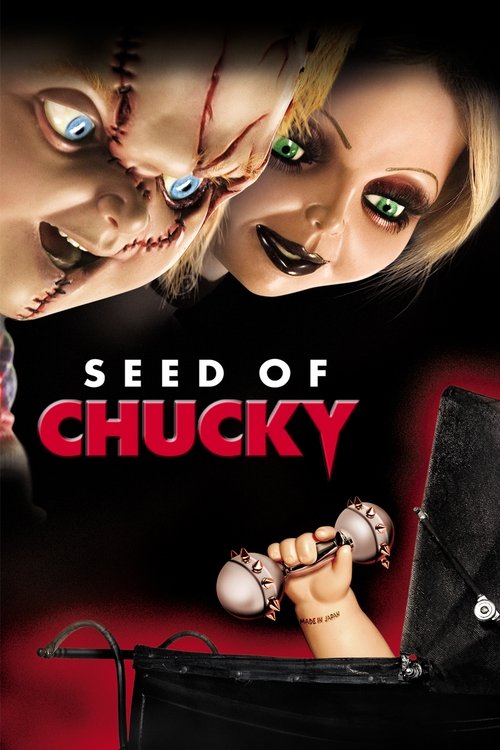
Seed of Chucky
This time around, Chucky and his homicidal honey, Tiffany, are brought back to life by their orphan offspring, Glen. Then the horror goes Hollywood as Chucky unleashes his own brand of murderous mayhem!
Despite its tight budget of $12.0M, Seed of Chucky became a box office success, earning $24.8M worldwide—a 107% return.
1 win & 6 nominations


Plot Structure
Story beats plotted across runtime


Narrative Arc
Emotional journey through the story's key moments
Story Circle
Blueprint 15-beat structure
Arcplot Score Breakdown
Weighted: Precision (70%) + Arc (15%) + Theme (15%)
Seed of Chucky (2004) exhibits meticulously timed narrative architecture, characteristic of Don Mancini's storytelling approach. This structural analysis examines how the film's 15-point plot structure maps to proven narrative frameworks across 1 hour and 26 minutes. With an Arcplot score of 6.6, the film balances conventional beats with creative variation.
Characters
Cast & narrative archetypes

Glen/Glenda
Chucky
Tiffany
Jennifer Tilly
Redman
Main Cast & Characters
Glen/Glenda
Played by Billy Boyd
The gender-fluid child of Chucky and Tiffany searching for identity and acceptance while struggling with their violent heritage.
Chucky
Played by Brad Dourif
The notorious killer doll and Glen's father, continuing his murderous rampage while attempting to transfer his soul into a human body.
Tiffany
Played by Jennifer Tilly
Chucky's homicidal bride and Glen's mother, torn between her maternal instincts and her love of killing.
Jennifer Tilly
Played by Jennifer Tilly
The real-life actress playing herself, targeted by Chucky and Tiffany as their intended human vessel.
Redman
Played by Redman
The rapper playing himself, Jennifer Tilly's love interest who becomes entangled in the dolls' deadly schemes.
Structural Analysis
The Status Quo at 1 minutes (1% through the runtime) establishes Glen, a sensitive doll child, lives as a ventriloquist dummy in a British carnival sideshow, mocked and abused by his cruel owner, yearning for family and identity.. Significantly, this early placement immediately immerses viewers in the story world.
The inciting incident occurs at 11 minutes when Glen escapes the carnival and travels to Hollywood after learning his parents Chucky and Tiffany are animatronic props in a horror film, deciding to seek them out.. At 13% through the film, this Disruption is delayed, allowing extended setup of the story world. This beat shifts the emotional landscape, launching the protagonist into the central conflict.
The First Threshold at 22 minutes marks the transition into Act II, occurring at 25% of the runtime. This indicates the protagonist's commitment to Chucky and Tiffany accept Glen as their child and decide to become a family, planning to possess human bodies (actress Jennifer Tilly and her driver) to live as humans together., moving from reaction to action.
At 43 minutes, the Midpoint arrives at 51% of the runtime—precisely centered, creating perfect narrative symmetry. Notably, this crucial beat Chucky becomes disgusted with Glen's sensitive nature and refusal to kill, creating a rift in the family; meanwhile Jennifer Tilly becomes pregnant, accelerating the possession timeline., fundamentally raising what's at risk. The emotional intensity shifts, dividing the narrative into clear before-and-after phases.
The Collapse moment at 64 minutes (75% through) represents the emotional nadir. Here, Chucky fully rejects Glen, calling him a disappointment and declaring he's no son of his; the family fractures completely as Tiffany must choose between husband and child., indicates the protagonist at their lowest point. This beat's placement in the final quarter sets up the climactic reversal.
The Second Threshold at 68 minutes initiates the final act resolution at 79% of the runtime. Glen realizes he must act to save his family and protect the innocent, accepting both his gentle nature and capacity for violence when necessary, finding synthesis of his dual identity., demonstrating the transformation achieved throughout the journey.
Emotional Journey
Seed of Chucky's emotional architecture traces a deliberate progression across 15 carefully calibrated beats.
Narrative Framework
This structural analysis employs structural analysis methodology used to understand storytelling architecture. By mapping Seed of Chucky against these established plot points, we can identify how Don Mancini utilizes or subverts traditional narrative conventions. The plot point approach reveals not only adherence to structural principles but also creative choices that distinguish Seed of Chucky within the horror genre.
Comparative Analysis
Additional horror films include Thinner, A Nightmare on Elm Street and Mary Reilly.
Plot Points by Act
Act I
SetupStatus Quo
Glen, a sensitive doll child, lives as a ventriloquist dummy in a British carnival sideshow, mocked and abused by his cruel owner, yearning for family and identity.
Theme
The carnival psychic tells Glen that family is everything and we all need to know where we come from, establishing the film's theme of identity and belonging.
Worldbuilding
Glen's miserable existence in the carnival is established, including his gentle nature that conflicts with violent urges, his discovery of a Chucky doll in a magazine, and his realization that these might be his parents.
Disruption
Glen escapes the carnival and travels to Hollywood after learning his parents Chucky and Tiffany are animatronic props in a horror film, deciding to seek them out.
Resistance
Glen arrives in Hollywood, infiltrates the film studio, finds his parents' doll bodies, and uses the Heart of Damballa amulet to resurrect them, leading to an awkward family reunion.
Act II
ConfrontationFirst Threshold
Chucky and Tiffany accept Glen as their child and decide to become a family, planning to possess human bodies (actress Jennifer Tilly and her driver) to live as humans together.
Mirror World
The doll family befriends actress Jennifer Tilly, who represents the human life and legitimacy they crave; Glen sees in her the possibility of a normal, violence-free existence.
Premise
The darkly comic exploration of the killer doll family trying to live together: Chucky and Tiffany attempt to mentor Glen in murder while planning their possession scheme, but Glen's pacifism conflicts with his parents' violent nature.
Midpoint
Chucky becomes disgusted with Glen's sensitive nature and refusal to kill, creating a rift in the family; meanwhile Jennifer Tilly becomes pregnant, accelerating the possession timeline.
Opposition
Family tensions escalate as Chucky rejects Glen, Tiffany wavers between supporting her child and her husband, and bodies pile up around them, drawing suspicion while their possession plan moves forward.
Collapse
Chucky fully rejects Glen, calling him a disappointment and declaring he's no son of his; the family fractures completely as Tiffany must choose between husband and child.
Crisis
Glen faces the dark night of abandonment and identity crisis while Tiffany grapples with her choices; the possession ritual begins as Jennifer gives birth.
Act III
ResolutionSecond Threshold
Glen realizes he must act to save his family and protect the innocent, accepting both his gentle nature and capacity for violence when necessary, finding synthesis of his dual identity.
Synthesis
Glen confronts his parents during the climactic finale; Tiffany possesses Jennifer, Chucky is killed by Glen in defense of Tiffany, and Glen's soul transfers into one of Jennifer's newborn twins.
Transformation
Five years later, Glen (now Glenda) lives as a human child in a loving home with Tiffany-as-Jennifer and twin sibling, having found the family and identity he sought, though hints of violence remain.