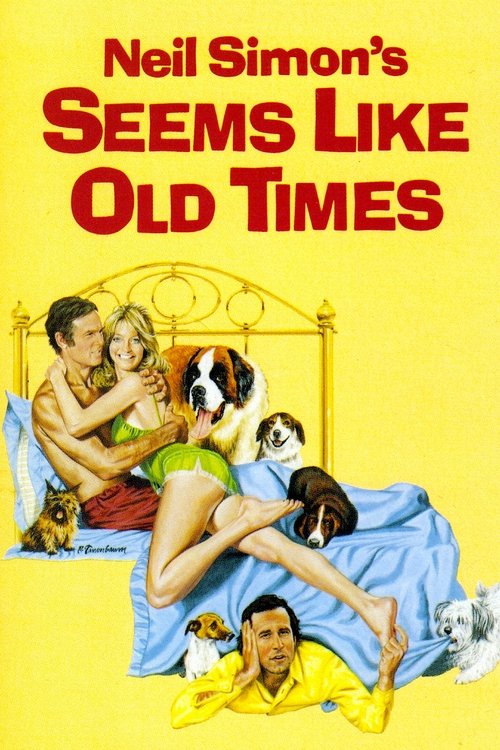
Seems Like Old Times
After being falsely accused of robbing a bank, a writer seeks the help of his lawyer ex-wife to clear his name. However, hilarity ensues when he must hide from her husband, who’s throwing a party for law enforcement officials.
The film earned $44.0M at the global box office.


Plot Structure
Story beats plotted across runtime


Narrative Arc
Emotional journey through the story's key moments
Story Circle
Blueprint 15-beat structure
Arcplot Score Breakdown
Weighted: Precision (70%) + Arc (15%) + Theme (15%)
Seems Like Old Times (1980) showcases strategically placed story structure, characteristic of Jay Sandrich's storytelling approach. This structural analysis examines how the film's 15-point plot structure maps to proven narrative frameworks across 1 hour and 42 minutes. With an Arcplot score of 7.0, the film balances conventional beats with creative variation.
Characters
Cast & narrative archetypes

Glenda Parks
Nick Gardenia
Ira Parks
Aurora De La Hoya
Main Cast & Characters
Glenda Parks
Played by Goldie Hawn
A compassionate lawyer married to the district attorney who must help her ex-husband while maintaining her marriage and career.
Nick Gardenia
Played by Chevy Chase
A struggling writer who is forced to rob a bank and turns to his ex-wife for help while on the run.
Ira Parks
Played by Charles Grodin
The ambitious district attorney married to Glenda, obsessed with his career and unaware his wife is hiding her ex-husband.
Aurora De La Hoya
Played by Yvonne Wilder
Glenda's devoted housekeeper who becomes complicit in hiding Nick and manages the chaotic household.
Structural Analysis
The Status Quo at 1 minutes (1% through the runtime) establishes Nick Gardenia lives a peaceful life as a writer in Big Sur, working on his novel in his beach house, establishing his carefree divorced existence before chaos arrives.. Of particular interest, this early placement immediately immerses viewers in the story world.
The inciting incident occurs at 13 minutes when Nick is kidnapped by two armed men who force him to rob a bank at gunpoint, then abandon him. His fingerprints and face are captured on camera, making him a wanted man despite being an innocent victim.. At 13% through the film, this Disruption is delayed, allowing extended setup of the story world. This beat shifts the emotional landscape, launching the protagonist into the central conflict.
The First Threshold at 26 minutes marks the transition into Act II, occurring at 25% of the runtime. This demonstrates the protagonist's commitment to Nick actively chooses to sneak into Glenda's house to ask for her help, crossing the threshold into her new world and setting up the central romantic/comedic conflict of the film. He cannot go back to his old life., moving from reaction to action.
At 51 minutes, the Midpoint arrives at 50% of the runtime—precisely centered, creating perfect narrative symmetry. Notably, this crucial beat False victory: Glenda and Nick share an intimate moment that confirms their feelings have returned, and she seems to be making progress on clearing his name. But this raises the stakes - now emotional betrayal is added to legal jeopardy., fundamentally raising what's at risk. The emotional intensity shifts, dividing the narrative into clear before-and-after phases.
The Collapse moment at 77 minutes (75% through) represents the emotional nadir. Here, Nick is discovered and arrested. Glenda's deception is exposed to Ira, destroying her marriage and her career prospects. Everything falls apart - she's lost both men and faces professional ruin for harboring a fugitive., illustrates the protagonist at their lowest point. This beat's placement in the final quarter sets up the climactic reversal.
The Second Threshold at 82 minutes initiates the final act resolution at 80% of the runtime. Glenda receives new evidence or makes a breakthrough that can prove Nick's innocence. Armed with both legal clarity and emotional certainty about her feelings, she chooses to fight for both truth and love., demonstrating the transformation achieved throughout the journey.
Emotional Journey
Seems Like Old Times's emotional architecture traces a deliberate progression across 15 carefully calibrated beats.
Narrative Framework
This structural analysis employs systematic plot point analysis that identifies crucial turning points. By mapping Seems Like Old Times against these established plot points, we can identify how Jay Sandrich utilizes or subverts traditional narrative conventions. The plot point approach reveals not only adherence to structural principles but also creative choices that distinguish Seems Like Old Times within the comedy genre.
Comparative Analysis
Additional comedy films include The Bad Guys, Ella Enchanted and The Evening Star.
Plot Points by Act
Act I
SetupStatus Quo
Nick Gardenia lives a peaceful life as a writer in Big Sur, working on his novel in his beach house, establishing his carefree divorced existence before chaos arrives.
Theme
During the forced robbery, one of the criminals makes a comment about "doing what you gotta do" versus "doing what's right" - foreshadowing the film's exploration of loyalty, obligation, and choosing between head and heart.
Worldbuilding
Introduction to Nick's solitary writer life in Big Sur, then shift to establish Glenda Parks' new life as a successful attorney married to DA Ira Parks, running a household that takes in stray dogs. Two separate worlds are established that will collide.
Disruption
Nick is kidnapped by two armed men who force him to rob a bank at gunpoint, then abandon him. His fingerprints and face are captured on camera, making him a wanted man despite being an innocent victim.
Resistance
Nick debates his options as a fugitive. Unable to turn himself in without evidence, and knowing Glenda is now a lawyer, he reluctantly decides he must seek help from his ex-wife despite their complicated history and her new marriage.
Act II
ConfrontationFirst Threshold
Nick actively chooses to sneak into Glenda's house to ask for her help, crossing the threshold into her new world and setting up the central romantic/comedic conflict of the film. He cannot go back to his old life.
Mirror World
Glenda agrees to hide Nick while she figures out how to help him, reintroducing the chemistry and connection they once shared. This relationship subplot will force her to examine what she truly wants versus what she thinks she should want.
Premise
The "fun and games" of hiding Nick from Ira while Glenda investigates his case. Comic complications with the dogs, near-discoveries, rekindled romance, and the absurdity of the love triangle. The promise of the premise: screwball romantic chaos.
Midpoint
False victory: Glenda and Nick share an intimate moment that confirms their feelings have returned, and she seems to be making progress on clearing his name. But this raises the stakes - now emotional betrayal is added to legal jeopardy.
Opposition
The authorities close in on Nick, Ira grows increasingly suspicious, Glenda is torn between her duty to her husband and her feelings for Nick. The pressure intensifies from all sides, forcing increasingly desperate measures and closer calls.
Collapse
Nick is discovered and arrested. Glenda's deception is exposed to Ira, destroying her marriage and her career prospects. Everything falls apart - she's lost both men and faces professional ruin for harboring a fugitive.
Crisis
Glenda faces the consequences of her choices. Her marriage is over, Nick is in custody, and she must confront what she truly wants from her life. The dark night where she processes the loss of her carefully constructed world.
Act III
ResolutionSecond Threshold
Glenda receives new evidence or makes a breakthrough that can prove Nick's innocence. Armed with both legal clarity and emotional certainty about her feelings, she chooses to fight for both truth and love.
Synthesis
Glenda uses her legal skills combined with her emotional conviction to clear Nick's name and resolve the case. The true robbers are caught or exposed, Nick is exonerated, and she makes her final choice between her old life and new possibilities.
Transformation
Closing image mirrors the opening but transformed: Glenda and Nick together, having chosen love and authenticity over appearances and obligation. She's still surrounded by stray dogs, but now with the right person beside her.