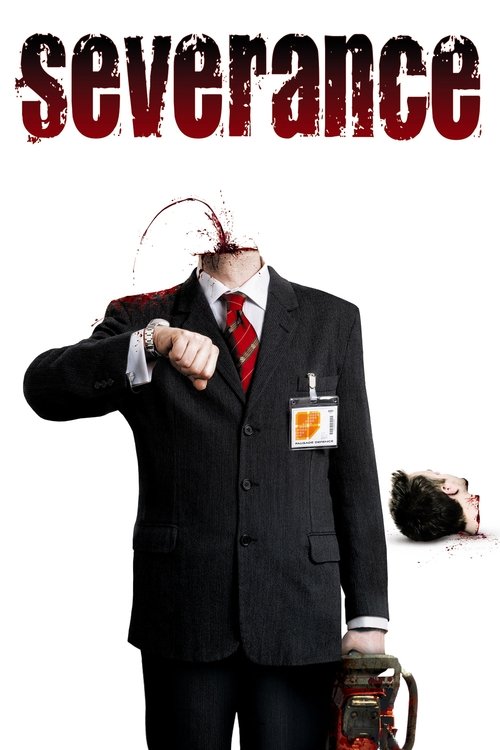
Severance
Seven employees of an international weapons manufacturer are treated to a team-building weekend at the company’s newly built luxury spa lodge. Things quickly go awry as the colleagues find their corporate weekend sabotaged by a deadly enemy.
The film earned $5.5M at the global box office.
3 wins & 2 nominations


Plot Structure
Story beats plotted across runtime


Narrative Arc
Emotional journey through the story's key moments
Story Circle
Blueprint 15-beat structure
Arcplot Score Breakdown
Weighted: Precision (70%) + Arc (15%) + Theme (15%)
Severance (2006) reveals precise story structure, characteristic of Christopher Smith's storytelling approach. This structural analysis examines how the film's 15-point plot structure maps to proven narrative frameworks across 1 hour and 36 minutes. With an Arcplot score of 7.4, the film balances conventional beats with creative variation.
Characters
Cast & narrative archetypes

Steve
Maggie
Richard
Harris
Jill
Gordon
Billy
Main Cast & Characters
Steve
Played by Danny Dyer
The protagonist, a sardonic sales manager who becomes the group's reluctant leader during the crisis.
Maggie
Played by Laura Harris
An intelligent and resourceful woman who forms a connection with Steve and helps lead the survival effort.
Richard
Played by Tim McInnerny
The pompous, ineffectual regional manager obsessed with maintaining authority despite being incompetent.
Harris
Played by Toby Stephens
The overly enthusiastic, aggressive team leader who takes the team-building exercises too seriously.
Jill
Played by Claudie Blakley
A drug-using, promiscuous woman who provides comic relief and eventually shows unexpected resilience.
Gordon
Played by Andy Nyman
A nerdy, socially awkward character obsessed with survival techniques and conspiracy theories.
Billy
Played by Babou Ceesay
A sleazy, vulgar salesman who constantly makes inappropriate jokes and advances.
Structural Analysis
The Status Quo at 1 minutes (1% through the runtime) establishes Office workers at Palisade Defence board a bus for a corporate team-building retreat in Eastern Europe. The group exhibits typical office dynamics: tension between manager Richard and slacker Steve, Harris's inappropriate jokes, and general workplace dysfunction.. Of particular interest, this early placement immediately immerses viewers in the story world.
The inciting incident occurs at 11 minutes when The bus driver refuses to continue down an ominous forest road, forcing the group to walk. They discover the 'luxury lodge' is actually a decrepit, abandoned building with no amenities, far from civilization.. At 12% through the film, this Disruption aligns precisely with traditional story structure. This beat shifts the emotional landscape, launching the protagonist into the central conflict.
The First Threshold at 24 minutes marks the transition into Act II, occurring at 25% of the runtime. This demonstrates the protagonist's commitment to The group decides to stay the night despite the ominous setting. They settle in and begin their team-building activities, committing to the retreat. This choice seals their fate as they're now isolated in hostile territory., moving from reaction to action.
At 47 minutes, the Midpoint arrives at 49% of the runtime—precisely centered, creating perfect narrative symmetry. Significantly, this crucial beat The group realizes they're being actively hunted when they discover Harris brutally murdered. The stakes escalate from uncomfortable retreat to life-or-death survival. The hunters are revealed to be armed and deadly serious., fundamentally raising what's at risk. The emotional intensity shifts, dividing the narrative into clear before-and-after phases.
The Collapse moment at 71 minutes (74% through) represents the emotional nadir. Here, Multiple team members are dead. Steve and Maggie are separated and captured. Their guide Billy is revealed to have been killed earlier. The survivors are at their lowest point, cornered by ruthless killers with seemingly no escape., reveals the protagonist at their lowest point. This beat's placement in the final quarter sets up the climactic reversal.
The Second Threshold at 76 minutes initiates the final act resolution at 79% of the runtime. The survivors weaponize their company's own products against their attackers. They realize their corporate knowledge and the weapons/traps around them are tools for survival, embracing what they previously questioned., demonstrating the transformation achieved throughout the journey.
Emotional Journey
Severance's emotional architecture traces a deliberate progression across 15 carefully calibrated beats.
Narrative Framework
This structural analysis employs structural analysis methodology used to understand storytelling architecture. By mapping Severance against these established plot points, we can identify how Christopher Smith utilizes or subverts traditional narrative conventions. The plot point approach reveals not only adherence to structural principles but also creative choices that distinguish Severance within the horror genre.
Christopher Smith's Structural Approach
Among the 2 Christopher Smith films analyzed on Arcplot, the average structural score is 7.3, reflecting strong command of classical structure. Severance represents one of the director's most structurally precise works. For comparative analysis, explore the complete Christopher Smith filmography.
Comparative Analysis
Additional horror films include Thinner, A Nightmare on Elm Street and Mary Reilly. For more Christopher Smith analyses, see Creep.
Plot Points by Act
Act I
SetupStatus Quo
Office workers at Palisade Defence board a bus for a corporate team-building retreat in Eastern Europe. The group exhibits typical office dynamics: tension between manager Richard and slacker Steve, Harris's inappropriate jokes, and general workplace dysfunction.
Theme
Steve questions the ethics of their weapons company, suggesting they're complicit in violence. The theme emerges: corporate complicity and karma - those who profit from violence may face violence themselves.
Worldbuilding
Establishes the ensemble cast on the bus journey: uptight manager Richard, stoner Steve, beautiful Maggie, nervous Jill, crude Harris, awkward Gordon, and guide Billy. They discuss the remote lodge location and their reservations about the trip.
Disruption
The bus driver refuses to continue down an ominous forest road, forcing the group to walk. They discover the 'luxury lodge' is actually a decrepit, abandoned building with no amenities, far from civilization.
Resistance
The group debates whether to stay or leave. Richard insists they make the best of it for team building. They explore the creepy lodge, finding disturbing evidence of its dark past. Strange sounds and missing people begin to unsettle them.
Act II
ConfrontationFirst Threshold
The group decides to stay the night despite the ominous setting. They settle in and begin their team-building activities, committing to the retreat. This choice seals their fate as they're now isolated in hostile territory.
Mirror World
Steve and Maggie connect over their shared cynicism about corporate culture, beginning a romantic subplot. Their relationship represents authentic human connection versus the artificial corporate team-building exercises.
Premise
The promised horror-comedy premise delivers: awkward team-building games, drug use, sexual tension, and escalating creepy occurrences. The group experiences what seems to be pranks - until Harris steps on a bear trap and people start disappearing for real.
Midpoint
The group realizes they're being actively hunted when they discover Harris brutally murdered. The stakes escalate from uncomfortable retreat to life-or-death survival. The hunters are revealed to be armed and deadly serious.
Opposition
The killers systematically hunt the group through the woods. Survivors are picked off one by one in increasingly violent ways. The team discovers their attackers may be connected to Palisade Defence's weapons - poetic justice turned lethal.
Collapse
Multiple team members are dead. Steve and Maggie are separated and captured. Their guide Billy is revealed to have been killed earlier. The survivors are at their lowest point, cornered by ruthless killers with seemingly no escape.
Crisis
The remaining survivors process their dire situation. They realize they must fight back rather than flee. They use knowledge gained throughout their ordeal to formulate a desperate counter-attack plan.
Act III
ResolutionSecond Threshold
The survivors weaponize their company's own products against their attackers. They realize their corporate knowledge and the weapons/traps around them are tools for survival, embracing what they previously questioned.
Synthesis
Final violent confrontation as survivors fight back using improvised weapons and guerrilla tactics. They turn the tables on their hunters, using the skills and products they sell. Dark comedy merges with brutal survival horror in the climactic battle.
Transformation
The few survivors escape the woods, forever changed from corporate drones to traumatized fighters. The irony complete: they survived using the very instruments of violence they profited from, covered in blood - the ultimate team-building experience.