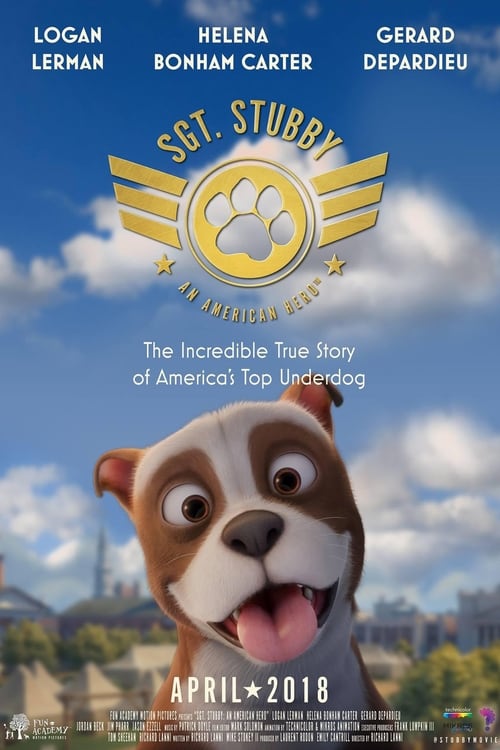
Sgt. Stubby: An American Hero
The true story of the most decorated dog in American military history -- Sgt. Stubby -- and the enduring bonds he forged with his brothers-in-arms in the trenches of World War I.
The film box office disappointment against its mid-range budget of $25.0M, earning $4.9M globally (-80% loss). While initial box office returns were modest, the film has gained appreciation for its compelling narrative within the animation genre.
23 wins & 7 nominations


Plot Structure
Story beats plotted across runtime


Narrative Arc
Emotional journey through the story's key moments
Story Circle
Blueprint 15-beat structure
Arcplot Score Breakdown
Weighted: Precision (70%) + Arc (15%) + Theme (15%)
Sgt. Stubby: An American Hero (2018) reveals carefully calibrated plot construction, characteristic of Richard Lanni's storytelling approach. This structural analysis examines how the film's 15-point plot structure maps to proven narrative frameworks across 1 hour and 25 minutes. With an Arcplot score of 6.9, the film balances conventional beats with creative variation.
Characters
Cast & narrative archetypes

Stubby
Robert Conroy
Gaston Baptiste
Elmer Olson
Sergeant Stodder
Margaret Conroy
Main Cast & Characters
Stubby
Played by Logan Lerman
A stray terrier who becomes the most decorated war dog of WWI, serving with the 102nd Infantry Regiment
Robert Conroy
Played by Logan Lerman
A young soldier who befriends Stubby and smuggles him to France, becoming his lifelong companion
Gaston Baptiste
Played by Gérard Depardieu
A French soldier and skilled handler who helps train Stubby and becomes a loyal friend
Elmer Olson
Played by Jim Pharr
A jovial soldier in the 102nd Infantry Regiment and friend to Conroy
Sergeant Stodder
Played by Jason Deline
A tough, no-nonsense sergeant who initially opposes Stubby but grows to respect him
Margaret Conroy
Played by Helena Bonham Carter
Robert's caring sister who corresponds with him and supports him from home
Structural Analysis
The Status Quo at 1 minutes (1% through the runtime) establishes A stray puppy wanders the streets of New Haven, Connecticut, alone and hungry, searching for food and shelter in 1917.. Notably, this early placement immediately immerses viewers in the story world.
The inciting incident occurs at 10 minutes when The regiment receives orders to ship out to France. Conroy must decide whether to leave Stubby behind or risk smuggling him aboard the ship to the war zone.. At 11% through the film, this Disruption aligns precisely with traditional story structure. This beat shifts the emotional landscape, launching the protagonist into the central conflict.
The First Threshold at 20 minutes marks the transition into Act II, occurring at 24% of the runtime. This indicates the protagonist's commitment to The commanding officer discovers Stubby but, impressed by the dog's salute and the morale boost he provides, allows him to stay as the regiment's mascot. Stubby is officially part of the war effort., moving from reaction to action.
At 41 minutes, the Midpoint arrives at 48% of the runtime—precisely centered, creating perfect narrative symmetry. The analysis reveals that this crucial beat During a major offensive, Stubby is injured by a grenade blast while saving soldiers. He's evacuated to a field hospital, and his survival is uncertain. False defeat: the hero appears to be out of the fight., fundamentally raising what's at risk. The emotional intensity shifts, dividing the narrative into clear before-and-after phases.
The Collapse moment at 61 minutes (72% through) represents the emotional nadir. Here, Conroy is seriously wounded in battle and collapses. Stubby frantically tries to help as medics rush in. The "whiff of death" - Conroy may not survive, and Stubby faces losing his best friend., shows the protagonist at their lowest point. This beat's placement in the final quarter sets up the climactic reversal.
The Second Threshold at 66 minutes initiates the final act resolution at 77% of the runtime. News arrives that the Armistice has been signed - the war is over. Conroy and Stubby realize they've survived and can return home. This revelation provides the hope and clarity needed for the final act., demonstrating the transformation achieved throughout the journey.
Emotional Journey
Sgt. Stubby: An American Hero's emotional architecture traces a deliberate progression across 15 carefully calibrated beats.
Narrative Framework
This structural analysis employs systematic plot point analysis that identifies crucial turning points. By mapping Sgt. Stubby: An American Hero against these established plot points, we can identify how Richard Lanni utilizes or subverts traditional narrative conventions. The plot point approach reveals not only adherence to structural principles but also creative choices that distinguish Sgt. Stubby: An American Hero within the animation genre.
Comparative Analysis
Additional animation films include The Bad Guys, Puss in Boots and Violet Evergarden: Eternity and the Auto Memory Doll.
Plot Points by Act
Act I
SetupStatus Quo
A stray puppy wanders the streets of New Haven, Connecticut, alone and hungry, searching for food and shelter in 1917.
Theme
Robert Conroy tells the dog: "Loyalty is everything." This establishes the film's core theme of loyalty, courage, and the bond between soldier and animal.
Worldbuilding
Introduction to Robert Conroy training at Yale to join the 102nd Infantry Regiment. He befriends the stray dog, names him Stubby, and smuggles him into camp despite regulations. Establishes the camaraderie among soldiers and America's entry into WWI.
Disruption
The regiment receives orders to ship out to France. Conroy must decide whether to leave Stubby behind or risk smuggling him aboard the ship to the war zone.
Resistance
Conroy debates what to do with Stubby. With help from fellow soldiers, he successfully sneaks Stubby onto the troop ship. The journey to France shows the bond deepening and Stubby winning over the troops, though discovery looms.
Act II
ConfrontationFirst Threshold
The commanding officer discovers Stubby but, impressed by the dog's salute and the morale boost he provides, allows him to stay as the regiment's mascot. Stubby is officially part of the war effort.
Mirror World
Stubby meets French soldier Gaston Baptiste and a young French orphan girl named Marguerite, who represents the innocent lives the soldiers are fighting to protect and deepens the thematic exploration of loyalty and sacrifice.
Premise
Stubby proves his worth in the trenches: warning soldiers of gas attacks, locating wounded men in no-man's land, capturing a German spy, and boosting morale. The "promise of the premise" - a heroic war dog in action.
Midpoint
During a major offensive, Stubby is injured by a grenade blast while saving soldiers. He's evacuated to a field hospital, and his survival is uncertain. False defeat: the hero appears to be out of the fight.
Opposition
Stubby recovers but the war intensifies. The regiment faces brutal battles at Château-Thierry and Seicheprey. Conroy and his fellow soldiers suffer losses, and the physical and psychological toll of war mounts. The opposition (German forces and war itself) closes in.
Collapse
Conroy is seriously wounded in battle and collapses. Stubby frantically tries to help as medics rush in. The "whiff of death" - Conroy may not survive, and Stubby faces losing his best friend.
Crisis
Stubby stays by Conroy's side during his recovery. Both dog and soldier face their darkest emotional moment, processing the trauma of war and the uncertainty of survival. A quiet period of healing and reflection.
Act III
ResolutionSecond Threshold
News arrives that the Armistice has been signed - the war is over. Conroy and Stubby realize they've survived and can return home. This revelation provides the hope and clarity needed for the final act.
Synthesis
Stubby is celebrated as a hero, receives medals and honors, meets President Woodrow Wilson, and returns home with Conroy. The finale shows their victory tour, public appearances, and the recognition of Stubby's extraordinary service.
Transformation
Stubby and Conroy walk peacefully through Yale campus together, mirroring the opening but now as celebrated heroes. The stray dog has become America's most decorated war dog; the young soldier has become a man. Their bond of loyalty has transformed them both.