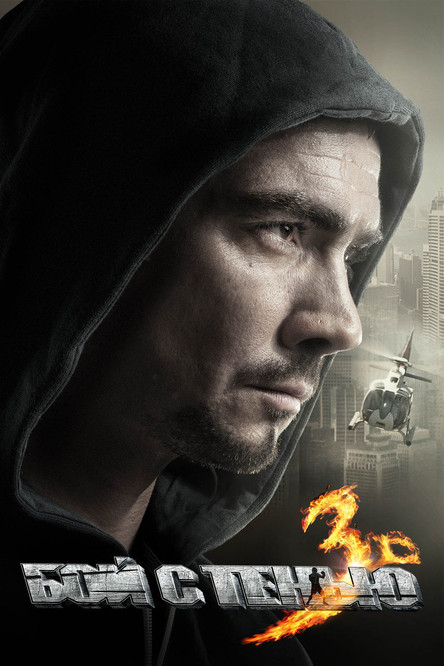
Shadow Boxing 3. The Final Round
Champion boxer Artyom Kolchin climbed all conceivable heights and became a national hero. He does not enter the boxing ring any more, rather choosing a coaching job and wild high life, including continuous TV appearances, hanging out and love affairs. One morning his daughter and his wife Vika meet him at home. Vika does not see the Artyom she once fell in love with in him any longer... The externally happy life of Kolchin comes to an end when the boxer he trains is almost killed during a match with the famous Kuerte. Artyom suspects that he used some forbidden technique. To obtain the proof, he has to go to Hong Kong where his long-time friend Vagit Valiev waits for him: he knows something about Kuerte which is not known to anyone else. To win, Artyom will have to enter the ring again.
Despite its limited budget of $5.0M, Shadow Boxing 3. The Final Round became a financial success, earning $13.6M worldwide—a 173% return.
Plot Structure
Story beats plotted across runtime


Narrative Arc
Emotional journey through the story's key moments
Story Circle
Blueprint 15-beat structure
Arcplot Score Breakdown
Weighted: Precision (70%) + Arc (15%) + Theme (15%)
Shadow Boxing 3. The Final Round (2011) showcases meticulously timed plot construction, characteristic of Alexey Sidorov's storytelling approach. This structural analysis examines how the film's 15-point plot structure maps to proven narrative frameworks across 2 hours and 2 minutes. With an Arcplot score of 7.4, the film balances conventional beats with creative variation.
Characters
Cast & narrative archetypes

Artem Kolchin
Sasha
Stepanych
Stas
Kuzma
Main Cast & Characters
Artem Kolchin
Played by Denis Nikiforov
A former boxing champion seeking redemption in his final fight, haunted by his past and determined to prove himself one last time.
Sasha
Played by Elena Panova
Artem's love interest and emotional anchor, providing support while struggling with the dangers of his boxing career.
Stepanych
Played by Andrei Panin
Artem's loyal trainer and mentor figure, guiding him through his final preparation with tough love and wisdom.
Stas
Played by Dmitriy Shevchenko
Artem's friend and sparring partner who provides both physical training support and emotional companionship.
Kuzma
Played by Pavel Derevyanko
A criminal figure from Artem's past representing the dark world he's trying to leave behind.
Structural Analysis
The Status Quo at 1 minutes (1% through the runtime) establishes Artem Kolchin is shown as a successful but aging boxer, living in relative comfort but haunted by his past and disconnected from his earlier passion for the sport.. Structural examination shows that this early placement immediately immerses viewers in the story world.
The inciting incident occurs at 15 minutes when A challenge emerges—either a new rival appears, a personal crisis forces Artem back into the ring, or he discovers a threat to someone he cares about that can only be resolved through one final fight.. At 12% through the film, this Disruption aligns precisely with traditional story structure. This beat shifts the emotional landscape, launching the protagonist into the central conflict.
The First Threshold at 31 minutes marks the transition into Act II, occurring at 25% of the runtime. This demonstrates the protagonist's commitment to Artem makes the active decision to accept the final challenge and commit to training for one last fight, entering the world of preparation and sacrifice., moving from reaction to action.
At 61 minutes, the Midpoint arrives at 50% of the runtime—precisely centered, creating perfect narrative symmetry. Significantly, this crucial beat A preliminary victory or successful sparring session gives Artem false confidence that he's ready, or he receives public recognition that raises the stakes—but underlying dangers remain unaddressed., fundamentally raising what's at risk. The emotional intensity shifts, dividing the narrative into clear before-and-after phases.
The Collapse moment at 92 minutes (75% through) represents the emotional nadir. Here, Artem suffers a devastating setback—an injury during training, a betrayal, or a revelation that his opponent is far more dangerous than anticipated. A mentor or loved one may be hurt or lost., indicates the protagonist at their lowest point. This beat's placement in the final quarter sets up the climactic reversal.
The Second Threshold at 98 minutes initiates the final act resolution at 80% of the runtime. A realization or moment of clarity—combining his hard-earned wisdom with his fighter's spirit—gives Artem the insight he needs. He understands the true meaning of the fight and what he must do., demonstrating the transformation achieved throughout the journey.
Emotional Journey
Shadow Boxing 3. The Final Round's emotional architecture traces a deliberate progression across 15 carefully calibrated beats.
Narrative Framework
This structural analysis employs proven narrative structure principles that track dramatic progression. By mapping Shadow Boxing 3. The Final Round against these established plot points, we can identify how Alexey Sidorov utilizes or subverts traditional narrative conventions. The plot point approach reveals not only adherence to structural principles but also creative choices that distinguish Shadow Boxing 3. The Final Round within the action genre.
Alexey Sidorov's Structural Approach
Among the 2 Alexey Sidorov films analyzed on Arcplot, the average structural score is 7.1, reflecting strong command of classical structure. Shadow Boxing 3. The Final Round represents one of the director's most structurally precise works. For comparative analysis, explore the complete Alexey Sidorov filmography.
Comparative Analysis
Additional action films include The Bad Guys, Puss in Boots and Venom: The Last Dance. For more Alexey Sidorov analyses, see Shadowboxing.
Plot Points by Act
Act I
SetupStatus Quo
Artem Kolchin is shown as a successful but aging boxer, living in relative comfort but haunted by his past and disconnected from his earlier passion for the sport.
Theme
A trainer or mentor figure tells Artem that true victory isn't about defeating others, but about conquering yourself and finding redemption.
Worldbuilding
Establishment of Artem's current life, his relationships, his position in the boxing world, and the personal demons that continue to plague him from previous films.
Disruption
A challenge emerges—either a new rival appears, a personal crisis forces Artem back into the ring, or he discovers a threat to someone he cares about that can only be resolved through one final fight.
Resistance
Artem resists the call to fight again, debates whether he still has what it takes, and receives guidance from mentors. He grapples with whether he can reclaim his former glory or if this fight is foolish.
Act II
ConfrontationFirst Threshold
Artem makes the active decision to accept the final challenge and commit to training for one last fight, entering the world of preparation and sacrifice.
Mirror World
A significant relationship deepens—possibly with a love interest, family member, or protégé—someone who represents what Artem is truly fighting for beyond personal glory.
Premise
Training montages, physical and mental preparation, Artem rediscovering his passion for boxing, bonding with his team, and proving he still has the skills despite his age and past trauma.
Midpoint
A preliminary victory or successful sparring session gives Artem false confidence that he's ready, or he receives public recognition that raises the stakes—but underlying dangers remain unaddressed.
Opposition
The opponent's power becomes clear, Artem's old injuries or psychological wounds resurface, relationships strain under pressure, and doubts intensify about whether he can actually win.
Collapse
Artem suffers a devastating setback—an injury during training, a betrayal, or a revelation that his opponent is far more dangerous than anticipated. A mentor or loved one may be hurt or lost.
Crisis
Artem contemplates giving up, faces his deepest fears and regrets from the entire trilogy, and must confront who he truly is beyond being a fighter.
Act III
ResolutionSecond Threshold
A realization or moment of clarity—combining his hard-earned wisdom with his fighter's spirit—gives Artem the insight he needs. He understands the true meaning of the fight and what he must do.
Synthesis
The climactic final fight where Artem applies everything he has learned, battles not just his opponent but his own demons, and achieves victory or honorable defeat that brings true resolution.
Transformation
Artem is shown at peace, having achieved redemption and self-knowledge. The final image mirrors the opening but shows a man transformed—no longer haunted, but whole.