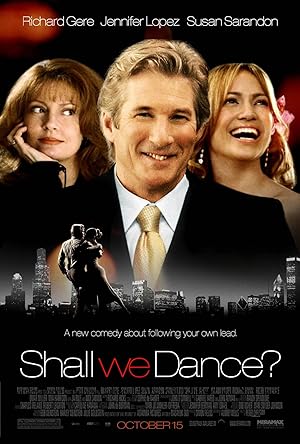
Shall We Dance?
John Clark is a middle aged Chicago estate lawyer. He loves his family, which includes his wife Beverly, but their combined busy schedules and getting caught in a rut after two decades of marriage has left him feeling unfulfilled. While taking the el train home every night, he notices the same young, beautiful contemplative woman staring out of one of the windows of Miss Mitzi's Dance Studio, which specializes in ballroom. He is intrigued enough with her beauty and sadness to go in one evening on his way home. He learns that she is Paulina, one of the instructors and a former world class ballroom dancer. Because of her, he signs up for beginner group dance lessons, regardless of them being taught by Miss Mitzi herself, and not Paulina. As time progresses, John gets caught up in the lives of those at Miss Mitzi's: his two fellow classmates - overweight Vern who wants to learn to dance for his upcoming wedding, and Chic, who wants to impress the ladies - and two of the studio's competitive amateurs, opinionated and brash Bobbie, who is looking for a dance partner, and one person who surprises John and who just wants to be able to show his true colors to the world while hiding under a mask. But as Paulina slowly allows herself to be involved in their lives as well, despite she vowing not to fraternize with the students, John comes to the spoken realization of what he was looking for when he first spotted Paulina in the window. Similarly, each of those at the dance studio are looking for their small place in life with the right person, Paulina included. John may not get the happy ending that he wants as Beverly, based on circumstances, believes he is having an affair.
Despite a mid-range budget of $50.0M, Shall We Dance? became a financial success, earning $170.1M worldwide—a 240% return.


Plot Structure
Story beats plotted across runtime


Narrative Arc
Emotional journey through the story's key moments
Story Circle
Blueprint 15-beat structure
Arcplot Score Breakdown
Weighted: Precision (70%) + Arc (15%) + Theme (15%)
Shall We Dance? (2004) reveals deliberately positioned narrative design, characteristic of Peter Chelsom's storytelling approach. This structural analysis examines how the film's 15-point plot structure maps to proven narrative frameworks across 1 hour and 46 minutes. With an Arcplot score of 7.3, the film balances conventional beats with creative variation.
Characters
Cast & narrative archetypes

John Clark
Paulina
Beverly Clark
Link Peterson
Miss Mitzi
Bobbie
Vern
Chic
Main Cast & Characters
John Clark
Played by Richard Gere
A successful estate lawyer living a predictable life who discovers ballroom dancing as an escape from his midlife malaise.
Paulina
Played by Jennifer Lopez
A mysterious and melancholic dance instructor who once competed professionally but has withdrawn from the spotlight.
Beverly Clark
Played by Susan Sarandon
John's devoted wife who grows suspicious of his secretive behavior and hires a private investigator.
Link Peterson
Played by Stanley Tucci
John's flamboyant coworker who secretly takes dance lessons and becomes his unlikely dance partner and friend.
Miss Mitzi
Played by Anita Gillette
An exuberant and theatrical dance instructor who teaches with passion and dramatic flair.
Bobbie
Played by Lisa Ann Walter
A brash and enthusiastic dance student who dreams of winning competitions and provides comic relief.
Vern
Played by Omar Miller
A shy and awkward student taking dance lessons to prepare for his upcoming wedding.
Chic
Played by Bobby Cannavale
A suave and skilled dance instructor who serves as Paulina's former partner and represents her past competitive glory.
Structural Analysis
The Status Quo at 1 minutes (1% through the runtime) establishes John Clark commutes home on the train, living a successful but monotonous life as an estate lawyer. His voiceover reveals he has everything he thought he wanted - wife, family, house - but feels a persistent emptiness.. Structural examination shows that this early placement immediately immerses viewers in the story world.
The inciting incident occurs at 12 minutes when From his train window, John sees Paulina staring wistfully from the window of Miss Mitzi's dance studio. Her melancholic beauty captivates him and stirs something long dormant.. At 11% through the film, this Disruption aligns precisely with traditional story structure. This beat shifts the emotional landscape, launching the protagonist into the central conflict.
The First Threshold at 26 minutes marks the transition into Act II, occurring at 24% of the runtime. This illustrates the protagonist's commitment to John impulsively gets off the train and climbs the stairs to Miss Mitzi's dance studio, signing up for beginner ballroom lessons. He actively chooses to enter this new world., moving from reaction to action.
At 53 minutes, the Midpoint arrives at 50% of the runtime—precisely centered, creating perfect narrative symmetry. Structural examination shows that this crucial beat John dances publicly at a company party, displaying newfound confidence and skill. Beverly notices the change in him. False victory: he's becoming alive again, but the deception and misdirected desire will create consequences., fundamentally raising what's at risk. The emotional intensity shifts, dividing the narrative into clear before-and-after phases.
The Collapse moment at 78 minutes (73% through) represents the emotional nadir. Here, Beverly confronts John with photos of him dancing with Paulina. The illusion of his secret world shatters. His marriage is threatened, and he must face that he's been running from his life rather than enriching it. Death of the fantasy., demonstrates the protagonist at their lowest point. This beat's placement in the final quarter sets up the climactic reversal.
The Second Threshold at 84 minutes initiates the final act resolution at 80% of the runtime. John realizes dancing itself - not Paulina, not escape - gave him back his sense of self. Beverly reveals she understands: she saw him become alive again. She gives him permission to dance in the competition, synthesizing passion WITH commitment., demonstrating the transformation achieved throughout the journey.
Emotional Journey
Shall We Dance?'s emotional architecture traces a deliberate progression across 15 carefully calibrated beats.
Narrative Framework
This structural analysis employs proven narrative structure principles that track dramatic progression. By mapping Shall We Dance? against these established plot points, we can identify how Peter Chelsom utilizes or subverts traditional narrative conventions. The plot point approach reveals not only adherence to structural principles but also creative choices that distinguish Shall We Dance? within the comedy genre.
Peter Chelsom's Structural Approach
Among the 6 Peter Chelsom films analyzed on Arcplot, the average structural score is 7.3, reflecting strong command of classical structure. Shall We Dance? represents one of the director's most structurally precise works. For comparative analysis, explore the complete Peter Chelsom filmography.
Comparative Analysis
Additional comedy films include The Bad Guys, Ella Enchanted and The Evening Star. For more Peter Chelsom analyses, see Hannah Montana: The Movie, The Space Between Us and Town & Country.
Plot Points by Act
Act I
SetupStatus Quo
John Clark commutes home on the train, living a successful but monotonous life as an estate lawyer. His voiceover reveals he has everything he thought he wanted - wife, family, house - but feels a persistent emptiness.
Theme
John's colleague asks, "Why do people get married?" suggesting the theme about finding passion and meaning within committed relationships rather than outside them.
Worldbuilding
Establish John's comfortable suburban life with wife Beverly and children. Show his daily routine, his law practice, family dinners. Reveal the absence of spontaneity and passion despite material success and genuine love for his family.
Disruption
From his train window, John sees Paulina staring wistfully from the window of Miss Mitzi's dance studio. Her melancholic beauty captivates him and stirs something long dormant.
Resistance
John debates whether to enter the dance studio. He rides past several times, wrestling with the impulse. He considers what this means, fears looking foolish, worries about betraying Beverly.
Act II
ConfrontationFirst Threshold
John impulsively gets off the train and climbs the stairs to Miss Mitzi's dance studio, signing up for beginner ballroom lessons. He actively chooses to enter this new world.
Mirror World
John meets Paulina as his instructor. She becomes the mirror character who embodies both the allure of passion and the pain of lost dreams, teaching him what he truly needs versus what he thinks he wants.
Premise
John discovers the joy of dancing. He bonds with quirky classmates Chic and Vern, hides lessons from Beverly, improves his skills. The fun of transformation, secret double life, growing confidence. Paulina remains distant but he's energized by the pursuit.
Midpoint
John dances publicly at a company party, displaying newfound confidence and skill. Beverly notices the change in him. False victory: he's becoming alive again, but the deception and misdirected desire will create consequences.
Opposition
Beverly grows suspicious and hires a detective. John becomes obsessed with the Chicago Tattinger Competition, pushing himself harder. Paulina begins opening up about her past championship loss. The lies compound. Beverly discovers the truth through surveillance photos.
Collapse
Beverly confronts John with photos of him dancing with Paulina. The illusion of his secret world shatters. His marriage is threatened, and he must face that he's been running from his life rather than enriching it. Death of the fantasy.
Crisis
John sits in darkness processing what he's done and why. He realizes he wasn't running toward Paulina but away from feeling invisible. He contemplates whether he's destroyed his marriage for a fantasy.
Act III
ResolutionSecond Threshold
John realizes dancing itself - not Paulina, not escape - gave him back his sense of self. Beverly reveals she understands: she saw him become alive again. She gives him permission to dance in the competition, synthesizing passion WITH commitment.
Synthesis
John competes in the Tattinger with Paulina as his partner. They dance beautifully. He helps Paulina reclaim her own lost passion. Beverly watches proudly. John integrates his newfound vitality into his real life rather than using it to escape.
Transformation
John and Beverly dance together at home, reunited and renewed. The closing image mirrors the opening but now John has rediscovered passion within his marriage, not outside it. He's fully present, alive, connected.