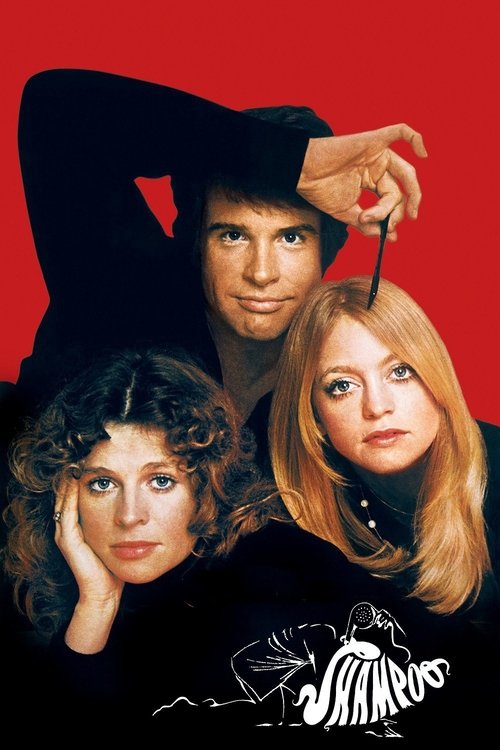
Shampoo
A Beverly Hills hairdresser runs around town on the eve of the 1968 presidential election trying to make heads or tails of his financial and romantic entanglements. His attempts to gather the money to open his own salon are continually side-tracked by the distractions presented by his many lovers.
Despite its tight budget of $4.0M, Shampoo became a commercial juggernaut, earning $60.0M worldwide—a remarkable 1400% return. The film's unique voice engaged audiences, showing that strong storytelling can transcend budget limitations.
1 Oscar. 3 wins & 11 nominations


Plot Structure
Story beats plotted across runtime


Narrative Arc
Emotional journey through the story's key moments
Story Circle
Blueprint 15-beat structure
Arcplot Score Breakdown
Weighted: Precision (70%) + Arc (15%) + Theme (15%)
Shampoo (1975) reveals meticulously timed narrative design, characteristic of Hal Ashby's storytelling approach. This structural analysis examines how the film's 15-point plot structure maps to proven narrative frameworks across 1 hour and 50 minutes. With an Arcplot score of 7.3, the film balances conventional beats with creative variation.
Characters
Cast & narrative archetypes

George Roundy
Jackie Shawn
Felicia Karpf
Lester Karpf
Jill
Lorna Karpf
Main Cast & Characters
George Roundy
Played by Warren Beatty
A charming, womanizing Beverly Hills hairdresser who juggles multiple affairs while struggling to open his own salon and confront his fear of commitment.
Jackie Shawn
Played by Julie Christie
George's on-again, off-again girlfriend who wants commitment and stability but is drawn to his charm despite his infidelity.
Felicia Karpf
Played by Lee Grant
A wealthy, married client of George who is having an affair with him while her husband considers financing George's salon.
Lester Karpf
Played by Jack Warden
A successful businessman and Felicia's husband who unknowingly considers financing his wife's lover's business venture.
Jill
Played by Goldie Hawn
Felicia and Lester's sexually adventurous daughter who also becomes involved with George, complicating his already tangled web of relationships.
Lorna Karpf
Played by Carrie Fisher
Lester's ex-wife, a former client of George with whom he also had a brief affair.
Structural Analysis
The Status Quo at 1 minutes (1% through the runtime) establishes George works as a hairdresser, servicing wealthy female clients in Beverly Hills while juggling multiple sexual relationships. His superficial charm masks deeper emptiness and lack of direction.. Notably, this early placement immediately immerses viewers in the story world.
The inciting incident occurs at 13 minutes when George's entanglements collide when he realizes he needs financial backing for his salon. He must approach Lester, not knowing that Jackie is Lester's mistress, creating a web of deception.. At 12% through the film, this Disruption aligns precisely with traditional story structure. This beat shifts the emotional landscape, launching the protagonist into the central conflict.
The First Threshold at 28 minutes marks the transition into Act II, occurring at 26% of the runtime. This demonstrates the protagonist's commitment to George commits to attending an election night party at Lester's house, fully entering the world of wealth and deception where all his relationships will converge. He chooses manipulation over honesty., moving from reaction to action.
At 55 minutes, the Midpoint arrives at 50% of the runtime—precisely centered, creating perfect narrative symmetry. The analysis reveals that this crucial beat False victory: George believes he's successfully managing all his relationships and is close to securing Lester's investment. He feels in control, but the audience sees the house of cards beginning to wobble., fundamentally raising what's at risk. The emotional intensity shifts, dividing the narrative into clear before-and-after phases.
The Collapse moment at 83 minutes (75% through) represents the emotional nadir. Here, All deceptions are exposed at once. Lester discovers George's affairs with multiple women including his wife and mistress. George loses the investment, loses the women, and his dream dies. He's revealed as empty and uncommitted., shows the protagonist at their lowest point. This beat's placement in the final quarter sets up the climactic reversal.
The Second Threshold at 88 minutes initiates the final act resolution at 80% of the runtime. George realizes he genuinely loves Jill and that authentic connection matters more than sexual conquest or money. He understands what he's lost through his inability to commit, but the realization comes too late., demonstrating the transformation achieved throughout the journey.
Emotional Journey
Shampoo's emotional architecture traces a deliberate progression across 15 carefully calibrated beats.
Narrative Framework
This structural analysis employs systematic plot point analysis that identifies crucial turning points. By mapping Shampoo against these established plot points, we can identify how Hal Ashby utilizes or subverts traditional narrative conventions. The plot point approach reveals not only adherence to structural principles but also creative choices that distinguish Shampoo within the comedy genre.
Hal Ashby's Structural Approach
Among the 4 Hal Ashby films analyzed on Arcplot, the average structural score is 7.0, reflecting strong command of classical structure. Shampoo represents one of the director's most structurally precise works. For comparative analysis, explore the complete Hal Ashby filmography.
Comparative Analysis
Additional comedy films include The Bad Guys, Ella Enchanted and The Evening Star. For more Hal Ashby analyses, see Coming Home, Being There and The Last Detail.
Plot Points by Act
Act I
SetupStatus Quo
George works as a hairdresser, servicing wealthy female clients in Beverly Hills while juggling multiple sexual relationships. His superficial charm masks deeper emptiness and lack of direction.
Theme
A character observes that George wants to have it all without making any real commitments, hinting at the film's exploration of authenticity versus superficiality and the cost of refusing to choose.
Worldbuilding
Set during the 1968 presidential election, George navigates between lovers Jill, Jackie (whose husband Lester is a wealthy businessman), and ex-girlfriend Jackie. His dream is to open his own salon but lacks the capital and credibility.
Disruption
George's entanglements collide when he realizes he needs financial backing for his salon. He must approach Lester, not knowing that Jackie is Lester's mistress, creating a web of deception.
Resistance
George debates how to secure funding without revealing his relationships. He attends social events with the wealthy set, increasingly uncomfortable as he navigates lies and pretends to be gay to deflect suspicion from husbands.
Act II
ConfrontationFirst Threshold
George commits to attending an election night party at Lester's house, fully entering the world of wealth and deception where all his relationships will converge. He chooses manipulation over honesty.
Mirror World
Jill represents the authentic relationship George could have—she genuinely loves him and sees through his act. She serves as the thematic mirror showing him what he's sacrificing for his shallow pursuits.
Premise
George juggles all his women at various social events, maintaining his lies while pursuing his business goal. The comedic sexual farce plays out as he attempts to keep everyone satisfied and no one suspicious.
Midpoint
False victory: George believes he's successfully managing all his relationships and is close to securing Lester's investment. He feels in control, but the audience sees the house of cards beginning to wobble.
Opposition
The election night party becomes increasingly chaotic as George's lies unravel. Women begin comparing notes, Lester grows suspicious, and George's carefully constructed world of compartmentalized relationships starts colliding.
Collapse
All deceptions are exposed at once. Lester discovers George's affairs with multiple women including his wife and mistress. George loses the investment, loses the women, and his dream dies. He's revealed as empty and uncommitted.
Crisis
George wanders through the aftermath, confronting what his choices have cost him. Nixon's victory plays on TV screens, reflecting the hollow victory of George's lifestyle. He sits alone with his failures.
Act III
ResolutionSecond Threshold
George realizes he genuinely loves Jill and that authentic connection matters more than sexual conquest or money. He understands what he's lost through his inability to commit, but the realization comes too late.
Synthesis
George attempts to win Jill back, confessing his love and promising to change. But she's already chosen to leave with another man who offered her commitment when George wouldn't. He must accept the consequences.
Transformation
George stands alone on a hillside watching Jill drive away, finally understanding the emptiness of his life. The closing image mirrors the opening but shows a man who has lost everything through his own choices—aware but defeated.