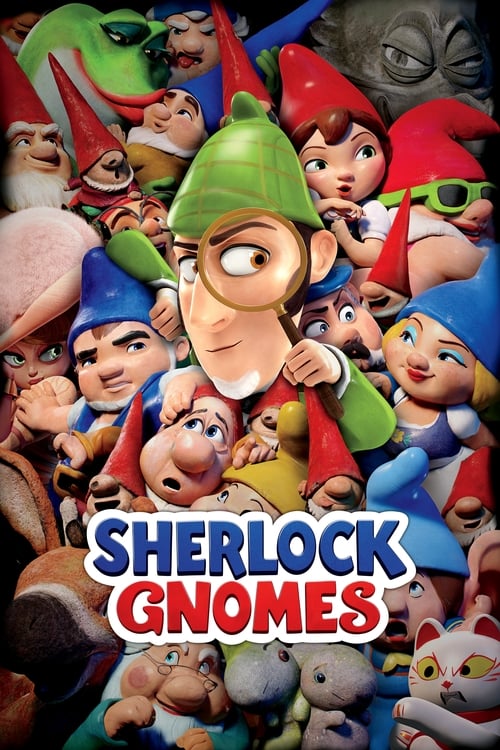
Sherlock Gnomes
Garden gnomes Gnomeo & Juliet recruit renown detective Sherlock Gnomes to investigate the mysterious disappearance of other garden ornaments.
Working with a moderate budget of $59.0M, the film achieved a modest success with $90.5M in global revenue (+53% profit margin).
1 win & 6 nominations


Plot Structure
Story beats plotted across runtime


Narrative Arc
Emotional journey through the story's key moments
Story Circle
Blueprint 15-beat structure
Arcplot Score Breakdown
Weighted: Precision (70%) + Arc (15%) + Theme (15%)
Sherlock Gnomes (2018) reveals carefully calibrated narrative architecture, characteristic of John Stevenson's storytelling approach. This structural analysis examines how the film's 15-point plot structure maps to proven narrative frameworks across 1 hour and 26 minutes. With an Arcplot score of 7.6, the film showcases strong structural fundamentals.
Characters
Cast & narrative archetypes

Sherlock Gnomes
Gnomeo
Juliet
Watson
Moriarty
Irene
Main Cast & Characters
Sherlock Gnomes
Played by Johnny Depp
A brilliant detective gnome investigating the mysterious disappearance of garden gnomes across London.
Gnomeo
Played by James McAvoy
A blue gnome who must balance his relationship with Juliet while helping Sherlock solve the case.
Juliet
Played by Emily Blunt
A red gnome who feels neglected by Gnomeo and seeks to protect her new garden while proving her worth.
Watson
Played by Chiwetel Ejiofor
Sherlock's loyal companion gnome who provides support and grounding to the eccentric detective.
Moriarty
Played by Jamie Demetriou
A cunning pie mascot seeking revenge against Sherlock for past humiliation.
Irene
Played by Mary J. Blige
Sherlock's former partner who was supposedly smashed, fueling his obsessive quest.
Structural Analysis
The Status Quo at 1 minutes (1% through the runtime) establishes Gnomeo and Juliet are happily together, living in their London garden. They announce to their garden gnome friends that they're moving to a new garden, establishing their relationship status quo before disruption.. Notably, this early placement immediately immerses viewers in the story world.
The inciting incident occurs at 10 minutes when All the garden gnomes except Gnomeo and Juliet mysteriously disappear overnight. They return to find their friends gone, launching the central mystery and forcing them to work together.. At 12% through the film, this Disruption aligns precisely with traditional story structure. This beat shifts the emotional landscape, launching the protagonist into the central conflict.
The First Threshold at 21 minutes marks the transition into Act II, occurring at 24% of the runtime. This demonstrates the protagonist's commitment to Gnomeo and Juliet actively choose to join Sherlock's investigation to save their friends, fully committing to the detective adventure and entering the mystery-solving world of Sherlock Gnomes., moving from reaction to action.
At 43 minutes, the Midpoint arrives at 50% of the runtime—precisely centered, creating perfect narrative symmetry. The analysis reveals that this crucial beat False defeat: They discover Moriarty's apparent hideout but it's a trap. The clues lead nowhere, Watson walks out on Sherlock feeling unappreciated, and Juliet walks out on Gnomeo. Both partnerships fracture at the midpoint, raising the stakes., fundamentally raising what's at risk. The emotional intensity shifts, dividing the narrative into clear before-and-after phases.
The Collapse moment at 65 minutes (76% through) represents the emotional nadir. Here, All is lost: Moriarty captures Juliet and Watson. Gnomeo and Sherlock discover the captured gnomes are about to be destroyed. Sherlock admits he's failed, having lost his partner and facing his greatest defeat. Metaphorical death of their partnerships and hope., reveals the protagonist at their lowest point. This beat's placement in the final quarter sets up the climactic reversal.
The Second Threshold at 69 minutes initiates the final act resolution at 80% of the runtime. Breakthrough: Gnomeo and Sherlock realize they need their partners and must work as a team. They crack the final clue together by combining their perspectives, synthesizing the lesson that partnerships require mutual respect and collaboration., demonstrating the transformation achieved throughout the journey.
Emotional Journey
Sherlock Gnomes's emotional architecture traces a deliberate progression across 15 carefully calibrated beats.
Narrative Framework
This structural analysis employs systematic plot point analysis that identifies crucial turning points. By mapping Sherlock Gnomes against these established plot points, we can identify how John Stevenson utilizes or subverts traditional narrative conventions. The plot point approach reveals not only adherence to structural principles but also creative choices that distinguish Sherlock Gnomes within the animation genre.
Comparative Analysis
Additional animation films include The Bad Guys, Puss in Boots and Violet Evergarden: Eternity and the Auto Memory Doll.
Plot Points by Act
Act I
SetupStatus Quo
Gnomeo and Juliet are happily together, living in their London garden. They announce to their garden gnome friends that they're moving to a new garden, establishing their relationship status quo before disruption.
Theme
A character mentions that "partnerships require work" and question what happens when partners drift apart, stating the film's theme about maintaining relationships and working together as a team.
Worldbuilding
The gnomes move to their new London garden. Gnomeo and Juliet struggle to balance renovating the garden while spending time together. They're repeatedly interrupted by garden duties, showing growing tension in their relationship.
Disruption
All the garden gnomes except Gnomeo and Juliet mysteriously disappear overnight. They return to find their friends gone, launching the central mystery and forcing them to work together.
Resistance
Gnomeo and Juliet discover Sherlock Gnomes and Watson investigating the disappearances. Sherlock explains that Moriarty is behind the gnome-nappings. The duo debates whether to trust Sherlock and how to proceed with the investigation.
Act II
ConfrontationFirst Threshold
Gnomeo and Juliet actively choose to join Sherlock's investigation to save their friends, fully committing to the detective adventure and entering the mystery-solving world of Sherlock Gnomes.
Mirror World
Sherlock and Watson's partnership dynamic is revealed - Watson feels undervalued and ignored by Sherlock, mirroring Gnomeo and Juliet's relationship struggles and establishing the thematic B-story about partnership.
Premise
The fun detective adventure: following clues across London, visiting Chinatown, the doll museum, and various landmarks. Sherlock shows off his deductive skills while Gnomeo and Juliet continue to bicker and drift apart during the investigation.
Midpoint
False defeat: They discover Moriarty's apparent hideout but it's a trap. The clues lead nowhere, Watson walks out on Sherlock feeling unappreciated, and Juliet walks out on Gnomeo. Both partnerships fracture at the midpoint, raising the stakes.
Opposition
Separated, Gnomeo and Sherlock pursue leads alone while Juliet and Watson team up. The real villain's plan becomes clearer. Gnomeo and Sherlock's arrogance and inability to work with partners causes more problems and dead ends.
Collapse
All is lost: Moriarty captures Juliet and Watson. Gnomeo and Sherlock discover the captured gnomes are about to be destroyed. Sherlock admits he's failed, having lost his partner and facing his greatest defeat. Metaphorical death of their partnerships and hope.
Crisis
Dark night: Gnomeo and Sherlock reflect on their failures as partners. Sherlock realizes he took Watson for granted. Gnomeo realizes he didn't listen to Juliet. Both process what they've lost through their selfishness.
Act III
ResolutionSecond Threshold
Breakthrough: Gnomeo and Sherlock realize they need their partners and must work as a team. They crack the final clue together by combining their perspectives, synthesizing the lesson that partnerships require mutual respect and collaboration.
Synthesis
The finale: Gnomeo and Sherlock race to save everyone. They work together as true partners, rescue Juliet and Watson, defeat Moriarty, and save all the gnomes. Both partnerships are restored and strengthened through teamwork.
Transformation
Closing image: Gnomeo and Juliet work together harmoniously in their garden, having learned to balance their partnership. Sherlock and Watson reconcile as equals. The transformed relationships mirror the opening but show growth and mutual appreciation.