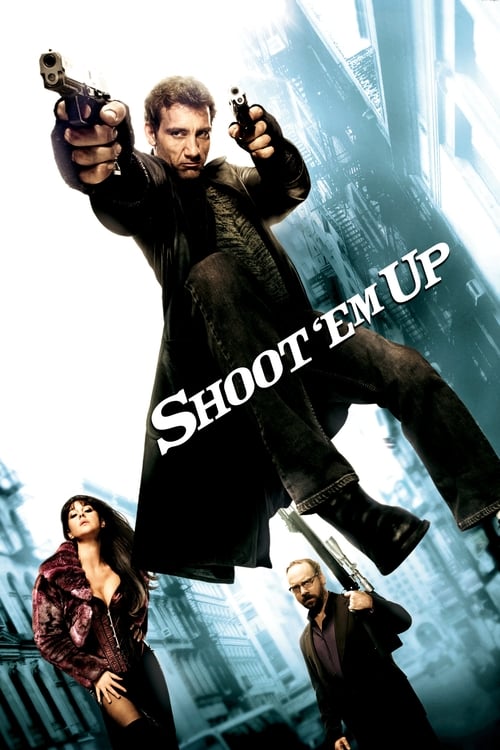
Shoot 'Em Up
A man named Mr. Smith delivers a woman's baby during a shootout, and is then called upon to protect the newborn from the army of gunmen.
The film struggled financially against its mid-range budget of $39.0M, earning $26.8M globally (-31% loss). While initial box office returns were modest, the film has gained appreciation for its distinctive approach within the action genre.


Plot Structure
Story beats plotted across runtime


Narrative Arc
Emotional journey through the story's key moments
Story Circle
Blueprint 15-beat structure
Arcplot Score Breakdown
Weighted: Precision (70%) + Arc (15%) + Theme (15%)
Shoot 'Em Up (2007) demonstrates deliberately positioned dramatic framework, characteristic of Michael Davis's storytelling approach. This structural analysis examines how the film's 15-point plot structure maps to proven narrative frameworks across 1 hour and 26 minutes. With an Arcplot score of 7.3, the film balances conventional beats with creative variation.
Characters
Cast & narrative archetypes

Mr. Smith
Donna Quintano
Karl Hertz
Senator Rutledge
Main Cast & Characters
Mr. Smith
Played by Clive Owen
A mysterious gunman with exceptional combat skills who reluctantly protects a newborn baby from assassins.
Donna Quintano
Played by Monica Bellucci
A lactating prostitute who helps Smith care for the baby while evading ruthless killers.
Karl Hertz
Played by Paul Giamatti
A sadistic and eccentric hitman obsessed with killing Smith and the baby.
Senator Rutledge
Played by Daniel Pilon
A corrupt politician orchestrating the conspiracy to kill the baby and its mother.
Structural Analysis
The Status Quo at 1 minutes (1% through the runtime) establishes Smith sits alone at a bus stop eating a carrot, detached and uninvolved with the world around him. He embodies isolation and apathy toward human connection.. Of particular interest, this early placement immediately immerses viewers in the story world.
The inciting incident occurs at 10 minutes when The baby's mother dies from her wounds, leaving Smith holding a newborn with no plan and killers closing in. The temporary situation becomes a life-or-death responsibility.. At 12% through the film, this Disruption aligns precisely with traditional story structure. This beat shifts the emotional landscape, launching the protagonist into the central conflict.
The First Threshold at 21 minutes marks the transition into Act II, occurring at 24% of the runtime. This indicates the protagonist's commitment to Smith makes the active choice to protect the baby and find out why people want him dead. He enlists DQ's help and commits to solving the mystery rather than abandoning the child., moving from reaction to action.
At 43 minutes, the Midpoint arrives at 50% of the runtime—precisely centered, creating perfect narrative symmetry. Of particular interest, this crucial beat Hertz discovers Smith's identity and his painful past—his pregnant wife and unborn child were killed years ago. This revelation raises the stakes and explains Smith's emotional investment in protecting the baby., fundamentally raising what's at risk. The emotional intensity shifts, dividing the narrative into clear before-and-after phases.
The Collapse moment at 65 minutes (76% through) represents the emotional nadir. Here, DQ is shot and apparently killed while Smith watches helplessly. The woman who taught him to care and connect is taken from him, echoing the loss of his wife., reveals the protagonist at their lowest point. This beat's placement in the final quarter sets up the climactic reversal.
The Second Threshold at 70 minutes initiates the final act resolution at 81% of the runtime. Smith channels his rage and grief into determination. He realizes he must eliminate the entire conspiracy to truly save the baby. He synthesizes his lethal skills with his newfound purpose of protection., demonstrating the transformation achieved throughout the journey.
Emotional Journey
Shoot 'Em Up's emotional architecture traces a deliberate progression across 15 carefully calibrated beats.
Narrative Framework
This structural analysis employs systematic plot point analysis that identifies crucial turning points. By mapping Shoot 'Em Up against these established plot points, we can identify how Michael Davis utilizes or subverts traditional narrative conventions. The plot point approach reveals not only adherence to structural principles but also creative choices that distinguish Shoot 'Em Up within the action genre.
Comparative Analysis
Additional action films include The Bad Guys, Puss in Boots and Venom: The Last Dance.
Plot Points by Act
Act I
SetupStatus Quo
Smith sits alone at a bus stop eating a carrot, detached and uninvolved with the world around him. He embodies isolation and apathy toward human connection.
Theme
During the initial gunfight, the pregnant woman pleads for help, establishing the film's core question: will Smith choose to get involved and protect the innocent, or remain detached?
Worldbuilding
Smith reluctantly intervenes to save a pregnant woman from armed thugs, delivering her baby during a firefight. The baby's mother dies, and Smith is thrust into protecting the newborn while pursued by dozens of gunmen. We learn Smith has exceptional combat skills and tactical thinking.
Disruption
The baby's mother dies from her wounds, leaving Smith holding a newborn with no plan and killers closing in. The temporary situation becomes a life-or-death responsibility.
Resistance
Smith debates what to do with the baby, attempting to leave him at various locations. He seeks help from DQ, a lactating prostitute. Hertz, the lead assassin, is introduced as a formidable antagonist. Smith resists full commitment to protecting the child.
Act II
ConfrontationFirst Threshold
Smith makes the active choice to protect the baby and find out why people want him dead. He enlists DQ's help and commits to solving the mystery rather than abandoning the child.
Mirror World
Smith and DQ form a makeshift family unit with the baby. DQ represents connection, care, and vulnerability—everything Smith has avoided. Their relationship begins to humanize him.
Premise
Smith, DQ, and the baby engage in increasingly outrageous action sequences while evading Hertz. Smith investigates the conspiracy, discovering the baby's rare bone marrow could save a political figure. The film delivers on its promise of creative, cartoonish violence.
Midpoint
Hertz discovers Smith's identity and his painful past—his pregnant wife and unborn child were killed years ago. This revelation raises the stakes and explains Smith's emotional investment in protecting the baby.
Opposition
Hertz uses Smith's past against him and intensifies attacks. The conspiracy reaches the highest levels of power. Smith's growing attachment to DQ and the baby makes him vulnerable. Hertz kidnaps DQ to lure Smith into a trap.
Collapse
DQ is shot and apparently killed while Smith watches helplessly. The woman who taught him to care and connect is taken from him, echoing the loss of his wife.
Crisis
Smith mourns DQ and faces his darkest moment. He must decide whether to continue fighting or surrender to grief and futility. The baby remains in danger.
Act III
ResolutionSecond Threshold
Smith channels his rage and grief into determination. He realizes he must eliminate the entire conspiracy to truly save the baby. He synthesizes his lethal skills with his newfound purpose of protection.
Synthesis
Smith launches an all-out assault on the conspiracy, killing the corrupt senator and his associates. He confronts and defeats Hertz in a final showdown. Smith ensures the baby is safe and the threat is eliminated.
Transformation
Smith walks away with the baby and a miraculously surviving DQ. The loner who ate carrots alone at a bus stop is now part of a family, transformed from detached observer to committed protector.