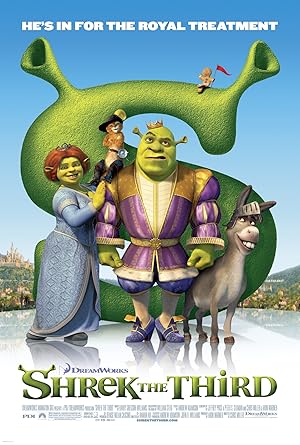
Shrek the Third
When King Harold (John Cleese) of Far, Far Away dies, the clumsy Shrek (Mike Myers) becomes the immediate successor of the throne. However, Shrek decides to find the legitimate heir Artie (Justin Timberlake) in a distant kingdom with his friends Donkey (Eddie Murphy) and Puss in Boots (Antonio Banderas) to be able return to his beloved house in the swamp with the pregnant Fiona (Cameron Diaz). Meanwhile, the envious and ambitious Prince Charming (Rupert Everett) joins the villains of the fairytales plotting a coup d'état to become the new King.
Despite a major studio investment of $160.0M, Shrek the Third became a box office success, earning $813.4M worldwide—a 408% return. This commercial performance validated the ambitious narrative scope, confirming that audiences embrace compelling narrative even at blockbuster scale.
Nominated for 1 BAFTA Award5 wins & 17 nominations


Plot Structure
Story beats plotted across runtime


Narrative Arc
Emotional journey through the story's key moments
Story Circle
Blueprint 15-beat structure
Arcplot Score Breakdown
Weighted: Precision (70%) + Arc (15%) + Theme (15%)
Shrek the Third (2007) exemplifies strategically placed dramatic framework, characteristic of Chris Miller's storytelling approach. This structural analysis examines how the film's 15-point plot structure maps to proven narrative frameworks across 1 hour and 33 minutes. With an Arcplot score of 6.5, the film balances conventional beats with creative variation.
Characters
Cast & narrative archetypes

Shrek
Donkey
Fiona
Prince Charming
Arthur Pendragon
Puss in Boots
Merlin
Main Cast & Characters
Shrek
Played by Mike Myers
An ogre reluctantly thrust into leadership when asked to become king of Far Far Away
Donkey
Played by Eddie Murphy
Shrek's loyal and talkative best friend who accompanies him on the quest to find Arthur
Fiona
Played by Cameron Diaz
Shrek's wife and princess of Far Far Away, pregnant and preparing for motherhood
Prince Charming
Played by Rupert Everett
The vengeful antagonist seeking to claim the throne and avenge his mother's defeat
Arthur Pendragon
Played by Justin Timberlake
The awkward teenage heir to the throne of Far Far Away, initially insecure but grows into leadership
Puss in Boots
Played by Antonio Banderas
The swashbuckling cat who aids Shrek and befriends Donkey on their adventure
Merlin
Played by Eric Idle
Arthur's eccentric former magic teacher who helps the heroes return to Far Far Away
Structural Analysis
The Status Quo at 1 minutes (1% through the runtime) establishes Shrek and Fiona struggle miserably through royal duties at Far Far Away, launching ships that crush crowds and christening babies who scream at Shrek's face. The ogre is clearly out of his element in civilized society.. Significantly, this early placement immediately immerses viewers in the story world.
The inciting incident occurs at 11 minutes when King Harold dies, leaving Shrek as heir to the throne. Before passing, Harold mentions Arthur as the only other potential heir—giving Shrek a desperate way out of his unwanted destiny.. At 12% through the film, this Disruption aligns precisely with traditional story structure. This beat shifts the emotional landscape, launching the protagonist into the central conflict.
The First Threshold at 23 minutes marks the transition into Act II, occurring at 25% of the runtime. This demonstrates the protagonist's commitment to Shrek, Donkey, and Puss arrive at Worcestershire Academy to find Arthur. Shrek actively commits to his quest, leaving behind Far Far Away and his responsibilities to find a replacement king., moving from reaction to action.
At 47 minutes, the Midpoint arrives at 50% of the runtime—precisely centered, creating perfect narrative symmetry. The analysis reveals that this crucial beat Prince Charming's villain army attacks Far Far Away and captures the princesses. Shrek learns the kingdom has fallen. This false defeat raises the stakes dramatically—it's no longer just about avoiding responsibility but saving everyone he loves., fundamentally raising what's at risk. The emotional intensity shifts, dividing the narrative into clear before-and-after phases.
The Collapse moment at 69 minutes (74% through) represents the emotional nadir. Here, Artie, hurt by the truth, wants nothing to do with being king. Shrek's manipulation has destroyed the boy's fragile confidence. When Charming's forces capture them, Shrek cruelly tells Artie he was just using him—sacrificing their relationship to protect the boy from Charming., demonstrates the protagonist at their lowest point. This beat's placement in the final quarter sets up the climactic reversal.
The Second Threshold at 75 minutes initiates the final act resolution at 81% of the runtime. Artie returns during the play, having realized Shrek lied to protect him. Shrek's sacrifice revealed his capacity for selfless love—exactly what a true father and leader must have. Artie's return gives Shrek hope and a second chance., demonstrating the transformation achieved throughout the journey.
Emotional Journey
Shrek the Third's emotional architecture traces a deliberate progression across 15 carefully calibrated beats.
Narrative Framework
This structural analysis employs a 15-point narrative structure framework that maps key story moments. By mapping Shrek the Third against these established plot points, we can identify how Chris Miller utilizes or subverts traditional narrative conventions. The plot point approach reveals not only adherence to structural principles but also creative choices that distinguish Shrek the Third within the animation genre.
Chris Miller's Structural Approach
Among the 2 Chris Miller films analyzed on Arcplot, the average structural score is 6.5, demonstrating varied approaches to story architecture. Shrek the Third exemplifies the director's characteristic narrative technique. For comparative analysis, explore the complete Chris Miller filmography.
Comparative Analysis
Additional animation films include The Bad Guys, Violet Evergarden: Eternity and the Auto Memory Doll. For more Chris Miller analyses, see Puss in Boots.
Plot Points by Act
Act I
SetupStatus Quo
Shrek and Fiona struggle miserably through royal duties at Far Far Away, launching ships that crush crowds and christening babies who scream at Shrek's face. The ogre is clearly out of his element in civilized society.
Theme
The dying King Harold tells Shrek there is another heir—Arthur—suggesting that being king isn't about bloodlines but about the person you choose to become: "You'll know what to do... you'll be a great king."
Worldbuilding
Shrek's discomfort with royal life is established through a series of disastrous public appearances. King Harold is revealed to be dying. Prince Charming performs in a dinner theater, bitter and plotting revenge. Shrek's identity crisis deepens as he faces the prospect of becoming king.
Disruption
King Harold dies, leaving Shrek as heir to the throne. Before passing, Harold mentions Arthur as the only other potential heir—giving Shrek a desperate way out of his unwanted destiny.
Resistance
Shrek debates his future with Fiona. She reveals she's pregnant, terrifying Shrek who has nightmares about parenthood. He decides to find Arthur to avoid becoming king, setting sail with Donkey and Puss. Meanwhile, Prince Charming rallies fairy tale villains to seize the kingdom.
Act II
ConfrontationFirst Threshold
Shrek, Donkey, and Puss arrive at Worcestershire Academy to find Arthur. Shrek actively commits to his quest, leaving behind Far Far Away and his responsibilities to find a replacement king.
Mirror World
Shrek meets Artie, a scrawny outcast teenager bullied by his peers. Artie mirrors Shrek's own feelings of inadequacy and not belonging. Their relationship will force Shrek to confront what it means to guide someone who feels like a loser.
Premise
Shrek kidnaps Artie from school despite the boy's initial resistance. The journey features comic misadventures including a shipwreck that lands them at Merlin's island. Shrek's clumsy attempts at motivation repeatedly backfire while Artie slowly warms to the quest.
Midpoint
Prince Charming's villain army attacks Far Far Away and captures the princesses. Shrek learns the kingdom has fallen. This false defeat raises the stakes dramatically—it's no longer just about avoiding responsibility but saving everyone he loves.
Opposition
Charming consolidates power while Fiona and the princesses are imprisoned. Shrek's group seeks Merlin's help to return home. Artie discovers Shrek only wanted him as a replacement and feels betrayed. The princesses stage a jailbreak. Shrek's fears about fatherhood intensify.
Collapse
Artie, hurt by the truth, wants nothing to do with being king. Shrek's manipulation has destroyed the boy's fragile confidence. When Charming's forces capture them, Shrek cruelly tells Artie he was just using him—sacrificing their relationship to protect the boy from Charming.
Crisis
Shrek is captured and set to be executed in Charming's theatrical production. Artie has abandoned them. The princesses and Fiona's rescue attempt fails. All seems lost as Shrek faces death alone, having pushed away the one person who could have helped.
Act III
ResolutionSecond Threshold
Artie returns during the play, having realized Shrek lied to protect him. Shrek's sacrifice revealed his capacity for selfless love—exactly what a true father and leader must have. Artie's return gives Shrek hope and a second chance.
Synthesis
Artie addresses the villains, convincing them they don't have to be defined by their evil roles—echoing the theme of choosing your own identity. The villains turn on Charming. Shrek defeats Charming. Artie accepts the crown on his own terms, freeing Shrek.
Transformation
Shrek and Fiona return to the swamp with their newborn ogre triplets. The ogre who feared fatherhood is now a loving, confident dad—covered in baby vomit but genuinely happy. He's found his true kingdom at home.