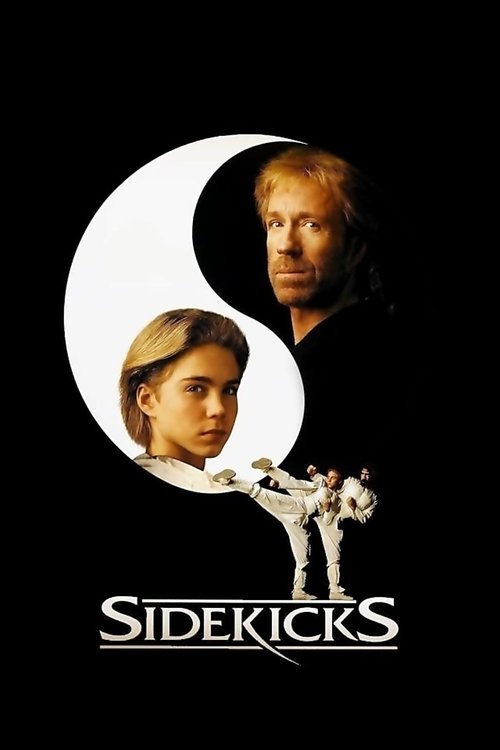
Sidekicks
Asthmatic teenager Barry Gabrewski is a daydreamer. Troubled by bullying, he escapes into a fantasy world where he is the sidekick to his martial arts hero, Chuck Norris, in a series of high-octane adventures taken right out of his movies. With help from his teacher's wise old uncle, Mr. Lee, Barry learns the finer points of martial arts and enters a karate championship.
Despite its limited budget of $7.5M, Sidekicks became a financial success, earning $17.2M worldwide—a 129% return.


Plot Structure
Story beats plotted across runtime


Narrative Arc
Emotional journey through the story's key moments
Story Circle
Blueprint 15-beat structure
Arcplot Score Breakdown
Weighted: Precision (70%) + Arc (15%) + Theme (15%)
Sidekicks (1992) reveals strategically placed story structure, characteristic of Aaron Norris's storytelling approach. This structural analysis examines how the film's 15-point plot structure maps to proven narrative frameworks across 1 hour and 41 minutes. With an Arcplot score of 7.4, the film balances conventional beats with creative variation.
Characters
Cast & narrative archetypes

Barry Gabrewski
Chuck Norris
Kelly Stone
Lauren
Randy Cellini
Mr. Lee
Jerry
Main Cast & Characters
Barry Gabrewski
Played by Jonathan Brandis
An asthmatic teenage boy who daydreams about being Chuck Norris's sidekick while struggling with bullies and self-confidence.
Chuck Norris
Played by Chuck Norris
A famous martial artist who appears in Barry's daydreams as his mentor and becomes his real-life teacher, inspiring him to compete in karate.
Kelly Stone
Played by Beau Bridges
Barry's uncle and guardian who runs a restaurant, supportive but initially skeptical of Barry's karate dreams.
Lauren
Played by Julia Nickson
A pretty waitress at Kelly's restaurant who Barry has a crush on and who encourages his pursuit of karate.
Randy Cellini
Played by John Buchanan
The main bully who torments Barry at school, a confident and aggressive antagonist.
Mr. Lee
Played by Mako
Chuck Norris's stern but wise karate instructor who trains Barry and other students in discipline and technique.
Jerry
Played by Danica McKellar
Barry's overweight friend who joins him in karate training and provides comic relief.
Structural Analysis
The Status Quo at 1 minutes (1% through the runtime) establishes Barry Gabrewski is a bullied asthmatic teenager who escapes into daydreams where Chuck Norris is his heroic sidekick, establishing his lonely, powerless existence.. Notably, this early placement immediately immerses viewers in the story world.
The inciting incident occurs at 13 minutes when Barry discovers a karate dojo run by Mr. Lee and witnesses students training, sparking hope that he could learn real martial arts instead of just dreaming about it.. At 13% through the film, this Disruption is delayed, allowing extended setup of the story world. This beat shifts the emotional landscape, launching the protagonist into the central conflict.
The First Threshold at 26 minutes marks the transition into Act II, occurring at 25% of the runtime. This demonstrates the protagonist's commitment to Barry makes the active choice to join Mr. Lee's dojo and commit to karate training, stepping into a new world where he must face his fears and build real strength., moving from reaction to action.
At 51 minutes, the Midpoint arrives at 51% of the runtime—precisely centered, creating perfect narrative symmetry. Notably, this crucial beat Barry successfully defends himself against Randy and his gang for the first time using his karate skills, a false victory that makes him believe he's already transformed, though he still relies on fantasy rather than genuine inner strength., fundamentally raising what's at risk. The emotional intensity shifts, dividing the narrative into clear before-and-after phases.
The Collapse moment at 77 minutes (76% through) represents the emotional nadir. Here, Barry suffers a devastating asthma attack and humiliating defeat in an early tournament round, crushing his confidence. His dream of proving himself dies, and he contemplates quitting karate entirely., indicates the protagonist at their lowest point. This beat's placement in the final quarter sets up the climactic reversal.
The Second Threshold at 81 minutes initiates the final act resolution at 80% of the runtime. Mr. Lee and Barry's father help him realize that true courage isn't about being fearless like Chuck Norris, but about facing fear despite limitations. Barry chooses to return to the tournament and fight, not for glory, but for himself., demonstrating the transformation achieved throughout the journey.
Emotional Journey
Sidekicks's emotional architecture traces a deliberate progression across 15 carefully calibrated beats.
Narrative Framework
This structural analysis employs proven narrative structure principles that track dramatic progression. By mapping Sidekicks against these established plot points, we can identify how Aaron Norris utilizes or subverts traditional narrative conventions. The plot point approach reveals not only adherence to structural principles but also creative choices that distinguish Sidekicks within the action genre.
Aaron Norris's Structural Approach
Among the 4 Aaron Norris films analyzed on Arcplot, the average structural score is 7.3, reflecting strong command of classical structure. Sidekicks represents one of the director's most structurally precise works. For comparative analysis, explore the complete Aaron Norris filmography.
Comparative Analysis
Additional action films include The Bad Guys, Puss in Boots and Venom: The Last Dance. For more Aaron Norris analyses, see Top Dog, Delta Force 2: The Colombian Connection and Braddock: Missing in Action III.
Plot Points by Act
Act I
SetupStatus Quo
Barry Gabrewski is a bullied asthmatic teenager who escapes into daydreams where Chuck Norris is his heroic sidekick, establishing his lonely, powerless existence.
Theme
Barry's father tells him that real strength comes from within, not from fantasy heroes - foreshadowing Barry's need to find his own courage.
Worldbuilding
Introduction to Barry's world: his asthma attacks, bullying by Randy Cellini and his gang, his supportive father running a restaurant, his vivid Chuck Norris fantasies, and his isolation at school.
Disruption
Barry discovers a karate dojo run by Mr. Lee and witnesses students training, sparking hope that he could learn real martial arts instead of just dreaming about it.
Resistance
Barry hesitates to join the dojo due to fear and self-doubt. Mr. Lee initially seems reluctant to take on Barry. Barry struggles with whether he can overcome his physical limitations and the bullies' mockery.
Act II
ConfrontationFirst Threshold
Barry makes the active choice to join Mr. Lee's dojo and commit to karate training, stepping into a new world where he must face his fears and build real strength.
Mirror World
Barry bonds with Kelly, a female student at the dojo, and with Mr. Lee who becomes his mentor. These relationships represent the authentic connection and guidance Barry needs to grow beyond his fantasies.
Premise
The fun of training montages: Barry learns karate, gains confidence, bonds with fellow students, and starts standing up to bullies. His Chuck Norris fantasies begin to merge with his real accomplishments as he discovers his own abilities.
Midpoint
Barry successfully defends himself against Randy and his gang for the first time using his karate skills, a false victory that makes him believe he's already transformed, though he still relies on fantasy rather than genuine inner strength.
Opposition
Pressure mounts as the karate tournament approaches. Randy's sensei, a corrupt instructor, trains Randy specifically to defeat Barry. Barry's asthma and self-doubt resurface. The stakes escalate and Barry realizes his progress might not be enough.
Collapse
Barry suffers a devastating asthma attack and humiliating defeat in an early tournament round, crushing his confidence. His dream of proving himself dies, and he contemplates quitting karate entirely.
Crisis
Barry retreats into despair and self-pity, withdrawing from the dojo and his friends. He must confront whether he has the inner strength to continue or will remain trapped in his fantasy world forever.
Act III
ResolutionSecond Threshold
Mr. Lee and Barry's father help him realize that true courage isn't about being fearless like Chuck Norris, but about facing fear despite limitations. Barry chooses to return to the tournament and fight, not for glory, but for himself.
Synthesis
The tournament finale: Barry faces Randy in the championship match. He combines Mr. Lee's teachings with his own determination, fighting through asthma and pain. He no longer needs Chuck Norris fantasies - he finds his own strength and defeats Randy honorably.
Transformation
Barry stands confident and self-assured, no longer needing fantasies to feel powerful. He has genuine friends, respect from peers, and most importantly, belief in himself. The real Chuck Norris appears and acknowledges Barry as a true martial artist.