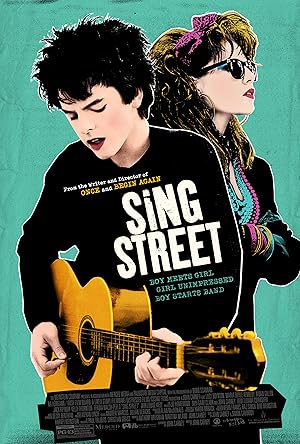
Sing Street
As everybody moves to the beat of Pop music in early-1980s-Dublin, the sensitive teenager, Conor, struggles to cope with a tense family relationship; reconnect with his older brother, Brendan, and, above all, deal with the hostile environment in his new public school. Then, one day, he sees her. Tall, with long chestnut hair, a buttery complexion, and big, dark eyes; an enigmatically beautiful girl standing in front of the school's gate, indolently observing people passing by. To get noticed by the distant girl, Raphina, Conor enlists the help of a group of teenage dreamers to form a band--and, surprisingly--with every lyric he writes, the gap narrows, and with every song he plays, her heart brims with affection. Now, before a sea of opportunities, what does the future hold for a brave love like this?
Despite its small-scale budget of $4.0M, Sing Street became a solid performer, earning $13.6M worldwide—a 241% return. The film's unconventional structure resonated with audiences, demonstrating that strong storytelling can transcend budget limitations.
16 wins & 45 nominations


Plot Structure
Story beats plotted across runtime


Narrative Arc
Emotional journey through the story's key moments
Story Circle
Blueprint 15-beat structure
Arcplot Score Breakdown
Weighted: Precision (70%) + Arc (15%) + Theme (15%)
Sing Street (2016) showcases meticulously timed narrative design, characteristic of John Carney's storytelling approach. This structural analysis examines how the film's 15-point plot structure maps to proven narrative frameworks across 1 hour and 45 minutes. With an Arcplot score of 7.3, the film balances conventional beats with creative variation.
Structural Analysis
The Status Quo at 2 minutes (1% through the runtime) establishes Conor sits passively as his parents argue about money. He's powerless in a crumbling family, about to be transferred to a rough Christian Brothers school due to financial problems.. Significantly, this early placement immediately immerses viewers in the story world.
The inciting incident occurs at 13 minutes when Conor sees Raphina across the street from school—a beautiful, mysterious girl. He's instantly captivated and impulsively tells her he needs a model for his band's music video.. At 13% through the film, this Disruption is delayed, allowing extended setup of the story world. This beat shifts the emotional landscape, launching the protagonist into the central conflict.
The First Threshold at 25 minutes marks the transition into Act II, occurring at 24% of the runtime. This illustrates the protagonist's commitment to The band performs together for the first time, filming "The Riddle of the Model" music video with Raphina. Conor actively chooses to pursue music and Raphina, stepping into the world of artistry and romance., moving from reaction to action.
At 53 minutes, the Midpoint arrives at 50% of the runtime—precisely centered, creating perfect narrative symmetry. Notably, this crucial beat The school dance performance is a triumph. The band wins over their peers, Conor stands up to bully Barry, and he shares a romantic moment with Raphina. False victory: everything seems perfect, but Raphina has a secret., fundamentally raising what's at risk. The emotional intensity shifts, dividing the narrative into clear before-and-after phases.
The Collapse moment at 78 minutes (74% through) represents the emotional nadir. Here, Conor's parents announce their separation. His father is broken, his mother is leaving. The family—Conor's foundation despite its dysfunction—is destroyed. He witnesses the death of his childhood illusions about love and stability., indicates the protagonist at their lowest point. This beat's placement in the final quarter sets up the climactic reversal.
The Second Threshold at 84 minutes initiates the final act resolution at 80% of the runtime. Conor writes "Up"—his first truly original song from the heart, synthesizing everything he's learned. He realizes he must take bold action: not just make music, but actually pursue his dream and ask Raphina to come to London with him., demonstrating the transformation achieved throughout the journey.
Emotional Journey
Sing Street's emotional architecture traces a deliberate progression across 15 carefully calibrated beats.
Narrative Framework
This structural analysis employs structural analysis methodology used to understand storytelling architecture. By mapping Sing Street against these established plot points, we can identify how John Carney utilizes or subverts traditional narrative conventions. The plot point approach reveals not only adherence to structural principles but also creative choices that distinguish Sing Street within the comedy genre.
John Carney's Structural Approach
Among the 3 John Carney films analyzed on Arcplot, the average structural score is 7.4, reflecting strong command of classical structure. Sing Street takes a more unconventional approach compared to the director's typical style. For comparative analysis, explore the complete John Carney filmography.
Comparative Analysis
Additional comedy films include The Bad Guys, Ella Enchanted and The Evening Star. For more John Carney analyses, see Begin Again, Once.
Plot Points by Act
Act I
SetupStatus Quo
Conor sits passively as his parents argue about money. He's powerless in a crumbling family, about to be transferred to a rough Christian Brothers school due to financial problems.
Theme
Brother Baxter tells Conor about conformity and rules at Synge Street. The implicit theme: will Conor conform to his harsh circumstances or find his own creative voice?
Worldbuilding
Establishing Conor's world: dysfunctional family, financial struggles, hostile new school with bullies and oppressive teachers, and his music-obsessed older brother Brendan who lives in the past.
Disruption
Conor sees Raphina across the street from school—a beautiful, mysterious girl. He's instantly captivated and impulsively tells her he needs a model for his band's music video.
Resistance
Conor must now actually form a band to avoid being exposed as a liar. He recruits musicians from school, gets advice from Brendan about music and style, and struggles with what kind of band to be.
Act II
ConfrontationFirst Threshold
The band performs together for the first time, filming "The Riddle of the Model" music video with Raphina. Conor actively chooses to pursue music and Raphina, stepping into the world of artistry and romance.
Mirror World
Conor and Raphina share an intimate moment after the video shoot. She reveals her dreams of going to London. This relationship will teach Conor about authenticity versus imitation in art and life.
Premise
The fun and games: the band evolves through different styles (Duran Duran, Hall & Oates, The Cure), shoots music videos, performs at a school dance. Conor and Raphina grow closer, and he discovers the joy of musical creation.
Midpoint
The school dance performance is a triumph. The band wins over their peers, Conor stands up to bully Barry, and he shares a romantic moment with Raphina. False victory: everything seems perfect, but Raphina has a secret.
Opposition
Complications mount: Conor learns Raphina has an older boyfriend in London. His parents' marriage falls apart completely. Brother Baxter increases persecution. The initial imitative approach to music feels hollow—Conor hasn't found his authentic voice yet.
Collapse
Conor's parents announce their separation. His father is broken, his mother is leaving. The family—Conor's foundation despite its dysfunction—is destroyed. He witnesses the death of his childhood illusions about love and stability.
Crisis
Conor processes the collapse. In his darkness, he has a conversation with Brendan, who reveals his own failed dreams and encourages Conor not to make the same mistakes. This plants the seed for authentic action.
Act III
ResolutionSecond Threshold
Conor writes "Up"—his first truly original song from the heart, synthesizing everything he's learned. He realizes he must take bold action: not just make music, but actually pursue his dream and ask Raphina to come to London with him.
Synthesis
Conor goes to Raphina and asks her to leave Dublin with him. They take a boat across the Irish Sea toward London and their dreams—a literal leap of faith. The band plays "Up" as they sail toward an uncertain but hopeful future.
Transformation
Conor and Raphina on the boat heading to London, playing music, fully committed to their artistic dreams. Contrasts with opening: instead of passive and trapped, he's active and free, having found his authentic voice.