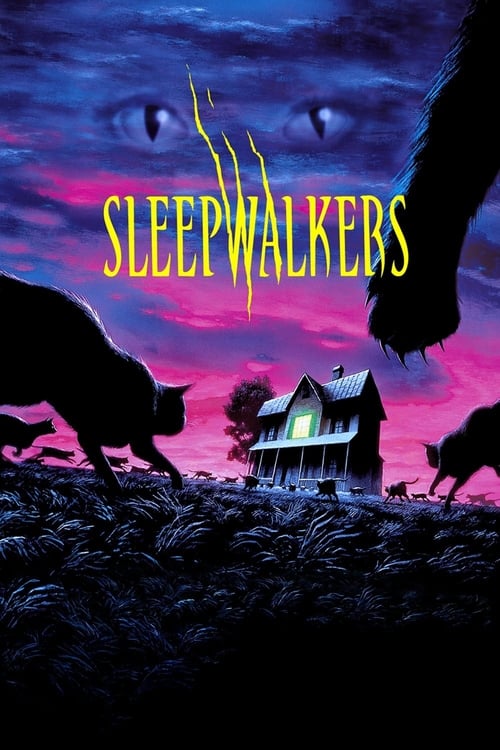
Sleepwalkers
Charles Brady and his mother, Mary, are the last of a dying breed whose needs are not of this world. They are Sleepwalkers - able to stay alive only by feeding on the life-force of the innocent, but destined to roam the earth, avoiding discovery while searching for their next victim. That search takes them to the sleepy little town of Travis, Indiana, where beautiful teenager Tanya Robertson is about to become an unwilling pawn in their nightmarish fight for survival.
Despite a mid-range budget of $15.0M, Sleepwalkers became a financial success, earning $30.5M worldwide—a 103% return.


Plot Structure
Story beats plotted across runtime


Narrative Arc
Emotional journey through the story's key moments
Story Circle
Blueprint 15-beat structure
Arcplot Score Breakdown
Weighted: Precision (70%) + Arc (15%) + Theme (15%)
Sleepwalkers (1992) showcases deliberately positioned plot construction, characteristic of Mick Garris's storytelling approach. This structural analysis examines how the film's 15-point plot structure maps to proven narrative frameworks across 1 hour and 29 minutes. With an Arcplot score of 6.8, the film balances conventional beats with creative variation.
Characters
Cast & narrative archetypes

Tanya Robertson
Charles Brady
Mary Brady
Clovis
Main Cast & Characters
Tanya Robertson
Played by Mädchen Amick
A high school student who becomes the target of Charles Brady's predatory affections, unaware of his monstrous nature.
Charles Brady
Played by Brian Krause
A shape-shifting sleepwalker who preys on virgin women to sustain himself and his mother, posing as a charming new student.
Mary Brady
Played by Alice Krige
Charles's mother and fellow sleepwalker who depends on her son to feed her life force through murderous means.
Clovis
Played by Multiple Cats
Tanya's loyal and perceptive cat who senses the evil nature of the sleepwalkers and becomes their nemesis.
Structural Analysis
The Status Quo at 1 minutes (1% through the runtime) establishes Police investigate a horrific crime scene at the Bradys' previous home in Bodega Bay - desiccated corpses and cats surrounding the house establish the supernatural threat before we meet the monsters wearing human faces.. Of particular interest, this early placement immediately immerses viewers in the story world.
The inciting incident occurs at 12 minutes when Charles approaches Tanya at school, using his supernatural charm and manufactured persona to begin seducing her. The predator has chosen his prey, disrupting Tanya's safe ordinary world.. At 13% through the film, this Disruption is delayed, allowing extended setup of the story world. This beat shifts the emotional landscape, launching the protagonist into the central conflict.
The First Threshold at 23 minutes marks the transition into Act II, occurring at 26% of the runtime. This shows the protagonist's commitment to Tanya agrees to go on a date with Charles to the cemetery for a romantic picnic, willingly entering the predator's world. Her choice to trust him crosses her from safety into danger., moving from reaction to action.
At 45 minutes, the Midpoint arrives at 51% of the runtime—precisely centered, creating perfect narrative symmetry. Notably, this crucial beat Charles reveals his true monstrous form to Tanya during an attempted attack at the cemetery, trying to drain her life force. She fights back with a corkscrew, wounding him. The mask has fallen - false victory for Charles becomes false defeat as his prey escapes., fundamentally raising what's at risk. The emotional intensity shifts, dividing the narrative into clear before-and-after phases.
The Collapse moment at 67 minutes (75% through) represents the emotional nadir. Here, The sleepwalkers attack Tanya's home, killing her parents. Charles captures Tanya and brings her to Mary. All seems lost as Tanya faces both monsters with no one left to save her - the whiff of death becomes literal., illustrates the protagonist at their lowest point. This beat's placement in the final quarter sets up the climactic reversal.
The Second Threshold at 72 minutes initiates the final act resolution at 81% of the runtime. Clovis the cat and an army of felines converge on the Brady house. Tanya realizes the cats are the sleepwalkers' mortal weakness - their scratches are fatal. She finds new hope and the means to fight back., demonstrating the transformation achieved throughout the journey.
Emotional Journey
Sleepwalkers's emotional architecture traces a deliberate progression across 15 carefully calibrated beats.
Narrative Framework
This structural analysis employs structural analysis methodology used to understand storytelling architecture. By mapping Sleepwalkers against these established plot points, we can identify how Mick Garris utilizes or subverts traditional narrative conventions. The plot point approach reveals not only adherence to structural principles but also creative choices that distinguish Sleepwalkers within the horror genre.
Comparative Analysis
Additional horror films include Thinner, A Nightmare on Elm Street and Mary Reilly.
Plot Points by Act
Act I
SetupStatus Quo
Police investigate a horrific crime scene at the Bradys' previous home in Bodega Bay - desiccated corpses and cats surrounding the house establish the supernatural threat before we meet the monsters wearing human faces.
Theme
The opening text card defines sleepwalkers as "nomadic shapeshifting creatures with human and feline origins" who survive by feeding on the life force of virgin females - establishing that predatory evil disguises itself in attractive forms.
Worldbuilding
Charles and Mary Brady arrive in Travis, Indiana as "mother and son" and establish their new identities. Charles enrolls in high school where he spots Tanya Robertson, the innocent virgin they've targeted. Their incestuous relationship and supernatural abilities are revealed.
Disruption
Charles approaches Tanya at school, using his supernatural charm and manufactured persona to begin seducing her. The predator has chosen his prey, disrupting Tanya's safe ordinary world.
Resistance
Charles courts Tanya while Mary grows increasingly desperate and weak, needing to feed. Tanya's parents express mild concern about the new boy. Deputy Andy Simpson notices something off about the Bradys. Clovis the cat senses the supernatural threat.
Act II
ConfrontationFirst Threshold
Tanya agrees to go on a date with Charles to the cemetery for a romantic picnic, willingly entering the predator's world. Her choice to trust him crosses her from safety into danger.
Mirror World
The cemetery date reveals Charles as seemingly romantic and sensitive, discussing poetry and showing Tanya a "perfect" evening. This false mirror shows what healthy love could look like, contrasting with the predatory truth beneath.
Premise
Charles deepens his manipulation of Tanya while hiding his monstrous nature. Mary feeds on a teacher who gets too close to the truth. Cats begin gathering around the Brady house. Deputy Simpson investigates and is killed, establishing the sleepwalkers' lethal power.
Midpoint
Charles reveals his true monstrous form to Tanya during an attempted attack at the cemetery, trying to drain her life force. She fights back with a corkscrew, wounding him. The mask has fallen - false victory for Charles becomes false defeat as his prey escapes.
Opposition
Wounded Charles returns to Mary who heals him through their incestuous bond. The police become involved but are systematically killed by the sleepwalkers. Tanya's parents try to protect her. The Bradys hunt Tanya with increasing desperation as Mary weakens further.
Collapse
The sleepwalkers attack Tanya's home, killing her parents. Charles captures Tanya and brings her to Mary. All seems lost as Tanya faces both monsters with no one left to save her - the whiff of death becomes literal.
Crisis
Mary prepares to feed on Tanya as Charles holds her captive. Tanya witnesses the full horror of the sleepwalkers' true forms and their desperate hunger. She must find the will to fight when everything seems hopeless.
Act III
ResolutionSecond Threshold
Clovis the cat and an army of felines converge on the Brady house. Tanya realizes the cats are the sleepwalkers' mortal weakness - their scratches are fatal. She finds new hope and the means to fight back.
Synthesis
The cats attack the sleepwalkers viciously. Tanya fights Charles using the cats as weapons. Charles is mortally wounded by cat scratches, and Mary is set ablaze. The final confrontation destroys both sleepwalkers as the innocence they preyed upon proves their undoing.
Transformation
Tanya survives, battered but alive, as the Brady house burns with the sleepwalkers inside. Clovis sits with her protectively. The innocent victim has become a survivor, transformed through horror but unbroken.