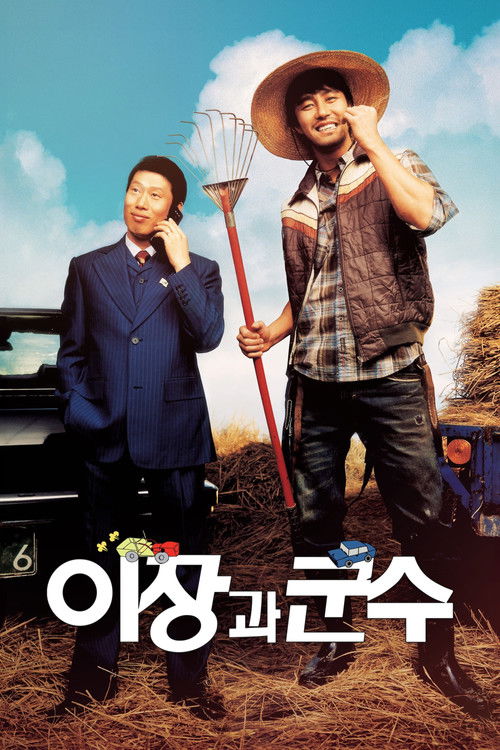
Small Town Rivals
Cho Chun-sam and Noh Dae-gyu, now both in their thirties, are old friends who went to the same elementary school. In their school days, Chun-sam was always the ambitious class president, while Dae-gyu had to settle for a role as vice president. Twenty years later their roles are reversed: Chun-sam is now a humble farmer who has assumed the post of village chief in his hometown, while Dae-gyu is the newly elected county magistrate. At first, Chun-sam asks his old friend for favours regarding the development of his village, but these requests are turned down. Later, when Dae-gyu proposes building a nuclear waste disposal facility in the county, Chun-sam leads demonstrations against the plan, turning old friends into bitter rivals.
The film earned $8.1M at the global box office.
Plot Structure
Story beats plotted across runtime


Narrative Arc
Emotional journey through the story's key moments
Story Circle
Blueprint 15-beat structure
Arcplot Score Breakdown
Weighted: Precision (70%) + Arc (15%) + Theme (15%)
Small Town Rivals (2007) demonstrates strategically placed plot construction, characteristic of Jang Kyu-sung's storytelling approach. This structural analysis examines how the film's 15-point plot structure maps to proven narrative frameworks across 1 hour and 53 minutes. With an Arcplot score of 7.3, the film balances conventional beats with creative variation.
Structural Analysis
The Status Quo at 2 minutes (2% through the runtime) establishes The protagonist is established in their small-town routine, comfortable but unfulfilled, showing their ordinary world before the rivalry begins.. Structural examination shows that this early placement immediately immerses viewers in the story world.
The inciting incident occurs at 14 minutes when The inciting incident that reignites the rivalry or introduces a new challenge that disrupts the status quo and demands response from the protagonist.. At 12% through the film, this Disruption aligns precisely with traditional story structure. This beat shifts the emotional landscape, launching the protagonist into the central conflict.
The First Threshold at 28 minutes marks the transition into Act II, occurring at 25% of the runtime. This shows the protagonist's commitment to The protagonist makes the active choice to fully commit to the rivalry, joining the competition or taking on the challenge despite reservations., moving from reaction to action.
At 57 minutes, the Midpoint arrives at 50% of the runtime—precisely centered, creating perfect narrative symmetry. Structural examination shows that this crucial beat A false victory where the protagonist appears to be winning the rivalry, but the stakes are raised and complications emerge that will change everything., fundamentally raising what's at risk. The emotional intensity shifts, dividing the narrative into clear before-and-after phases.
The Collapse moment at 85 minutes (75% through) represents the emotional nadir. Here, The protagonist hits rock bottom as the rivalry causes real damage—a friendship destroyed, reputation ruined, or the realization that they've lost sight of what matters., shows the protagonist at their lowest point. This beat's placement in the final quarter sets up the climactic reversal.
The Second Threshold at 90 minutes initiates the final act resolution at 80% of the runtime. A realization or new information helps the protagonist see that true victory isn't about beating rivals but about community, bringing together what they've learned., demonstrating the transformation achieved throughout the journey.
Emotional Journey
Small Town Rivals's emotional architecture traces a deliberate progression across 15 carefully calibrated beats.
Narrative Framework
This structural analysis employs structural analysis methodology used to understand storytelling architecture. By mapping Small Town Rivals against these established plot points, we can identify how Jang Kyu-sung utilizes or subverts traditional narrative conventions. The plot point approach reveals not only adherence to structural principles but also creative choices that distinguish Small Town Rivals within the comedy genre.
Comparative Analysis
Additional comedy films include The Ministry of Ungentlemanly Warfare, The Bad Guys and Lake Placid.
Plot Points by Act
Act I
SetupStatus Quo
The protagonist is established in their small-town routine, comfortable but unfulfilled, showing their ordinary world before the rivalry begins.
Theme
A supporting character comments on the nature of competition and community, stating the thematic question about what truly matters in rivalry.
Worldbuilding
Introduction to the small town setting, establishing relationships, community dynamics, and the history of the rivalry between the two sides.
Disruption
The inciting incident that reignites the rivalry or introduces a new challenge that disrupts the status quo and demands response from the protagonist.
Resistance
The protagonist resists involvement, debates whether to engage in the rivalry, and receives guidance from mentors or community members about what's at stake.
Act II
ConfrontationFirst Threshold
The protagonist makes the active choice to fully commit to the rivalry, joining the competition or taking on the challenge despite reservations.
Mirror World
Introduction of a key relationship (romantic interest or friendship from the opposing side) that will carry the thematic counterpoint and teach what the protagonist needs.
Premise
The fun of the rivalry unfolds with competitive scenes, escalating pranks or challenges, and the protagonist enjoying initial success while exploring this new dynamic.
Midpoint
A false victory where the protagonist appears to be winning the rivalry, but the stakes are raised and complications emerge that will change everything.
Opposition
The rivalry intensifies as opponents fight back harder, the protagonist's tactics backfire, relationships strain, and the cost of competition becomes apparent.
Collapse
The protagonist hits rock bottom as the rivalry causes real damage—a friendship destroyed, reputation ruined, or the realization that they've lost sight of what matters.
Crisis
The dark night following the collapse where the protagonist processes their mistakes, faces the consequences, and wrestles with whether they can make things right.
Act III
ResolutionSecond Threshold
A realization or new information helps the protagonist see that true victory isn't about beating rivals but about community, bringing together what they've learned.
Synthesis
The protagonist executes a plan to heal the divide, brings the community together, and transforms the rivalry into cooperation or mutual respect through decisive action.
Transformation
The closing image mirrors the opening but shows transformation—the protagonist in the same small town but now connected, fulfilled, and having learned what truly matters.