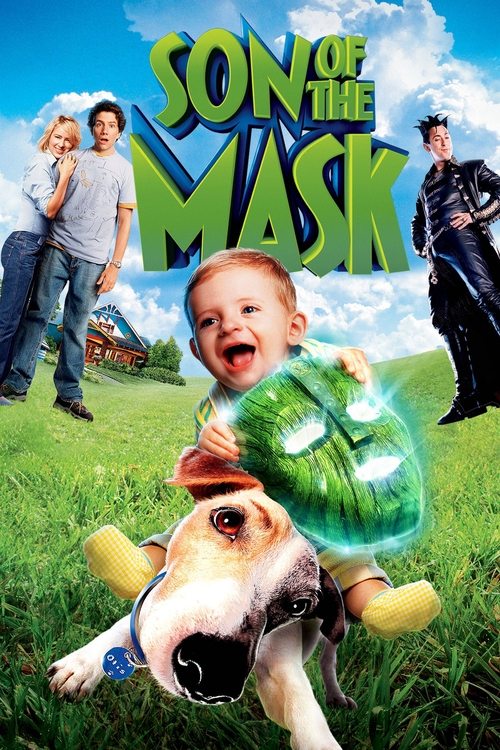
Son of the Mask
Tim Avery, an aspiring cartoonist, finds himself in a predicament when his dog stumbles upon the mask of Loki. Then after conceiving an infant son "born of the mask", he discovers just how looney child raising can be.
The film disappointed at the box office against its considerable budget of $84.0M, earning $59.9M globally (-29% loss). While initial box office returns were modest, the film has gained appreciation for its unique voice within the fantasy genre.
7 wins & 12 nominations


Plot Structure
Story beats plotted across runtime


Narrative Arc
Emotional journey through the story's key moments
Story Circle
Blueprint 15-beat structure
Arcplot Score Breakdown
Weighted: Precision (70%) + Arc (15%) + Theme (15%)
Son of the Mask (2005) reveals deliberately positioned narrative architecture, characteristic of Lawrence Guterman's storytelling approach. This structural analysis examines how the film's 15-point plot structure maps to proven narrative frameworks across 1 hour and 34 minutes. With an Arcplot score of 7.7, the film showcases strong structural fundamentals.
Characters
Cast & narrative archetypes

Tim Avery
Tonya Avery
Alvey Avery
Loki
Odin
Otis the Dog
Main Cast & Characters
Tim Avery
Played by Jamie Kennedy
An aspiring animator who finds the Mask of Loki and struggles when his infant son inherits its powers.
Tonya Avery
Played by Traylor Howard
Tim's wife and supportive partner who must cope with their supernatural baby.
Alvey Avery
Played by Ryan Falconer
Tim and Tonya's infant son who inherits the powers of the Mask, creating chaos with reality-bending abilities.
Loki
Played by Alan Cumming
The Norse god of mischief seeking to reclaim his magical mask from the mortal world.
Odin
Played by Bob Hoskins
The father of Loki who sets him on the quest to retrieve the mask.
Otis the Dog
Played by Bear the Dog
The Avery family dog who also becomes affected by the Mask's powers and rivals the baby.
Structural Analysis
The Status Quo at 1 minutes (1% through the runtime) establishes Tim Avery is an aspiring cartoonist working at an animation studio, living an ordinary life with his wife Tonya and their dog Otis, struggling to balance his creative dreams with adult responsibilities.. Notably, this early placement immediately immerses viewers in the story world.
The inciting incident occurs at 11 minutes when Tim finds the Mask of Loki at a riverbank after Otis digs it up. He puts it on at a Halloween party, unleashing its chaotic cartoon powers and unknowingly conceiving a baby with supernatural abilities that same night.. At 11% through the film, this Disruption aligns precisely with traditional story structure. This beat shifts the emotional landscape, launching the protagonist into the central conflict.
The First Threshold at 23 minutes marks the transition into Act II, occurring at 25% of the runtime. This demonstrates the protagonist's commitment to Baby Alvey is born with the powers of the mask, exhibiting supernatural cartoon abilities from birth. Tim must accept his new reality as the father of a godlike infant, whether he feels ready or not., moving from reaction to action.
At 46 minutes, the Midpoint arrives at 49% of the runtime—precisely centered, creating perfect narrative symmetry. Structural examination shows that this crucial beat Loki discovers that Alvey is the child of the mask and escalates his efforts to capture the baby. The stakes raise from inconvenient chaos to genuine danger as a god now hunts Tim's family. False defeat: what seemed like manageable problems become life-threatening., fundamentally raising what's at risk. The emotional intensity shifts, dividing the narrative into clear before-and-after phases.
The Collapse moment at 69 minutes (73% through) represents the emotional nadir. Here, Loki successfully captures baby Alvey and takes him away. Tim's worst fear is realized: his failure to embrace fatherhood has led to losing his son. The family is torn apart, representing the death of Tim's chance to keep avoiding responsibility., reveals the protagonist at their lowest point. This beat's placement in the final quarter sets up the climactic reversal.
The Second Threshold at 75 minutes initiates the final act resolution at 80% of the runtime. Tim realizes that his love for Alvey and his cartoonist creativity are not opposing forces - he can use his imaginative skills to save his son. He chooses to embrace fatherhood fully and puts on the mask voluntarily to fight Loki as an equal., demonstrating the transformation achieved throughout the journey.
Emotional Journey
Son of the Mask's emotional architecture traces a deliberate progression across 15 carefully calibrated beats.
Narrative Framework
This structural analysis employs proven narrative structure principles that track dramatic progression. By mapping Son of the Mask against these established plot points, we can identify how Lawrence Guterman utilizes or subverts traditional narrative conventions. The plot point approach reveals not only adherence to structural principles but also creative choices that distinguish Son of the Mask within the fantasy genre.
Lawrence Guterman's Structural Approach
Among the 2 Lawrence Guterman films analyzed on Arcplot, the average structural score is 7.7, reflecting strong command of classical structure. Son of the Mask exemplifies the director's characteristic narrative technique. For comparative analysis, explore the complete Lawrence Guterman filmography.
Comparative Analysis
Additional fantasy films include Thinner, Ella Enchanted and Conan the Barbarian. For more Lawrence Guterman analyses, see Cats & Dogs.
Plot Points by Act
Act I
SetupStatus Quo
Tim Avery is an aspiring cartoonist working at an animation studio, living an ordinary life with his wife Tonya and their dog Otis, struggling to balance his creative dreams with adult responsibilities.
Theme
Tonya or Tim's boss discusses the importance of taking responsibility and being ready for the next stage of life, hinting at the central theme of accepting responsibility versus clinging to immaturity.
Worldbuilding
Establishing Tim's world: his job at the animation studio, his relationship with Tonya, his reluctance about having children, and the Norse mythology backstory of Loki's mask being rediscovered after being lost following the events of the first film.
Disruption
Tim finds the Mask of Loki at a riverbank after Otis digs it up. He puts it on at a Halloween party, unleashing its chaotic cartoon powers and unknowingly conceiving a baby with supernatural abilities that same night.
Resistance
Tim discovers Tonya is pregnant and wrestles with his fear of fatherhood. He debates whether he's ready to be a father while dealing with the aftermath of the mask's effects. Odin sends Loki to retrieve the mask from Earth.
Act II
ConfrontationFirst Threshold
Baby Alvey is born with the powers of the mask, exhibiting supernatural cartoon abilities from birth. Tim must accept his new reality as the father of a godlike infant, whether he feels ready or not.
Mirror World
Loki arrives on Earth and begins hunting for the mask. He represents the mirror to Tim: a perpetual child-god who never grew up, never took responsibility, showing Tim what happens when you refuse to mature.
Premise
The "fun and games" of dealing with a mask-powered baby: Alvey creates cartoon chaos at home, Tim and Tonya struggle with supernatural parenting, Otis becomes jealous and also exhibits mask powers, and Loki closes in on the family.
Midpoint
Loki discovers that Alvey is the child of the mask and escalates his efforts to capture the baby. The stakes raise from inconvenient chaos to genuine danger as a god now hunts Tim's family. False defeat: what seemed like manageable problems become life-threatening.
Opposition
Loki actively pursues Alvey, creating elaborate schemes to capture him. Tim and Tonya struggle to protect their son while dealing with the escalating cartoon violence. Tim's immaturity and reluctance to fully commit to fatherhood make everything harder. The family begins to fracture under pressure.
Collapse
Loki successfully captures baby Alvey and takes him away. Tim's worst fear is realized: his failure to embrace fatherhood has led to losing his son. The family is torn apart, representing the death of Tim's chance to keep avoiding responsibility.
Crisis
Tim faces his dark night of the soul, confronting his failures as a father and husband. He must process his guilt and decide who he truly wants to be: the irresponsible artist-dreamer or the father his family needs.
Act III
ResolutionSecond Threshold
Tim realizes that his love for Alvey and his cartoonist creativity are not opposing forces - he can use his imaginative skills to save his son. He chooses to embrace fatherhood fully and puts on the mask voluntarily to fight Loki as an equal.
Synthesis
Tim, empowered by the mask and his newfound paternal determination, battles Loki in an epic cartoon confrontation. He combines his artist's imagination with a father's protective love to defeat the god and rescue Alvey, proving he has grown into his role.
Transformation
Tim is shown as a confident, engaged father, fully embracing his role with Alvey. The mask is returned to Odin, no longer needed, because Tim has found the balance between his creative spirit and his responsibilities. He has transformed from man-child to father.