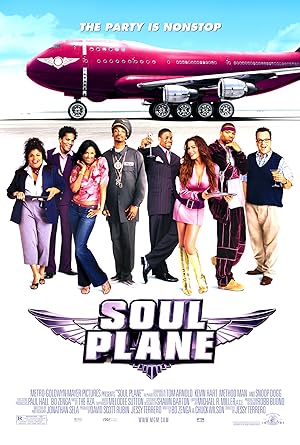
Soul Plane
Why just fly when you can soar with soul? After a humiliating experience on an airplane, Nashawn Wade sues the airline and is awarded a huge settlement. Determined to make good with the money, Nashawn creates the full service airline of his dreams, complete with sexy stewardesses, funky music, a hot onboard dance club, and a bathroom attendant. Departing from all-new Terminal X in Los Angeles, Soul Plane gives "fly" a whole new meaning taking its passengers on a maiden voyage full of comedy.
The film disappointed at the box office against its respectable budget of $16.0M, earning $14.8M globally (-7% loss).


Plot Structure
Story beats plotted across runtime


Narrative Arc
Emotional journey through the story's key moments
Story Circle
Blueprint 15-beat structure
Arcplot Score Breakdown
Weighted: Precision (70%) + Arc (15%) + Theme (15%)
Soul Plane (2004) exhibits precise plot construction, characteristic of Jessy Terrero's storytelling approach. This structural analysis examines how the film's 15-point plot structure maps to proven narrative frameworks across 1 hour and 26 minutes. With an Arcplot score of 7.3, the film balances conventional beats with creative variation.
Characters
Cast & narrative archetypes

Nashawn Wade
Captain Mack
Giselle
Muggsy
Mr. Hunkee
Jamiqua
Main Cast & Characters
Nashawn Wade
Played by Kevin Hart
An entrepreneur who starts his own airline after a traumatic experience on a commercial flight, determined to create a better flying experience for his community.
Captain Mack
Played by Snoop Dogg
A smooth-talking pilot with questionable credentials who becomes the captain of the inaugural Soul Plane flight.
Giselle
Played by K.D. Aubert
Nashawn's love interest and flight attendant who supports his vision while maintaining her own independence.
Muggsy
Played by Method Man
Nashawn's loyal cousin and business partner who helps him launch the airline despite various mishaps.
Mr. Hunkee
Played by Tom Arnold
An uptight businessman who reluctantly boards Soul Plane and struggles with the unconventional airline culture.
Jamiqua
Played by Mo'Nique
A sassy flight attendant who brings attitude and comic relief to the Soul Plane crew.
Structural Analysis
The Status Quo at 1 minutes (1% through the runtime) establishes Nashawn Wade is an ordinary passenger on a commercial airline, heading to a family event. His life is unremarkable but stable.. The analysis reveals that this early placement immediately immerses viewers in the story world.
The inciting incident occurs at 10 minutes when Nashawn suffers a humiliating and traumatic accident on the airplane involving the bathroom, which becomes a viral incident. This catastrophe disrupts his normal life.. At 12% through the film, this Disruption aligns precisely with traditional story structure. This beat shifts the emotional landscape, launching the protagonist into the central conflict.
The First Threshold at 22 minutes marks the transition into Act II, occurring at 25% of the runtime. This shows the protagonist's commitment to Nashawn makes the active decision to create NWA (Nashawn Wade Airlines), a hip-hop themed airline. He commits his fortune and reputation to this bold venture., moving from reaction to action.
At 43 minutes, the Midpoint arrives at 50% of the runtime—precisely centered, creating perfect narrative symmetry. Notably, this crucial beat Technical problems emerge mid-flight. The pilot Captain Mack's incompetence becomes apparent, and systems begin failing. What seemed like a victory now shows cracks of potential disaster., fundamentally raising what's at risk. The emotional intensity shifts, dividing the narrative into clear before-and-after phases.
The Collapse moment at 65 minutes (75% through) represents the emotional nadir. Here, Complete systems failure threatens to crash the plane. Nashawn faces losing everything: his investment, the passengers' lives, his dream, and his credibility. The lowest point of total disaster., illustrates the protagonist at their lowest point. This beat's placement in the final quarter sets up the climactic reversal.
The Second Threshold at 69 minutes initiates the final act resolution at 80% of the runtime. Nashawn finds new resolve, combining street-smart ingenuity with genuine leadership. He rallies passengers and crew, synthesizing flash with substance to solve the crisis., demonstrating the transformation achieved throughout the journey.
Emotional Journey
Soul Plane's emotional architecture traces a deliberate progression across 15 carefully calibrated beats.
Narrative Framework
This structural analysis employs systematic plot point analysis that identifies crucial turning points. By mapping Soul Plane against these established plot points, we can identify how Jessy Terrero utilizes or subverts traditional narrative conventions. The plot point approach reveals not only adherence to structural principles but also creative choices that distinguish Soul Plane within the comedy genre.
Comparative Analysis
Additional comedy films include The Bad Guys, Ella Enchanted and The Evening Star.
Plot Points by Act
Act I
SetupStatus Quo
Nashawn Wade is an ordinary passenger on a commercial airline, heading to a family event. His life is unremarkable but stable.
Theme
A character remarks about taking control of your own destiny and not letting others dictate your path, foreshadowing Nashawn's journey to independence.
Worldbuilding
Establishment of Nashawn's ordinary world, his family dynamics, financial struggles, and the typical frustrations of commercial air travel.
Disruption
Nashawn suffers a humiliating and traumatic accident on the airplane involving the bathroom, which becomes a viral incident. This catastrophe disrupts his normal life.
Resistance
Nashawn wins a $100 million lawsuit against the airline. He debates what to do with the money and receives advice from family and friends about starting his own airline.
Act II
ConfrontationFirst Threshold
Nashawn makes the active decision to create NWA (Nashawn Wade Airlines), a hip-hop themed airline. He commits his fortune and reputation to this bold venture.
Mirror World
Nashawn reconnects with his romantic interest Giselle, who represents a grounded perspective and genuine connection beyond the flashy airline concept.
Premise
The maiden voyage of Soul Plane showcases all the outrageous amenities: club section, casino, disco floor. The fun and games of the premise deliver comedy as diverse passengers interact.
Midpoint
Technical problems emerge mid-flight. The pilot Captain Mack's incompetence becomes apparent, and systems begin failing. What seemed like a victory now shows cracks of potential disaster.
Opposition
Multiple crises escalate: mechanical failures worsen, passenger conflicts intensify, authorities question the airline's legitimacy, and Nashawn's inexperience shows. Everything works against success.
Collapse
Complete systems failure threatens to crash the plane. Nashawn faces losing everything: his investment, the passengers' lives, his dream, and his credibility. The lowest point of total disaster.
Crisis
In the dark moment, Nashawn confronts his ego and recklessness. He processes that this isn't just about style or revenge against airlines—real lives depend on him.
Act III
ResolutionSecond Threshold
Nashawn finds new resolve, combining street-smart ingenuity with genuine leadership. He rallies passengers and crew, synthesizing flash with substance to solve the crisis.
Synthesis
Nashawn orchestrates an unconventional emergency landing using creative problem-solving. Passengers work together, overcoming their differences. The finale proves the airline concept can work with proper responsibility.
Transformation
Nashawn stands with his successful airline and Giselle, having transformed from a victim seeking flashy revenge into a responsible entrepreneur who learned to balance style with substance.