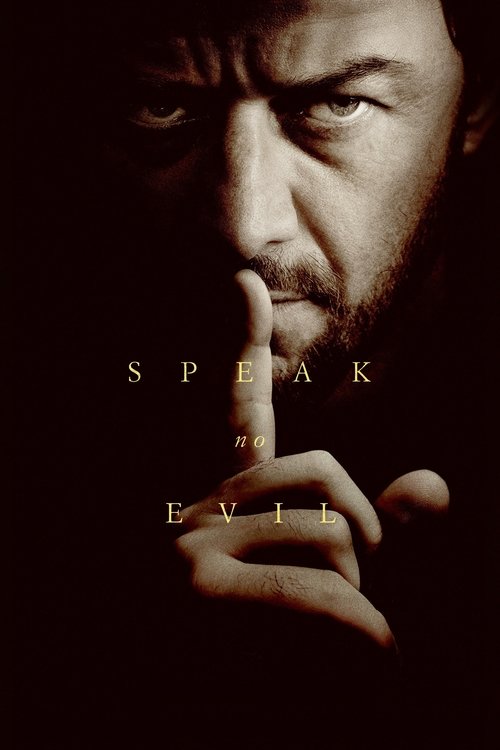
Speak No Evil
When an American family is invited to spend the weekend at the idyllic country estate of a charming British family they befriended on vacation, what begins as a dream holiday soon warps into a snarled psychological nightmare.
Despite a mid-range budget of $15.0M, Speak No Evil became a solid performer, earning $76.8M worldwide—a 412% return.
1 win & 6 nominations


Plot Structure
Story beats plotted across runtime


Narrative Arc
Emotional journey through the story's key moments
Story Circle
Blueprint 15-beat structure
Arcplot Score Breakdown
Weighted: Precision (70%) + Arc (15%) + Theme (15%)
Speak No Evil (2024) exhibits strategically placed narrative architecture, characteristic of James Watkins's storytelling approach. This structural analysis examines how the film's 15-point plot structure maps to proven narrative frameworks across 1 hour and 50 minutes. With an Arcplot score of 7.8, the film showcases strong structural fundamentals.
Characters
Cast & narrative archetypes

Ben Dalton
Louise Dalton
Paddy
Ciara
Agnes Dalton
Ant
Main Cast & Characters
Ben Dalton
Played by Scoot McNairy
An anxious American father who struggles with assertiveness and people-pleasing tendencies while trying to protect his family from danger.
Louise Dalton
Played by Mackenzie Davis
Ben's wife, a protective mother who senses danger but struggles between social politeness and her instincts to keep her family safe.
Paddy
Played by James McAvoy
A charismatic and manipulative man who lures the Dalton family into a nightmare through charm, psychological dominance, and eventual violence.
Ciara
Played by Aisling Franciosi
Paddy's wife who appears submissive and enabling, complicit in the twisted dynamics of their household and the manipulation of guests.
Agnes Dalton
Played by Alix West Lefler
The young daughter of Ben and Louise who becomes a target and witness to the horrifying events that unfold.
Ant
Played by Dan Hough
Paddy and Ciara's son who has had his tongue cut out, a victim of his parents' abuse and a silent witness to their cruelty.
Structural Analysis
The Status Quo at 1 minutes (1% through the runtime) establishes Ben and Louise Dalton vacation in Italy with their daughter Agnes, appearing as a typical American family dealing with minor marital tensions and social awkwardness at a resort.. Notably, this early placement immediately immerses viewers in the story world.
The inciting incident occurs at 13 minutes when The Daltons receive an unexpected invitation from Paddy and Ciara to visit their remote farmhouse in the English countryside, disrupting their plans to return to normal life.. At 12% through the film, this Disruption aligns precisely with traditional story structure. This beat shifts the emotional landscape, launching the protagonist into the central conflict.
The First Threshold at 28 minutes marks the transition into Act II, occurring at 25% of the runtime. This demonstrates the protagonist's commitment to The Daltons arrive at Paddy and Ciara's isolated farmhouse in the countryside, making the active choice to enter this strange new world and committing to the weekend visit despite their discomfort., moving from reaction to action.
At 55 minutes, the Midpoint arrives at 50% of the runtime—precisely centered, creating perfect narrative symmetry. Notably, this crucial beat A major boundary violation occurs (Paddy's aggressive behavior or discovery about Ant's situation) that shifts the dynamic from uncomfortable to threatening. The Daltons realize something is deeply wrong, but stakes are raised—leaving becomes complicated. False defeat: they're trapped by their own politeness., fundamentally raising what's at risk. The emotional intensity shifts, dividing the narrative into clear before-and-after phases.
The Collapse moment at 83 minutes (75% through) represents the emotional nadir. Here, The Daltons' worst fears are confirmed about Paddy and Ciara's predatory nature and what happened to previous victims. The full horror of their situation is revealed—they and Agnes are in mortal danger. The "whiff of death" as their escape attempt fails catastrophically., shows the protagonist at their lowest point. This beat's placement in the final quarter sets up the climactic reversal.
The Second Threshold at 88 minutes initiates the final act resolution at 80% of the runtime. Ben and Louise make the crucial decision to stop being polite and fight back. They embrace the very rudeness and aggression they've avoided their whole lives. The synthesis of the theme: sometimes you must be "rude" to survive. They choose violence to protect their family., demonstrating the transformation achieved throughout the journey.
Emotional Journey
Speak No Evil's emotional architecture traces a deliberate progression across 15 carefully calibrated beats.
Narrative Framework
This structural analysis employs structural analysis methodology used to understand storytelling architecture. By mapping Speak No Evil against these established plot points, we can identify how James Watkins utilizes or subverts traditional narrative conventions. The plot point approach reveals not only adherence to structural principles but also creative choices that distinguish Speak No Evil within the horror genre.
James Watkins's Structural Approach
Among the 2 James Watkins films analyzed on Arcplot, the average structural score is 7.5, reflecting strong command of classical structure. Speak No Evil represents one of the director's most structurally precise works. For comparative analysis, explore the complete James Watkins filmography.
Comparative Analysis
Additional horror films include Thinner, A Nightmare on Elm Street and Mary Reilly. For more James Watkins analyses, see The Woman in Black.
Plot Points by Act
Act I
SetupStatus Quo
Ben and Louise Dalton vacation in Italy with their daughter Agnes, appearing as a typical American family dealing with minor marital tensions and social awkwardness at a resort.
Theme
Paddy tells Ben at the resort: "You're too polite, mate. Sometimes you have to be rude." The theme of boundaries, politeness vs. self-preservation, and the danger of conflict avoidance is established.
Worldbuilding
The Daltons are introduced as conflict-avoidant, overly polite people. Ben struggles with assertiveness, Louise manages anxiety, and they're disconnected as a couple. They meet the charismatic British couple Paddy and Ciara with their son Ant at the Italian resort.
Disruption
The Daltons receive an unexpected invitation from Paddy and Ciara to visit their remote farmhouse in the English countryside, disrupting their plans to return to normal life.
Resistance
The Daltons debate whether to accept the invitation. Despite reservations and red flags, their inability to say no and desire to appear open-minded leads them toward accepting. They prepare for the trip, ignoring their instincts.
Act II
ConfrontationFirst Threshold
The Daltons arrive at Paddy and Ciara's isolated farmhouse in the countryside, making the active choice to enter this strange new world and committing to the weekend visit despite their discomfort.
Mirror World
The relationship with Paddy and Ciara serves as a dark mirror to the Daltons' marriage. Where Ben and Louise are repressed and conflict-avoidant, Paddy and Ciara appear free and uninhibited—but this freedom masks something sinister.
Premise
The "promise of the premise"—escalating uncomfortable situations as Paddy and Ciara's behavior becomes increasingly bizarre and boundary-violating. Small transgressions pile up: inappropriate comments, strange parenting of mute son Ant, cultural insensitivity, and subtle manipulation. The Daltons repeatedly fail to leave.
Midpoint
A major boundary violation occurs (Paddy's aggressive behavior or discovery about Ant's situation) that shifts the dynamic from uncomfortable to threatening. The Daltons realize something is deeply wrong, but stakes are raised—leaving becomes complicated. False defeat: they're trapped by their own politeness.
Opposition
Paddy and Ciara's true nature emerges as they tighten psychological control over the Daltons. Attempts to leave are thwarted through manipulation and intimidation. The couple's sinister plan becomes clearer—they target weak, polite families. Tension escalates toward violence.
Collapse
The Daltons' worst fears are confirmed about Paddy and Ciara's predatory nature and what happened to previous victims. The full horror of their situation is revealed—they and Agnes are in mortal danger. The "whiff of death" as their escape attempt fails catastrophically.
Crisis
The Daltons are at their lowest point, physically trapped and psychologically broken. They must confront their fatal flaw—their inability to be "rude," to fight back, to protect themselves. Dark night processing their failures as parents and partners.
Act III
ResolutionSecond Threshold
Ben and Louise make the crucial decision to stop being polite and fight back. They embrace the very rudeness and aggression they've avoided their whole lives. The synthesis of the theme: sometimes you must be "rude" to survive. They choose violence to protect their family.
Synthesis
The finale confrontation. The Daltons use their newfound assertiveness and willingness to transgress social norms to fight Paddy and Ciara. Violent, desperate struggle for survival. They save Ant and protect Agnes. The transformation is enacted through brutal self-defense.
Transformation
The Daltons, now fundamentally changed, stand together as a stronger family unit. They've learned to set boundaries, to be "rude" when necessary, and to fight for what matters. The final image mirrors the opening but shows people who can now protect themselves.