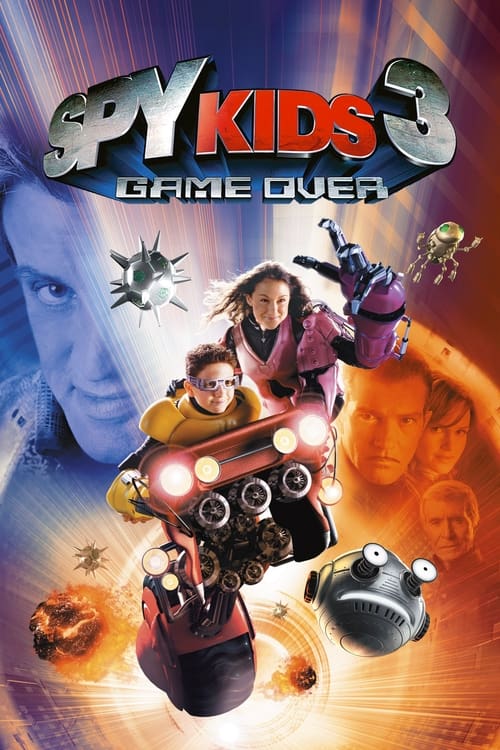
Spy Kids 3-D: Game Over
Despite a moderate budget of $38.0M, Spy Kids 3-D: Game Over became a solid performer, earning $197.1M worldwide—a 419% return.


Plot Structure
Story beats plotted across runtime


Narrative Arc
Emotional journey through the story's key moments
Story Circle
Blueprint 15-beat structure
Characters
Cast & narrative archetypes

Juni Cortez
Carmen Cortez
The Toymaker
Grandpa
Demetra
Rez
Francis
Arnold
Main Cast & Characters
Juni Cortez
Played by Daryl Sabara
A retired spy kid who enters a dangerous virtual reality game to rescue his sister and save the world.
Carmen Cortez
Played by Alexa PenaVega
Juni's sister, trapped in the Game Over virtual reality and needs rescue.
The Toymaker
Played by Sylvester Stallone
A mad scientist creator of the Game Over who has a split personality disorder represented by five identities.
Grandpa
Played by Ricardo Montalbán
The children's grandfather and original spy, who joins Juni in the virtual game world.
Demetra
Played by Courtney Jines
A skilled gamer and Juni's ally within the virtual reality game world.
Rez
Played by Robert Vito
A cocky beta tester who competes with Juni in the game.
Francis
Played by Bobby Edner
A fellow gamer kid who teams up with Juni in the virtual world.
Arnold
Played by Ryan Pinkston
A gamer kid and part of Juni's team navigating the game levels.
Structural Analysis
The Status Quo at 1 minutes (1% through the runtime) establishes Juni works alone as a private detective, having left the OSS and distanced himself from his family. He helps an old woman find her lost cat, showing his isolated but good-hearted existence.. Structural examination shows that this early placement immediately immerses viewers in the story world.
The inciting incident occurs at 10 minutes when Devlin reveals that Carmen is trapped inside the video game "Game Over" and is running out of time. The Toymaker plans to release the game to enslave children's minds. Juni must go in to save her.. At 12% through the film, this Disruption aligns precisely with traditional story structure. This beat shifts the emotional landscape, launching the protagonist into the central conflict.
The First Threshold at 20 minutes marks the transition into Act II, occurring at 24% of the runtime. This illustrates the protagonist's commitment to Juni puts on the virtual reality gear and enters "Game Over." He chooses to accept the mission and crosses into the digital world, leaving behind his solitary existence to save his sister., moving from reaction to action.
At 42 minutes, the Midpoint arrives at 50% of the runtime—precisely centered, creating perfect narrative symmetry. Of particular interest, this crucial beat Juni finally finds Carmen, who has disguised herself as "The Guy" - a legendary player. This false victory seems like mission accomplished, but Carmen reveals the stakes are higher: they must still defeat the Toymaker to escape., fundamentally raising what's at risk. The emotional intensity shifts, dividing the narrative into clear before-and-after phases.
The Collapse moment at 62 minutes (74% through) represents the emotional nadir. Here, The Toymaker defeats Juni and releases his robots into the real world. All seems lost as the game breaks through to reality. Juni's individual efforts have failed - he cannot win alone against this threat., reveals the protagonist at their lowest point. This beat's placement in the final quarter sets up the climactic reversal.
The Second Threshold at 67 minutes initiates the final act resolution at 79% of the runtime. Juni calls for backup and the entire Cortez family - including Grandma, Grandpa, parents, and Uncle Machete - arrives to fight. Juni embraces the power of family, synthesizing his skills with their collective strength., demonstrating the transformation achieved throughout the journey.
Emotional Journey
Spy Kids 3-D: Game Over's emotional architecture traces a deliberate progression across 15 carefully calibrated beats.
Narrative Framework
This structural analysis employs proven narrative structure principles that track dramatic progression. By mapping Spy Kids 3-D: Game Over against these established plot points, we can identify how Robert Rodriguez utilizes or subverts traditional narrative conventions. The plot point approach reveals not only adherence to structural principles but also creative choices that distinguish Spy Kids 3-D: Game Over within its genre.
Robert Rodriguez's Structural Approach
Among the 14 Robert Rodriguez films analyzed on Arcplot, the average structural score is 7.3, reflecting strong command of classical structure. Spy Kids 3-D: Game Over exemplifies the director's characteristic narrative technique. For comparative analysis, explore the complete Robert Rodriguez filmography.
Comparative Analysis
For more Robert Rodriguez analyses, see Spy Kids: All the Time in the World, From Dusk Till Dawn and Desperado.
Plot Points by Act
Act I
SetupStatus Quo
Juni works alone as a private detective, having left the OSS and distanced himself from his family. He helps an old woman find her lost cat, showing his isolated but good-hearted existence.
Theme
Grandpa tells Juni that family is always there for each other, and that going it alone is never the answer. This sets up the central theme that cooperation and family bonds are stronger than individual effort.
Worldbuilding
We learn Juni has retired from spy work and operates solo. The OSS contacts him about a dangerous virtual reality game called "Game Over" created by the Toymaker. Carmen has gone into the game and is now trapped inside.
Disruption
Devlin reveals that Carmen is trapped inside the video game "Game Over" and is running out of time. The Toymaker plans to release the game to enslave children's minds. Juni must go in to save her.
Resistance
Juni debates whether to help, initially refusing due to his desire to work alone. Devlin and his family persuade him that Carmen needs him. Juni agrees to enter the game, receiving briefing on the rules and dangers.
Act II
ConfrontationFirst Threshold
Juni puts on the virtual reality gear and enters "Game Over." He chooses to accept the mission and crosses into the digital world, leaving behind his solitary existence to save his sister.
Mirror World
Juni meets the Beta Testers - Francis, Arnold, and Rez - a group of misfit gamers who teach him that teamwork is essential to progress through the game. They represent the cooperative spirit Juni lacks.
Premise
Juni navigates through the game's increasingly difficult levels - robot battles, mega-races, and lava surfing. He reluctantly works with other players while searching for Carmen, experiencing the fun and danger of the virtual world.
Midpoint
Juni finally finds Carmen, who has disguised herself as "The Guy" - a legendary player. This false victory seems like mission accomplished, but Carmen reveals the stakes are higher: they must still defeat the Toymaker to escape.
Opposition
The Toymaker intensifies his attacks, sending increasingly difficult challenges. Players are eliminated. Juni's allies fall. The game becomes more deadly as they approach the final level, and the Toymaker prepares to release the game worldwide.
Collapse
The Toymaker defeats Juni and releases his robots into the real world. All seems lost as the game breaks through to reality. Juni's individual efforts have failed - he cannot win alone against this threat.
Crisis
Juni faces despair as the Toymaker's robots threaten both the virtual and real worlds. He must confront his belief in going solo and accept that he needs help from his entire family.
Act III
ResolutionSecond Threshold
Juni calls for backup and the entire Cortez family - including Grandma, Grandpa, parents, and Uncle Machete - arrives to fight. Juni embraces the power of family, synthesizing his skills with their collective strength.
Synthesis
The Cortez family battles the Toymaker's robots together. Grandpa confronts his old enemy the Toymaker, choosing forgiveness over vengeance. The family defeats the robotic army through unity and cooperation.
Transformation
Juni stands with his reunited family, no longer a lone detective but an integral part of the Cortez team. Grandpa forgives the Toymaker, breaking the cycle of isolation. The family is stronger together than apart.