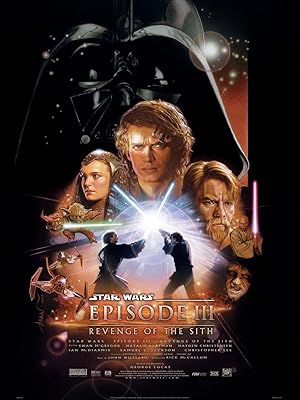
Star Wars: Episode III - Revenge of the Sith
Nearly three years have passed since the beginning of the Clone Wars. The Republic, with the help of the Jedi, take on Count Dooku and the Separatists. With a new threat rising, the Jedi Council sends Obi-Wan Kenobi and Anakin Skywalker to aid the captured Chancellor. Anakin feels he is ready to be promoted to Jedi Master. Obi-Wan is hunting down the Separatist General, Grievous. When Anakin has future visions of pain and suffering coming Padmé's way, he sees Master Yoda for counsel. When Darth Sidious executes Order 66, it destroys most of all the Jedi have built. Experience the birth of Darth Vader. Feel the betrayal that leads to hatred between two brothers. And witness the power of hope.
Despite a substantial budget of $113.0M, Star Wars: Episode III - Revenge of the Sith became a box office phenomenon, earning $850.0M worldwide—a remarkable 652% return.
Nominated for 1 Oscar. 29 wins & 64 nominations


Plot Structure
Story beats plotted across runtime


Narrative Arc
Emotional journey through the story's key moments
Story Circle
Blueprint 15-beat structure
Arcplot Score Breakdown
Weighted: Precision (70%) + Arc (15%) + Theme (15%)
Star Wars: Episode III - Revenge of the Sith (2005) reveals strategically placed dramatic framework, characteristic of George Lucas's storytelling approach. This structural analysis examines how the film's 15-point plot structure maps to proven narrative frameworks across 2 hours and 20 minutes. With an Arcplot score of 4.3, the film takes an unconventional approach to traditional narrative frameworks.
Characters
Cast & narrative archetypes

Anakin Skywalker
Obi-Wan Kenobi
Padmé Amidala
Palpatine / Darth Sidious
Yoda
Mace Windu
General Grievous
Count Dooku
Main Cast & Characters
Anakin Skywalker
Played by Hayden Christensen
Jedi Knight who falls to the dark side, seduced by promises of power to save his wife. Becomes Darth Vader.
Obi-Wan Kenobi
Played by Ewan McGregor
Jedi Master and mentor to Anakin, struggles to save his fallen apprentice while maintaining Jedi principles.
Padmé Amidala
Played by Natalie Portman
Senator and Anakin's secret wife, pregnant with twins. Tries desperately to prevent Anakin's fall to darkness.
Palpatine / Darth Sidious
Played by Ian McDiarmid
Supreme Chancellor who reveals himself as Sith Lord, orchestrates the fall of the Jedi and the Republic.
Yoda
Played by Frank Oz
Grand Master of the Jedi Order, leads the fight against the Sith and Order 66 before going into exile.
Mace Windu
Played by Samuel L. Jackson
Senior Jedi Master who confronts Palpatine but is betrayed by Anakin at the crucial moment.
General Grievous
Played by Matthew Wood
Cyborg commander of the Separatist droid army, obsessed with collecting lightsabers from slain Jedi.
Count Dooku
Played by Christopher Lee
Sith Lord and Separatist leader, betrayed and executed by Palpatine to make way for Anakin.
Structural Analysis
The Status Quo at 1 minutes (1% through the runtime) establishes Anakin and Obi-Wan pilot starfighters through a massive space battle above Coruscant, showcasing their bond as master and apprentice at the height of the Clone Wars. They banter confidently, displaying their heroic status as legendary Jedi warriors.. Of particular interest, this early placement immediately immerses viewers in the story world.
The inciting incident occurs at 16 minutes when Anakin experiences a vivid nightmare of Padmé dying in childbirth, the same type of prophetic dream he had before losing his mother. This vision disrupts his world and plants the seed of fear that will drive all his subsequent choices.. At 11% through the film, this Disruption aligns precisely with traditional story structure. This beat shifts the emotional landscape, launching the protagonist into the central conflict.
The First Threshold at 32 minutes marks the transition into Act II, occurring at 23% of the runtime. This demonstrates the protagonist's commitment to The Jedi Council asks Anakin to spy on Palpatine, his friend and mentor. Anakin reluctantly accepts this mission, crossing the threshold into a world of divided loyalties, deception, and moral compromise that goes against everything the Jedi stand for., moving from reaction to action.
At 64 minutes, the Midpoint arrives at 45% of the runtime—arriving early, accelerating into Act IIb complications. Structural examination shows that this crucial beat Palpatine reveals himself as Darth Sidious, the Sith Lord the Jedi have been hunting. Anakin discovers the truth but doesn't immediately act, showing his internal conflict. This false defeat raises the stakes enormously—the enemy has been hiding in plain sight all along., fundamentally raising what's at risk. The emotional intensity shifts, dividing the narrative into clear before-and-after phases.
The Collapse moment at 94 minutes (67% through) represents the emotional nadir. Here, Anakin kneels before Palpatine and pledges himself to the dark side, becoming Darth Vader. His identity as a Jedi dies. He has lost everything he was in a desperate attempt to save Padmé, marking the complete death of Anakin Skywalker's soul., reveals the protagonist at their lowest point. This beat's placement in the final quarter sets up the climactic reversal.
The Second Threshold at 101 minutes initiates the final act resolution at 72% of the runtime. Padmé confronts Anakin on Mustafar, and he realizes she cannot accept what he's become. When Obi-Wan emerges from her ship, Anakin's paranoia takes over and he Force-chokes Padmé. This moment of ultimate betrayal seals his fate and triggers the final confrontation with his former master., demonstrating the transformation achieved throughout the journey.
Emotional Journey
Star Wars: Episode III - Revenge of the Sith's emotional architecture traces a deliberate progression across 15 carefully calibrated beats.
Narrative Framework
This structural analysis employs a 15-point narrative structure framework that maps key story moments. By mapping Star Wars: Episode III - Revenge of the Sith against these established plot points, we can identify how George Lucas utilizes or subverts traditional narrative conventions. The plot point approach reveals not only adherence to structural principles but also creative choices that distinguish Star Wars: Episode III - Revenge of the Sith within the action genre.
George Lucas's Structural Approach
Among the 5 George Lucas films analyzed on Arcplot, the average structural score is 4.3, showcasing experimental approaches to narrative form. Star Wars: Episode III - Revenge of the Sith exemplifies the director's characteristic narrative technique. For comparative analysis, explore the complete George Lucas filmography.
Comparative Analysis
Additional action films include The Bad Guys, Puss in Boots and Venom: The Last Dance. For more George Lucas analyses, see Star Wars: Episode IV - A New Hope, American Graffiti and Star Wars: Episode II - Attack of the Clones.
Plot Points by Act
Act I
SetupStatus Quo
Anakin and Obi-Wan pilot starfighters through a massive space battle above Coruscant, showcasing their bond as master and apprentice at the height of the Clone Wars. They banter confidently, displaying their heroic status as legendary Jedi warriors.
Theme
Palpatine tells Anakin, "Learn to know the dark side of the Force and you will achieve a power greater than any Jedi," planting the thematic seed about the seduction of power and the cost of attempting to control destiny through forbidden means.
Worldbuilding
The rescue of Chancellor Palpatine establishes the Clone Wars context, Anakin's heroism and growing power, his secret marriage to Padmé, the Jedi Council's distrust, and Palpatine's inappropriate closeness to Anakin. We see Anakin as a celebrated war hero struggling with Jedi restrictions.
Disruption
Anakin experiences a vivid nightmare of Padmé dying in childbirth, the same type of prophetic dream he had before losing his mother. This vision disrupts his world and plants the seed of fear that will drive all his subsequent choices.
Resistance
Anakin debates how to prevent his vision from coming true. He receives conflicting guidance: Yoda counsels acceptance and letting go of attachment, while Palpatine subtly suggests the dark side offers power over death. Anakin is appointed to the Council but denied the rank of Master, deepening his resentment.
Act II
ConfrontationFirst Threshold
The Jedi Council asks Anakin to spy on Palpatine, his friend and mentor. Anakin reluctantly accepts this mission, crossing the threshold into a world of divided loyalties, deception, and moral compromise that goes against everything the Jedi stand for.
Mirror World
Obi-Wan is sent away to hunt General Grievous on Utapau, removing Anakin's moral anchor and the one person who might have prevented his fall. Their farewell represents the severing of the master-apprentice bond that has been the thematic heart of Anakin's journey.
Premise
Anakin explores the seduction of the dark side as Palpatine shares the story of Darth Plagueis and the power to prevent death. Meanwhile, the war escalates with battles on multiple worlds. Anakin is torn between his Jedi duty and his growing attachment to Palpatine's promises of greater power.
Midpoint
Palpatine reveals himself as Darth Sidious, the Sith Lord the Jedi have been hunting. Anakin discovers the truth but doesn't immediately act, showing his internal conflict. This false defeat raises the stakes enormously—the enemy has been hiding in plain sight all along.
Opposition
Anakin reports Palpatine to Mace Windu, but when the Jedi move to arrest the Chancellor, Anakin's fear of losing Padmé overwhelms his judgment. He intervenes to save Palpatine, resulting in Mace Windu's death. The pressure of his choice crushes him, and Palpatine completes his manipulation.
Collapse
Anakin kneels before Palpatine and pledges himself to the dark side, becoming Darth Vader. His identity as a Jedi dies. He has lost everything he was in a desperate attempt to save Padmé, marking the complete death of Anakin Skywalker's soul.
Crisis
Vader executes Order 66, leading the clone troopers to massacre the Jedi Temple, including the younglings. He travels to Mustafar to eliminate the Separatist leaders. The darkness fully consumes him as he commits increasingly horrific acts, believing he's doing what's necessary to gain the power to save Padmé.
Act III
ResolutionSecond Threshold
Padmé confronts Anakin on Mustafar, and he realizes she cannot accept what he's become. When Obi-Wan emerges from her ship, Anakin's paranoia takes over and he Force-chokes Padmé. This moment of ultimate betrayal seals his fate and triggers the final confrontation with his former master.
Synthesis
The climactic duel between Obi-Wan and Anakin on Mustafar plays out alongside Yoda's battle with Palpatine. Obi-Wan defeats Anakin, leaving him burning on the lava shore. Padmé dies giving birth to Luke and Leia, and Anakin is rebuilt as the mechanical Darth Vader. The Empire rises as the Republic falls.
Transformation
The fully armored Darth Vader takes his first mechanical breath and asks about Padmé. Learning she's dead, he screams in anguish, believing he killed her. The transformation is complete: Anakin Skywalker is gone, replaced by the dark lord who will terrorize the galaxy, having lost everything he tried to save.