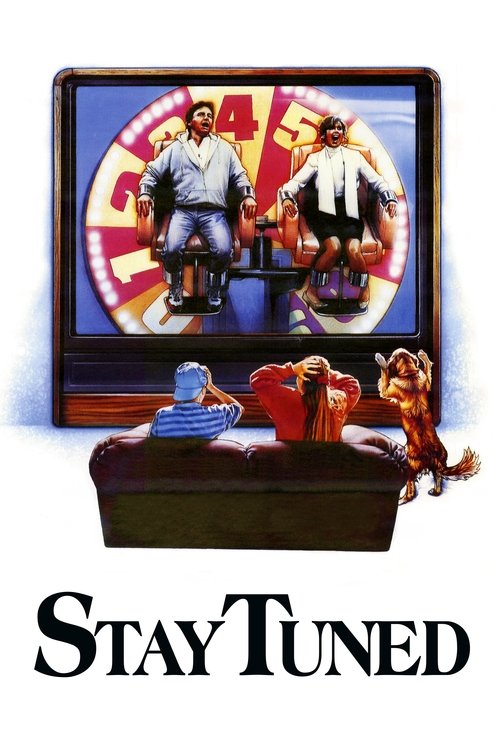
Stay Tuned
Salesman Roy Knable spends all his free time watching television, to the exasperation of his wife, Helen. One day, TV salesman Spike convinces Roy to buy a satellite dish offering 666 channels. The new addition to Roy's home entertainment system sucks him and Helen into Hellvision, a realm run by Spike, who is an emissary of Satan. For 24 hours, the couple must survive devilish parodies of TV programs if they want to return to reality alive.
The film box office disappointment against its mid-range budget of $25.0M, earning $10.7M globally (-57% loss). While initial box office returns were modest, the film has gained appreciation for its fresh perspective within the comedy genre.


Plot Structure
Story beats plotted across runtime


Narrative Arc
Emotional journey through the story's key moments
Story Circle
Blueprint 15-beat structure
Arcplot Score Breakdown
Weighted: Precision (70%) + Arc (15%) + Theme (15%)
Stay Tuned (1992) demonstrates deliberately positioned story structure, characteristic of Peter Hyams's storytelling approach. This structural analysis examines how the film's 15-point plot structure maps to proven narrative frameworks across 1 hour and 27 minutes. With an Arcplot score of 7.2, the film balances conventional beats with creative variation.
Characters
Cast & narrative archetypes

Roy Knable
Helen Knable
Spike
Darryl Knable
Diane Knable
Main Cast & Characters
Roy Knable
Played by John Ritter
A couch potato television addict who gets sucked into his TV with his wife and must survive twisted parodies of TV shows.
Helen Knable
Played by Pam Dawber
Roy's frustrated wife who wants him to pay more attention to their family instead of the television.
Spike
Played by Jeffrey Jones
The demonic TV salesman who traps Roy and Helen in hellish television programming to steal their souls.
Darryl Knable
Played by David Tom
Roy and Helen's teenage son who tries to rescue his parents from the television world.
Diane Knable
Played by Heather McComb
Roy and Helen's young daughter who helps her brother rescue their parents.
Structural Analysis
The Status Quo at 1 minutes (1% through the runtime) establishes Roy Knable is glued to the television, channel surfing obsessively while his wife Helen tries unsuccessfully to connect with him. Their marriage is strained by his TV addiction and emotional absence.. Structural examination shows that this early placement immediately immerses viewers in the story world.
The inciting incident occurs at 10 minutes when Spike, a mysterious and sinister salesman, appears at the Knable home offering Roy a state-of-the-art satellite dish system with 666 channels - completely free. His arrival marks the intrusion of demonic forces into their ordinary world.. At 12% through the film, this Disruption aligns precisely with traditional story structure. This beat shifts the emotional landscape, launching the protagonist into the central conflict.
The First Threshold at 22 minutes marks the transition into Act II, occurring at 25% of the runtime. This reveals the protagonist's commitment to During a heated argument about the TV, Roy and Helen are suddenly sucked through the television screen into Hellvision - a demonic dimension where they must survive deadly parodies of television programs or lose their souls., moving from reaction to action.
At 44 minutes, the Midpoint arrives at 50% of the runtime—precisely centered, creating perfect narrative symmetry. The analysis reveals that this crucial beat Roy and Helen find a brief moment of safety and reconnection, reminiscing about their early relationship. Roy begins to realize what truly matters. However, this false victory is short-lived as Spike reveals the stakes are higher than they knew - their souls are the prize., fundamentally raising what's at risk. The emotional intensity shifts, dividing the narrative into clear before-and-after phases.
The Collapse moment at 65 minutes (75% through) represents the emotional nadir. Here, Helen is captured by Spike and her soul is about to be claimed. Roy watches helplessly, paralyzed by his old passive nature. It appears he will lose his wife forever because he cannot act - the ultimate consequence of being a spectator rather than a participant in life., reveals the protagonist at their lowest point. This beat's placement in the final quarter sets up the climactic reversal.
The Second Threshold at 70 minutes initiates the final act resolution at 80% of the runtime. Roy realizes that all his years of watching television have given him knowledge of every trope, every plot device, every way stories work. He can use this knowledge actively to defeat Spike. For once, his obsession becomes a tool rather than an escape., demonstrating the transformation achieved throughout the journey.
Emotional Journey
Stay Tuned's emotional architecture traces a deliberate progression across 15 carefully calibrated beats.
Narrative Framework
This structural analysis employs proven narrative structure principles that track dramatic progression. By mapping Stay Tuned against these established plot points, we can identify how Peter Hyams utilizes or subverts traditional narrative conventions. The plot point approach reveals not only adherence to structural principles but also creative choices that distinguish Stay Tuned within the comedy genre.
Peter Hyams's Structural Approach
Among the 14 Peter Hyams films analyzed on Arcplot, the average structural score is 7.1, reflecting strong command of classical structure. Stay Tuned represents one of the director's most structurally precise works. For comparative analysis, explore the complete Peter Hyams filmography.
Comparative Analysis
Additional comedy films include The Bad Guys, Ella Enchanted and The Evening Star. For more Peter Hyams analyses, see Capricorn One, Timecop and The Musketeer.
Plot Points by Act
Act I
SetupStatus Quo
Roy Knable is glued to the television, channel surfing obsessively while his wife Helen tries unsuccessfully to connect with him. Their marriage is strained by his TV addiction and emotional absence.
Theme
Helen confronts Roy about choosing television over real life, telling him that life is happening while he watches other people live theirs. She states he needs to stop being a spectator and start participating.
Worldbuilding
The Knable family dynamics are established: Roy's TV obsession, Helen's frustration, their two children caught in the middle. Roy has lost his job and retreated further into television as escapism. The suburban home feels increasingly divided.
Disruption
Spike, a mysterious and sinister salesman, appears at the Knable home offering Roy a state-of-the-art satellite dish system with 666 channels - completely free. His arrival marks the intrusion of demonic forces into their ordinary world.
Resistance
Roy eagerly accepts the satellite dish despite Helen's reservations. He becomes even more entranced by the endless channels. Helen grows increasingly concerned about the strange programming and the hold it has over Roy. Tension builds in the household.
Act II
ConfrontationFirst Threshold
During a heated argument about the TV, Roy and Helen are suddenly sucked through the television screen into Hellvision - a demonic dimension where they must survive deadly parodies of television programs or lose their souls.
Mirror World
Trapped together in Hellvision, Roy and Helen must work as a team for the first time in years. Their forced partnership begins to remind them of their connection. Helen's resourcefulness complements Roy's pop culture knowledge.
Premise
Roy and Helen navigate through various deadly TV show parodies including game shows, westerns, action programs, and sitcoms. Each channel presents new dangers where they must use their wits to survive. Their children discover what happened and try to help from the outside.
Midpoint
Roy and Helen find a brief moment of safety and reconnection, reminiscing about their early relationship. Roy begins to realize what truly matters. However, this false victory is short-lived as Spike reveals the stakes are higher than they knew - their souls are the prize.
Opposition
Spike intensifies his pursuit, sending Roy and Helen into increasingly dangerous programs. They get separated repeatedly. Roy's passive tendencies nearly get them killed multiple times. Their son Darryl works desperately to find a way to help them escape from the real world.
Collapse
Helen is captured by Spike and her soul is about to be claimed. Roy watches helplessly, paralyzed by his old passive nature. It appears he will lose his wife forever because he cannot act - the ultimate consequence of being a spectator rather than a participant in life.
Crisis
Roy faces his deepest fear - that his passivity has cost him everything that matters. Alone and desperate, he must confront the truth that watching life go by is the same as not living at all. His children's faith in him from the outside world gives him a glimmer of hope.
Act III
ResolutionSecond Threshold
Roy realizes that all his years of watching television have given him knowledge of every trope, every plot device, every way stories work. He can use this knowledge actively to defeat Spike. For once, his obsession becomes a tool rather than an escape.
Synthesis
Roy takes decisive action, using his encyclopedic TV knowledge to outmaneuver Spike through various program genres. With help from his children in the real world and Helen fighting alongside him, Roy confronts and defeats Spike, destroying the Hellvision system and freeing all the trapped souls.
Transformation
Roy and Helen return home, their bond renewed and strengthened. Roy turns off the television and embraces his family. The final image shows him actively engaged with Helen and the kids, no longer a passive spectator but a full participant in his own life.