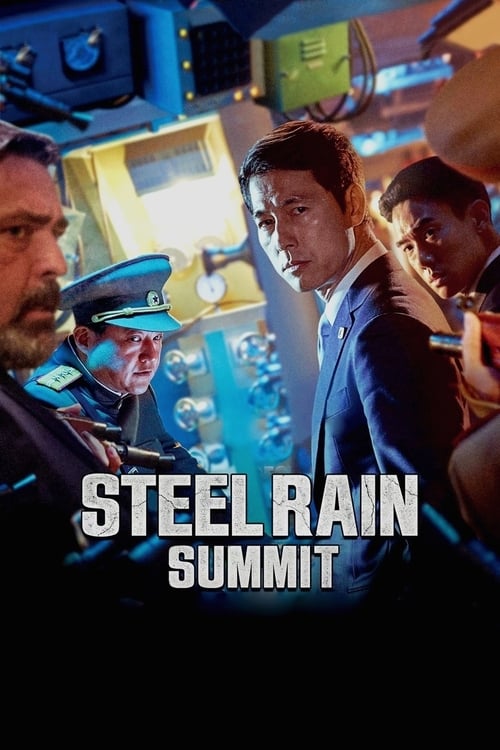
Steel Rain 2: Summit
A futuristic film about a crisis near the brink of war after three leaders are kidnapped by a North Korean nuclear submarine in a coup d’état during a summit between the two Koreas and the United States.
The film earned $12.3M at the global box office.


Plot Structure
Story beats plotted across runtime


Narrative Arc
Emotional journey through the story's key moments
Story Circle
Blueprint 15-beat structure
Arcplot Score Breakdown
Weighted: Precision (70%) + Arc (15%) + Theme (15%)
Steel Rain 2: Summit (2020) exemplifies strategically placed story structure, characteristic of Yang Woo-seok's storytelling approach. This structural analysis examines how the film's 15-point plot structure maps to proven narrative frameworks across 2 hours and 12 minutes. With an Arcplot score of 7.3, the film balances conventional beats with creative variation.
Characters
Cast & narrative archetypes

Han Gyeong-jae
Yoo Seong-cheol
Smoot
Jang Yong-nam
Choi Myeong-rok
Park Jin-woo
Main Cast & Characters
Han Gyeong-jae
Played by Jung Woo-sung
President of South Korea who must navigate a tense three-way summit after being kidnapped alongside the leaders of North Korea and the United States.
Yoo Seong-cheol
Played by Kwak Do-won
North Korean Supreme Leader who finds himself trapped in an underground bunker with his South Korean and American counterparts.
Smoot
Played by Angus Macfadyen
President of the United States who must cooperate with the Korean leaders during the crisis while managing military tensions.
Jang Yong-nam
Played by Yoo Yeon-seok
North Korean general and military hardliner who orchestrates the kidnapping plot to provoke conflict.
Choi Myeong-rok
Played by Kim Yong-rim
Chief of the South Korean Presidential Security Service who works to rescue the kidnapped leaders.
Park Jin-woo
Played by Shin Jung-keun
South Korean Prime Minister who assumes control during the crisis and must make critical decisions.
Structural Analysis
The Status Quo at 2 minutes (2% through the runtime) establishes The leaders of South Korea, North Korea, and the United States prepare for a historic peace summit. President Smoot of the US, North Korean Chairman Ri, and South Korean President Han each arrive with their own agendas and security concerns.. Significantly, this early placement immediately immerses viewers in the story world.
The inciting incident occurs at 17 minutes when The three leaders are suddenly kidnapped during the summit by a rogue North Korean military faction. An explosion rocks the venue and they are taken to a secret underground bunker, held hostage together.. At 13% through the film, this Disruption is delayed, allowing extended setup of the story world. This beat shifts the emotional landscape, launching the protagonist into the central conflict.
The First Threshold at 33 minutes marks the transition into Act II, occurring at 25% of the runtime. This reveals the protagonist's commitment to The three leaders make the active choice to work together to survive and escape. They realize their captors want to trigger a war between their nations, and only by cooperating can they prevent catastrophe., moving from reaction to action.
At 66 minutes, the Midpoint arrives at 50% of the runtime—precisely centered, creating perfect narrative symmetry. Notably, this crucial beat The leaders discover their captors' full plan: stage their deaths to make it look like each nation assassinated the others, triggering a three-way war. They also learn their governments are on the brink of military action against each other. The stakes become existential., fundamentally raising what's at risk. The emotional intensity shifts, dividing the narrative into clear before-and-after phases.
The Collapse moment at 99 minutes (75% through) represents the emotional nadir. Here, Their final escape attempt fails catastrophically. One of the leaders is seriously wounded. The captors announce the executions will proceed immediately. All hope seems lost as they await their fate., demonstrates the protagonist at their lowest point. This beat's placement in the final quarter sets up the climactic reversal.
The Second Threshold at 106 minutes initiates the final act resolution at 80% of the runtime. A loyal security team discovers the bunker location. The leaders realize they have one final chance and use their combined knowledge of the facility to signal their position and coordinate a rescue from inside., demonstrating the transformation achieved throughout the journey.
Emotional Journey
Steel Rain 2: Summit's emotional architecture traces a deliberate progression across 15 carefully calibrated beats.
Narrative Framework
This structural analysis employs a 15-point narrative structure framework that maps key story moments. By mapping Steel Rain 2: Summit against these established plot points, we can identify how Yang Woo-seok utilizes or subverts traditional narrative conventions. The plot point approach reveals not only adherence to structural principles but also creative choices that distinguish Steel Rain 2: Summit within the action genre.
Yang Woo-seok's Structural Approach
Among the 2 Yang Woo-seok films analyzed on Arcplot, the average structural score is 7.3, reflecting strong command of classical structure. Steel Rain 2: Summit exemplifies the director's characteristic narrative technique. For comparative analysis, explore the complete Yang Woo-seok filmography.
Comparative Analysis
Additional action films include The Bad Guys, Puss in Boots and Venom: The Last Dance. For more Yang Woo-seok analyses, see Steel Rain.
Plot Points by Act
Act I
SetupStatus Quo
The leaders of South Korea, North Korea, and the United States prepare for a historic peace summit. President Smoot of the US, North Korean Chairman Ri, and South Korean President Han each arrive with their own agendas and security concerns.
Theme
An adviser warns that "When powerful men sit together, someone always tries to flip the table." The theme of distrust and manipulation in international diplomacy is established.
Worldbuilding
The summit setup is established showing the tense relationships between the three nations. Security protocols, political tensions, and the personal dynamics between the three leaders are introduced. Each leader has domestic pressures and international objectives.
Disruption
The three leaders are suddenly kidnapped during the summit by a rogue North Korean military faction. An explosion rocks the venue and they are taken to a secret underground bunker, held hostage together.
Resistance
The three leaders initially blame each other and argue about who is responsible. They resist cooperation while their respective governments scramble to respond. They must decide whether to trust each other or remain adversaries even in captivity.
Act II
ConfrontationFirst Threshold
The three leaders make the active choice to work together to survive and escape. They realize their captors want to trigger a war between their nations, and only by cooperating can they prevent catastrophe.
Mirror World
The leaders share personal stories about their families and fears, humanizing each other beyond their political roles. President Han reveals his hopes for his daughter's future in a unified Korea, creating an emotional connection.
Premise
The three leaders navigate the bunker together, combining their different skills and knowledge. They decode clues about their captors' plans, evade guards, and work as an unlikely team. The premise of "three enemies must cooperate to survive" plays out.
Midpoint
The leaders discover their captors' full plan: stage their deaths to make it look like each nation assassinated the others, triggering a three-way war. They also learn their governments are on the brink of military action against each other. The stakes become existential.
Opposition
The captors tighten security and the leaders' escape attempts fail. Outside, hardliners in each government push for military strikes. Trust between the three men is tested as old grievances resurface under pressure. Time runs out as forces mobilize for war.
Collapse
Their final escape attempt fails catastrophically. One of the leaders is seriously wounded. The captors announce the executions will proceed immediately. All hope seems lost as they await their fate.
Crisis
In what they believe are their final moments, the three leaders reconcile and acknowledge their shared humanity. They record messages for each other's families and make peace with death, having found unexpected friendship.
Act III
ResolutionSecond Threshold
A loyal security team discovers the bunker location. The leaders realize they have one final chance and use their combined knowledge of the facility to signal their position and coordinate a rescue from inside.
Synthesis
A coordinated rescue operation unfolds as the three leaders fight alongside their rescuers. They expose the conspiracy and prevent the war. The rogue faction is neutralized and the leaders emerge together, united.
Transformation
The three leaders stand together at a press conference, announcing a genuine peace agreement forged through their shared ordeal. What began as political theater has become real friendship and cooperation, offering hope for lasting peace.