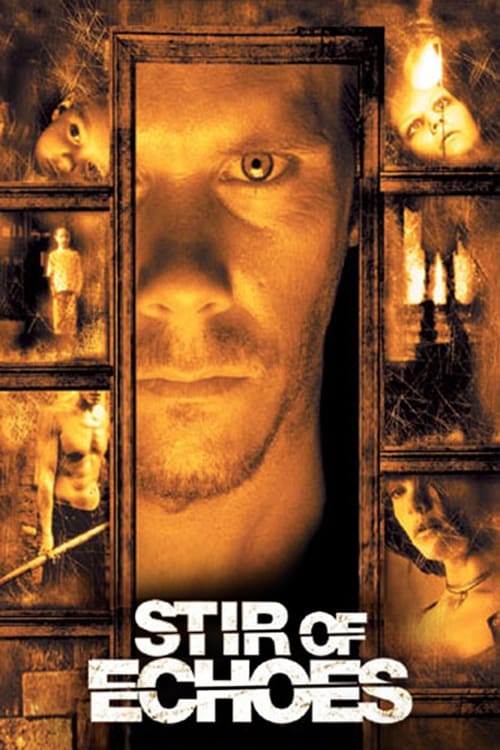
Stir of Echoes
After being hypnotized by his sister-in-law, Tom Witzky begins seeing haunting visions of a girl's ghost and a mystery begins to unfold around her.
Working with a tight budget of $12.0M, the film achieved a modest success with $21.1M in global revenue (+76% profit margin).
3 wins & 5 nominations


Plot Structure
Story beats plotted across runtime


Narrative Arc
Emotional journey through the story's key moments
Story Circle
Blueprint 15-beat structure
Arcplot Score Breakdown
Weighted: Precision (70%) + Arc (15%) + Theme (15%)
Stir of Echoes (1999) reveals deliberately positioned dramatic framework, characteristic of David Koepp's storytelling approach. This structural analysis examines how the film's 15-point plot structure maps to proven narrative frameworks across 1 hour and 39 minutes. With an Arcplot score of 7.4, the film balances conventional beats with creative variation.
Structural Analysis
The Status Quo at 1 minutes (1% through the runtime) establishes Tom Witzky sits on his porch in a working-class Chicago neighborhood, watching life pass by. He's a regular guy, a lineman for the electric company, married with a young son Jake - content but feeling like something is missing from his ordinary life.. Notably, this early placement immediately immerses viewers in the story world.
The inciting incident occurs at 12 minutes when At the party, Tom skeptically allows Lisa to hypnotize him. She tells him to "open his mind" and he experiences a terrifying flash of a ghostly girl. When he awakens, something fundamental has changed - a psychic door has been opened that cannot be closed.. At 12% through the film, this Disruption aligns precisely with traditional story structure. This beat shifts the emotional landscape, launching the protagonist into the central conflict.
The First Threshold at 24 minutes marks the transition into Act II, occurring at 24% of the runtime. This reveals the protagonist's commitment to Tom makes the conscious decision to pursue his visions rather than try to suppress them. He chooses to investigate the ghost girl he keeps seeing, committing to uncovering the truth despite the toll it's taking on his marriage and sanity., moving from reaction to action.
At 49 minutes, the Midpoint arrives at 49% of the runtime—precisely centered, creating perfect narrative symmetry. Notably, this crucial beat Tom discovers Samantha's body buried under the house - a false victory that turns to horror. He now knows she was murdered, but this revelation puts him in direct conflict with the killers who still live in the neighborhood. The stakes shift from supernatural mystery to mortal danger., fundamentally raising what's at risk. The emotional intensity shifts, dividing the narrative into clear before-and-after phases.
The Collapse moment at 74 minutes (75% through) represents the emotional nadir. Here, Tom's neighbor attacks him and threatens his family. Maggie takes Jake and leaves, terrified by both the danger and Tom's deteriorating mental state. Tom is alone, battered, and realizes his pursuit of the truth has cost him everything he was trying to protect., reveals the protagonist at their lowest point. This beat's placement in the final quarter sets up the climactic reversal.
The Second Threshold at 78 minutes initiates the final act resolution at 79% of the runtime. Tom has a vision revealing exactly what happened to Samantha and who was responsible. Armed with this knowledge and accepting his role as Samantha's voice, he decides to confront the killers and bring the truth to light, whatever the cost., demonstrating the transformation achieved throughout the journey.
Emotional Journey
Stir of Echoes's emotional architecture traces a deliberate progression across 15 carefully calibrated beats.
Narrative Framework
This structural analysis employs structural analysis methodology used to understand storytelling architecture. By mapping Stir of Echoes against these established plot points, we can identify how David Koepp utilizes or subverts traditional narrative conventions. The plot point approach reveals not only adherence to structural principles but also creative choices that distinguish Stir of Echoes within the horror genre.
David Koepp's Structural Approach
Among the 5 David Koepp films analyzed on Arcplot, the average structural score is 7.2, reflecting strong command of classical structure. Stir of Echoes represents one of the director's most structurally precise works. For comparative analysis, explore the complete David Koepp filmography.
Comparative Analysis
Additional horror films include Thinner, A Nightmare on Elm Street and Mary Reilly. For more David Koepp analyses, see Premium Rush, Secret Window and Mortdecai.
Plot Points by Act
Act I
SetupStatus Quo
Tom Witzky sits on his porch in a working-class Chicago neighborhood, watching life pass by. He's a regular guy, a lineman for the electric company, married with a young son Jake - content but feeling like something is missing from his ordinary life.
Theme
At the neighborhood party, Tom's sister-in-law Lisa, who practices hypnosis, tells him: "There's a whole world out there that most people ignore... once you open that door, you can't close it." This foreshadows the irreversible awakening Tom is about to experience.
Worldbuilding
We meet the Witzky family: Tom, his pregnant wife Maggie, and their son Jake who seems to communicate with unseen presences. The neighborhood is established as a close-knit community with hidden secrets beneath its blue-collar surface.
Disruption
At the party, Tom skeptically allows Lisa to hypnotize him. She tells him to "open his mind" and he experiences a terrifying flash of a ghostly girl. When he awakens, something fundamental has changed - a psychic door has been opened that cannot be closed.
Resistance
Tom begins experiencing disturbing visions and psychic episodes. He sees fragments of a girl, hears scratching sounds, and becomes increasingly obsessed. Maggie grows worried as Tom's behavior becomes erratic. He seeks answers from Lisa, who warns him about what he's unleashed.
Act II
ConfrontationFirst Threshold
Tom makes the conscious decision to pursue his visions rather than try to suppress them. He chooses to investigate the ghost girl he keeps seeing, committing to uncovering the truth despite the toll it's taking on his marriage and sanity.
Mirror World
Tom connects with his son Jake, who reveals he's been seeing the same ghost - a girl named Samantha who lived in their house. Jake becomes Tom's spiritual guide, showing that children can see what adults have learned to ignore. Their shared ability creates a new bond.
Premise
Tom investigates Samantha's disappearance, experiencing increasingly intense visions. He sees her being attacked, buried. He digs up his backyard obsessively, alienates his neighbors, and strains his marriage. The mystery of what happened to Samantha Kozak unfolds through his psychic episodes.
Midpoint
Tom discovers Samantha's body buried under the house - a false victory that turns to horror. He now knows she was murdered, but this revelation puts him in direct conflict with the killers who still live in the neighborhood. The stakes shift from supernatural mystery to mortal danger.
Opposition
Tom pieces together that Samantha was killed by neighborhood boys - now grown men including his neighbors. As he gets closer to the truth, the killers realize he knows and begin threatening his family. His obsession has put everyone he loves in danger. Maggie considers leaving with Jake.
Collapse
Tom's neighbor attacks him and threatens his family. Maggie takes Jake and leaves, terrified by both the danger and Tom's deteriorating mental state. Tom is alone, battered, and realizes his pursuit of the truth has cost him everything he was trying to protect.
Crisis
Tom sits alone in his destroyed home, surrounded by the holes he's dug. He must choose between his family's safety and bringing justice to Samantha. He realizes that ignoring the truth won't make it go away - Samantha's spirit will never rest until she's found.
Act III
ResolutionSecond Threshold
Tom has a vision revealing exactly what happened to Samantha and who was responsible. Armed with this knowledge and accepting his role as Samantha's voice, he decides to confront the killers and bring the truth to light, whatever the cost.
Synthesis
Tom confronts the murderers. In a tense showdown, the truth is exposed. The police arrive as the situation escalates. Samantha's body is officially discovered and her killers are arrested. Tom has fulfilled his purpose as the conduit for Samantha's justice.
Transformation
Tom sits on his porch again, but transformed. Maggie and Jake return to him. He's no longer the skeptic who dismissed what he couldn't understand. He's accepted his gift and his son's abilities. The family is reunited, changed but whole, as Samantha finally finds peace.