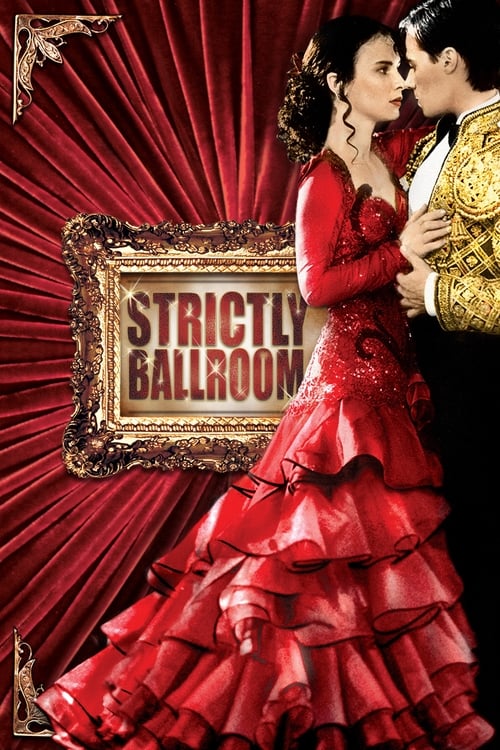
Strictly Ballroom
Brave new steps put Scott's career in jeopardy. With a new partner and determination, can he still succeed?
Despite its limited budget of $3.0M, Strictly Ballroom became a box office phenomenon, earning $33.9M worldwide—a remarkable 1032% return. The film's unique voice found its audience, demonstrating that strong storytelling can transcend budget limitations.


Plot Structure
Story beats plotted across runtime


Narrative Arc
Emotional journey through the story's key moments
Story Circle
Blueprint 15-beat structure
Arcplot Score Breakdown
Weighted: Precision (70%) + Arc (15%) + Theme (15%)
Strictly Ballroom (1992) demonstrates precise dramatic framework, characteristic of Baz Luhrmann's storytelling approach. This structural analysis examines how the film's 15-point plot structure maps to proven narrative frameworks across 1 hour and 34 minutes. With an Arcplot score of 7.0, the film balances conventional beats with creative variation.
Characters
Cast & narrative archetypes

Scott Hastings
Fran
Shirley Hastings
Doug Hastings
Barry Fife
Liz Holt
Rico
Ya Ya
Main Cast & Characters
Scott Hastings
Played by Paul Mercurio
A talented ballroom dancer who rebels against strict dance federation rules to create his own unconventional steps.
Fran
Played by Tara Morice
A shy beginner dancer who partners with Scott to dance "their own steps" and discovers confidence through authentic expression.
Shirley Hastings
Played by Pat Thomson
Scott's controlling mother and former dancer who prioritizes competition success and conformity over artistic freedom.
Doug Hastings
Played by Barry Otto
Scott's quiet, repressed father who hides a passionate past as a dancer and eventually reveals his own rebellion.
Barry Fife
Played by Bill Hunter
The tyrannical president of the Dance Federation who manipulates rules and dancers to maintain control over ballroom dancing.
Liz Holt
Played by Gia Carides
Scott's former dance partner who abandons him for a more conventional partner when he insists on dancing his own steps.
Rico
Played by Antonio Vargas
Fran's passionate Spanish father who teaches Scott authentic flamenco and the true spirit of dance.
Ya Ya
Played by Armonia Benedito
Fran's grandmother who embodies passionate, authentic Spanish dance tradition and encourages Scott's transformation.
Structural Analysis
The Status Quo at 1 minutes (1% through the runtime) establishes Scott Hastings dances confidently at the Pan-Pacific Grand Prix, showcasing his talent and unconventional "crowd-pleasing" steps in the glittering world of competitive ballroom dancing.. Of particular interest, this early placement immediately immerses viewers in the story world.
The inciting incident occurs at 11 minutes when Scott's partner Liz storms out, refusing to dance with him anymore after he insists on dancing his own steps, leaving him without a partner just weeks before the Pan-Pacifics.. At 11% through the film, this Disruption aligns precisely with traditional story structure. This beat shifts the emotional landscape, launching the protagonist into the central conflict.
The First Threshold at 23 minutes marks the transition into Act II, occurring at 25% of the runtime. This reveals the protagonist's commitment to Scott makes the active choice to dance with Fran, agreeing to teach her and partner with her in secret, stepping away from the established dance world's expectations., moving from reaction to action.
At 46 minutes, the Midpoint arrives at 49% of the runtime—precisely centered, creating perfect narrative symmetry. Of particular interest, this crucial beat At the State Championship, Scott and Fran dance together publicly for the first time, performing brilliantly with their own steps. They're winning the crowd - a false victory as Barry Fife is about to intervene., fundamentally raising what's at risk. The emotional intensity shifts, dividing the narrative into clear before-and-after phases.
The Collapse moment at 69 minutes (73% through) represents the emotional nadir. Here, Scott abandons Fran, choosing to dance with Liz and conform to Federation rules. Fran is devastated and humiliated. Scott's dream of dancing authentically dies as he surrenders to fear and pressure., shows the protagonist at their lowest point. This beat's placement in the final quarter sets up the climactic reversal.
The Second Threshold at 75 minutes initiates the final act resolution at 80% of the runtime. Doug reveals the truth: he and Shirley never lost when they danced their own steps - Barry Fife lied. Doug tells Scott "A life lived in fear is a life half-lived" and encourages him to dance his own steps with courage., demonstrating the transformation achieved throughout the journey.
Emotional Journey
Strictly Ballroom's emotional architecture traces a deliberate progression across 15 carefully calibrated beats.
Narrative Framework
This structural analysis employs proven narrative structure principles that track dramatic progression. By mapping Strictly Ballroom against these established plot points, we can identify how Baz Luhrmann utilizes or subverts traditional narrative conventions. The plot point approach reveals not only adherence to structural principles but also creative choices that distinguish Strictly Ballroom within the comedy genre.
Baz Luhrmann's Structural Approach
Among the 6 Baz Luhrmann films analyzed on Arcplot, the average structural score is 6.7, demonstrating varied approaches to story architecture. Strictly Ballroom represents one of the director's most structurally precise works. For comparative analysis, explore the complete Baz Luhrmann filmography.
Comparative Analysis
Additional comedy films include The Bad Guys, Ella Enchanted and The Evening Star. For more Baz Luhrmann analyses, see Romeo + Juliet, Australia and Elvis.
Plot Points by Act
Act I
SetupStatus Quo
Scott Hastings dances confidently at the Pan-Pacific Grand Prix, showcasing his talent and unconventional "crowd-pleasing" steps in the glittering world of competitive ballroom dancing.
Theme
Barry Fife states the core rule: "There are no new steps!" - establishing the central conflict between conformity and authentic self-expression in dance and life.
Worldbuilding
Introduction to the rigid world of ballroom dancing competition: the Hastings Dance Studio, Scott's domineering mother Shirley, his timid father Doug, the Federation's control under Barry Fife, and the pressure to conform to strictly regulated steps.
Disruption
Scott's partner Liz storms out, refusing to dance with him anymore after he insists on dancing his own steps, leaving him without a partner just weeks before the Pan-Pacifics.
Resistance
Scott resists pressure to conform and dance with a new partner chosen by his mother. Fran, a beginner student, secretly approaches him about partnering. Scott initially dismisses her but she persists, showing him a paso doble rhythm.
Act II
ConfrontationFirst Threshold
Scott makes the active choice to dance with Fran, agreeing to teach her and partner with her in secret, stepping away from the established dance world's expectations.
Mirror World
Fran brings Scott to meet her family - her father Rico and grandmother Ya Ya - introducing him to authentic Spanish dance and passion, a world that values feeling and cultural truth over competition rules.
Premise
Scott and Fran train together, learning to dance with genuine passion. Rico teaches Scott the authentic paso doble. Fran transforms from ugly duckling to beautiful partner. They develop chemistry and discover the joy of dancing from the heart.
Midpoint
At the State Championship, Scott and Fran dance together publicly for the first time, performing brilliantly with their own steps. They're winning the crowd - a false victory as Barry Fife is about to intervene.
Opposition
Barry Fife manipulates Scott by revealing his father Doug once tried to dance his own steps and "lost" because of it. Scott's mother pressures him to return to proper competition style. Liz returns as a partner option. The establishment closes ranks against change.
Collapse
Scott abandons Fran, choosing to dance with Liz and conform to Federation rules. Fran is devastated and humiliated. Scott's dream of dancing authentically dies as he surrenders to fear and pressure.
Crisis
Scott goes through the motions preparing for Pan-Pacifics with Liz, empty and hollow. Fran doesn't show up to the studio. Doug struggles with his own regrets. The night before the competition, all seems lost emotionally.
Act III
ResolutionSecond Threshold
Doug reveals the truth: he and Shirley never lost when they danced their own steps - Barry Fife lied. Doug tells Scott "A life lived in fear is a life half-lived" and encourages him to dance his own steps with courage.
Synthesis
Scott rushes to find Fran at her home. He apologizes and asks her to dance with him at Pan-Pacifics. They enter the competition and perform the paso doble with fierce authenticity, dancing their own steps despite Barry Fife cutting the music. The crowd claps the rhythm. Doug and Shirley join them on the floor.
Transformation
Scott and Fran finish their dance in triumphant pose, surrounded by supporters who have joined them on the floor. They've lost the competition but won their freedom, dancing with authentic passion and courage, fully themselves.