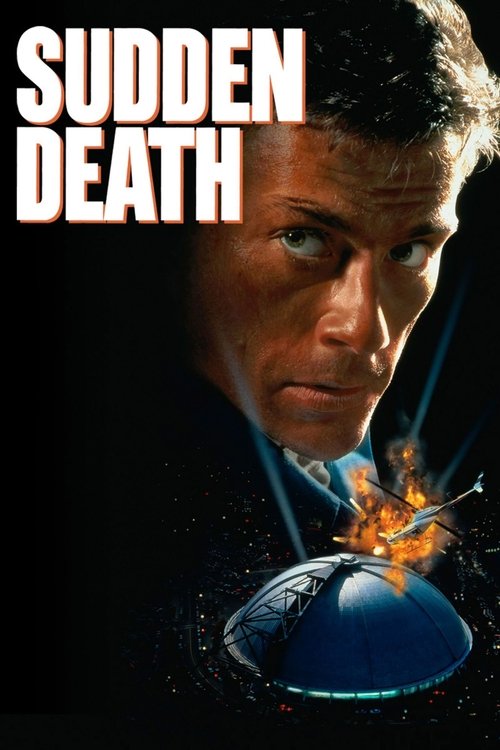
Sudden Death poster
6.9
Arcplot Score
Unverified

Sudden Death

1995110 minR
Director: Peter Hyams

When a man's daughter is suddenly taken during a championship hockey game – with the captors demanding a billion dollars by game's end – he frantically sets a plan in motion to rescue her and abort an impending explosion before the final buzzer.

Revenue$64.4M
Budget$35.0M
Profit
+29.4M
+84%

Working with a respectable budget of $35.0M, the film achieved a steady performer with $64.4M in global revenue (+84% profit margin).

TMDb6.0
Popularity1.6
Where to Watch
Fandango At HomeGoogle Play MoviesAmazon VideoYouTubeApple TV

Plot Structure

Story beats plotted across runtime

Act ISetupAct IIConfrontationAct IIIResolutionWorldbuilding3Resistance5Premise8Opposition10Crisis12Synthesis14124679111513
Color Timeline
Color timeline
Sound Timeline
Sound timeline
Threshold
Section
Plot Point

Narrative Arc

Emotional journey through the story's key moments

0-2-5
0m21m41m62m82m
Plot Point
Act Threshold
Emotional Arc

Story Circle

Blueprint 15-beat structure

Loading Story Circle...

Arcplot Score Breakdown

Structural Adherence: Flexible
8.3/10
4/10
3/10
Overall Score6.9/10

Weighted: Precision (70%) + Arc (15%) + Theme (15%)

Sudden Death (1995) showcases deliberately positioned narrative architecture, characteristic of Peter Hyams's storytelling approach. This structural analysis examines how the film's 12-point plot structure maps to proven narrative frameworks across 1 hour and 50 minutes. With an Arcplot score of 6.9, the film balances conventional beats with creative variation.

Structural Analysis

The Status Quo at 1 minutes (1% through the runtime) establishes Former firefighter Darren McCord fails to save a young girl from a burning building, a traumatic failure that haunts him and ends his firefighting career.. Notably, this early placement immediately immerses viewers in the story world.

The inciting incident occurs at 14 minutes when Darren discovers his daughter Emily has been kidnapped by terrorists who have infiltrated the arena and taken the Vice President hostage, with bombs planted throughout the building.. At 13% through the film, this Disruption is delayed, allowing extended setup of the story world. This beat shifts the emotional landscape, launching the protagonist into the central conflict.

At 56 minutes, the Midpoint arrives at 50% of the runtime—precisely centered, creating perfect narrative symmetry. The analysis reveals that this crucial beat False defeat: Darren makes contact with authorities but realizes he's completely on his own inside. His son Tyler is also captured, doubling the personal stakes. The full scope of the bomb threat is revealed., fundamentally raising what's at risk. The emotional intensity shifts, dividing the narrative into clear before-and-after phases.

The Collapse moment at 82 minutes (75% through) represents the emotional nadir. Here, The hockey game ends, triggering the bomb countdown. Darren faces the possibility of total failure - losing his children, the Vice President, and thousands of lives, repeating his original trauma on a massive scale., illustrates the protagonist at their lowest point. This beat's placement in the final quarter sets up the climactic reversal.

The Synthesis at 87 minutes initiates the final act resolution at 79% of the runtime. Final confrontation: Darren battles Foss in intense hand-to-hand combat, rescues his children, saves the Vice President, and neutralizes the bomb threat. He executes his plan with skill and determination., demonstrating the transformation achieved throughout the journey.

Emotional Journey

Sudden Death's emotional architecture traces a deliberate progression across 12 carefully calibrated beats.

Narrative Framework

This structural analysis employs a 15-point narrative structure framework that maps key story moments. By mapping Sudden Death against these established plot points, we can identify how Peter Hyams utilizes or subverts traditional narrative conventions. The plot point approach reveals not only adherence to structural principles but also creative choices that distinguish Sudden Death within the action genre.

Peter Hyams's Structural Approach

Among the 14 Peter Hyams films analyzed on Arcplot, the average structural score is 7.1, reflecting strong command of classical structure. Sudden Death takes a more unconventional approach compared to the director's typical style. For comparative analysis, explore the complete Peter Hyams filmography.

Comparative Analysis

Additional action films include The Ministry of Ungentlemanly Warfare, The Bad Guys and Lake Placid. For more Peter Hyams analyses, see The Presidio, Timecop and Running Scared.

Plot Points by Act

Act I

Setup
1

Status Quo

1 min0.9%-1 tone

Former firefighter Darren McCord fails to save a young girl from a burning building, a traumatic failure that haunts him and ends his firefighting career.

2

Theme

6 min5.6%-1 tone

A colleague or character mentions second chances and redemption, establishing the film's thematic question: Can someone overcome past failure and save lives again?

3

Worldbuilding

1 min0.9%-1 tone

Present day: Darren works as a fire marshal at Pittsburgh Civic Arena during Stanley Cup Game 7. He brings his children Emily and Tyler to the game. The Vice President attends. Normal world established before chaos.

4

Disruption

14 min13.1%-2 tone

Darren discovers his daughter Emily has been kidnapped by terrorists who have infiltrated the arena and taken the Vice President hostage, with bombs planted throughout the building.

5

Resistance

14 min13.1%-2 tone

Darren debates his options, realizes the scope of the terrorist plot, and struggles with whether he can act given his past trauma. He assesses the situation and his capabilities.

Act II

Confrontation
7

Mirror World

33 min29.9%-2 tone

Darren's relationship with his children, particularly their faith in him as a protector, represents the thematic counterpoint: he must become the hero they believe him to be.

8

Premise

27 min24.3%-2 tone

The "fun and games" of one man vs. terrorists: Darren systematically takes out terrorists using his arena knowledge, including the iconic kitchen fight with the mascot-disguised terrorist. Real-time tension builds with the hockey game.

9

Midpoint

56 min50.5%-3 tone

False defeat: Darren makes contact with authorities but realizes he's completely on his own inside. His son Tyler is also captured, doubling the personal stakes. The full scope of the bomb threat is revealed.

10

Opposition

56 min50.5%-3 tone

The terrorists close in on Darren, the hockey game approaches its end (triggering the bombs), both children are in immediate danger, and villain Joshua Foss proves to be a formidable opponent. Everything intensifies.

11

Collapse

82 min74.8%-4 tone

The hockey game ends, triggering the bomb countdown. Darren faces the possibility of total failure - losing his children, the Vice President, and thousands of lives, repeating his original trauma on a massive scale.

12

Crisis

82 min74.8%-4 tone

Dark night: Darren must confront his deepest fear of failing to save lives again. He processes the overwhelming odds and finds resolve in his love for his children and duty to protect innocents.

Act III

Resolution
14

Synthesis

87 min79.4%-4 tone

Final confrontation: Darren battles Foss in intense hand-to-hand combat, rescues his children, saves the Vice President, and neutralizes the bomb threat. He executes his plan with skill and determination.