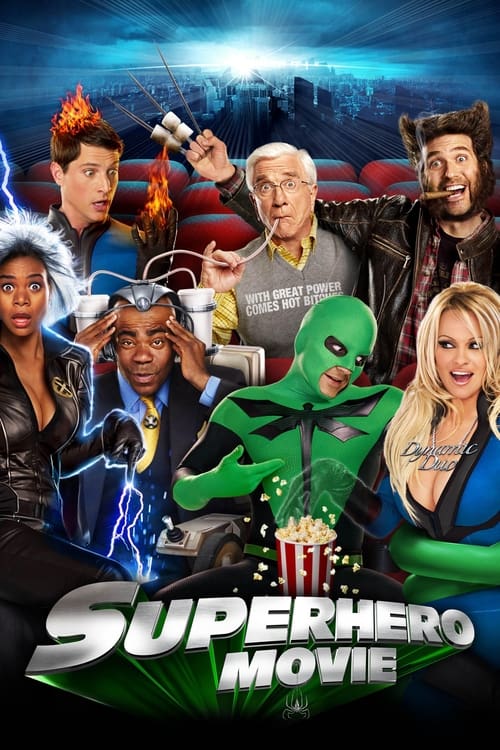
Superhero Movie
Rick Riker is a nerdy teen imbued with superpowers by a radioactive dragonfly. And because every hero needs a nemesis, enter Lou Landers, aka the villainously goofy Hourglass.
Despite a moderate budget of $35.0M, Superhero Movie became a solid performer, earning $71.6M worldwide—a 104% return.


Plot Structure
Story beats plotted across runtime


Narrative Arc
Emotional journey through the story's key moments
Story Circle
Blueprint 15-beat structure
Arcplot Score Breakdown
Weighted: Precision (70%) + Arc (15%) + Theme (15%)
Superhero Movie (2008) exemplifies deliberately positioned dramatic framework, characteristic of Craig Mazin's storytelling approach. This structural analysis examines how the film's 15-point plot structure maps to proven narrative frameworks across 1 hour and 22 minutes. With an Arcplot score of 7.3, the film balances conventional beats with creative variation.
Characters
Cast & narrative archetypes

Rick Riker / Dragonfly
Lou Landers / Hourglass
Jill Johnson
Aunt Lucille
Uncle Albert
Trey
Main Cast & Characters
Rick Riker / Dragonfly
Played by Drake Bell
Awkward high school student who gains superpowers from a genetically-modified dragonfly bite and becomes the hero Dragonfly.
Lou Landers / Hourglass
Played by Christopher McDonald
Wealthy businessman who becomes the villain Hourglass after a failed life-extension experiment drains others' life force.
Jill Johnson
Played by Sara Paxton
Rick's love interest and classmate who is initially dating Lance but eventually recognizes Rick's worth.
Aunt Lucille
Played by Marion Ross
Rick's caring and supportive aunt who raises him after his parents' death, often providing comedic wisdom.
Uncle Albert
Played by Leslie Nielsen
Rick's uncle on life support who communicates through flatulence and eventually inspires Rick with his final words.
Trey
Played by Kevin Hart
Rick's best friend and confidant who supports him through his superhero journey.
Structural Analysis
The Status Quo at 1 minutes (1% through the runtime) establishes Rick Riker is an ordinary, awkward high school student living with his Aunt Lucille and Uncle Albert, bullied at school and ignored by his crush Jill Johnson.. Structural examination shows that this early placement immediately immerses viewers in the story world.
The inciting incident occurs at 9 minutes when Rick is bitten by a genetically modified dragonfly during a school field trip to an animal research lab, initiating his transformation.. At 11% through the film, this Disruption aligns precisely with traditional story structure. This beat shifts the emotional landscape, launching the protagonist into the central conflict.
The First Threshold at 21 minutes marks the transition into Act II, occurring at 25% of the runtime. This reveals the protagonist's commitment to After Uncle Albert is killed by a criminal Rick could have stopped, Rick makes the active choice to become a superhero - the Dragonfly - to honor his uncle and fight crime., moving from reaction to action.
At 41 minutes, the Midpoint arrives at 50% of the runtime—precisely centered, creating perfect narrative symmetry. Of particular interest, this crucial beat Lou Landers becomes the villain Hourglass after a laboratory accident, raising the stakes. Rick realizes he now faces a supervillain threat, not just street crime, and the fun and games are over., fundamentally raising what's at risk. The emotional intensity shifts, dividing the narrative into clear before-and-after phases.
The Collapse moment at 60 minutes (74% through) represents the emotional nadir. Here, Hourglass captures Jill and Aunt Lucille, threatening to drain their life force. Rick is defeated in battle, loses his powers temporarily, and faces his darkest moment as both hero and person., indicates the protagonist at their lowest point. This beat's placement in the final quarter sets up the climactic reversal.
The Second Threshold at 65 minutes initiates the final act resolution at 79% of the runtime. Rick realizes that being a hero isn't about powers but about courage and responsibility. He regains his resolve and powers through inner strength and determination to save those he loves., demonstrating the transformation achieved throughout the journey.
Emotional Journey
Superhero Movie's emotional architecture traces a deliberate progression across 15 carefully calibrated beats.
Narrative Framework
This structural analysis employs systematic plot point analysis that identifies crucial turning points. By mapping Superhero Movie against these established plot points, we can identify how Craig Mazin utilizes or subverts traditional narrative conventions. The plot point approach reveals not only adherence to structural principles but also creative choices that distinguish Superhero Movie within the comedy genre.
Comparative Analysis
Additional comedy films include The Bad Guys, Ella Enchanted and The Evening Star.
Plot Points by Act
Act I
SetupStatus Quo
Rick Riker is an ordinary, awkward high school student living with his Aunt Lucille and Uncle Albert, bullied at school and ignored by his crush Jill Johnson.
Theme
Uncle Albert tells Rick that "with great power comes great responsibility" - the thematic core about what it means to be a hero.
Worldbuilding
Establishing Rick's ordinary world: his relationship with aunt and uncle, his unrequited love for Jill, his friendship with Trey, the school bully dynamics, and introduction of Lou Landers as a wealthy industrialist.
Disruption
Rick is bitten by a genetically modified dragonfly during a school field trip to an animal research lab, initiating his transformation.
Resistance
Rick discovers his new powers (super strength, wall-climbing, enhanced senses) and struggles to control them. He debates what to do with these abilities while dealing with awkward physical changes and continued school humiliation.
Act II
ConfrontationFirst Threshold
After Uncle Albert is killed by a criminal Rick could have stopped, Rick makes the active choice to become a superhero - the Dragonfly - to honor his uncle and fight crime.
Mirror World
Rick develops a deeper connection with Jill Johnson, who represents the human/emotional life Rick wants, providing the thematic counterpoint to his superhero identity.
Premise
Rick embraces his role as the Dragonfly, fighting crime across the city, becoming a media sensation, and enjoying the perks of being a superhero while balancing his pursuit of Jill.
Midpoint
Lou Landers becomes the villain Hourglass after a laboratory accident, raising the stakes. Rick realizes he now faces a supervillain threat, not just street crime, and the fun and games are over.
Opposition
Hourglass begins draining life force from victims to extend his own life. Rick struggles to balance his superhero duties with his relationship with Jill. The villain gets stronger while Rick's personal life deteriorates.
Collapse
Hourglass captures Jill and Aunt Lucille, threatening to drain their life force. Rick is defeated in battle, loses his powers temporarily, and faces his darkest moment as both hero and person.
Crisis
Rick confronts his fears and self-doubt, processing the loss and contemplating giving up. He reflects on Uncle Albert's words about responsibility and what it truly means to be a hero.
Act III
ResolutionSecond Threshold
Rick realizes that being a hero isn't about powers but about courage and responsibility. He regains his resolve and powers through inner strength and determination to save those he loves.
Synthesis
Rick confronts Hourglass in the final battle, using both his powers and the lessons he's learned about responsibility. He rescues Jill and Aunt Lucille, defeats the villain, and saves the city.
Transformation
Rick stands confidently as both the Dragonfly and as himself, having integrated his dual identity. He's no longer the awkward, powerless kid from the opening - he's a true hero who understands that power and responsibility go hand in hand.