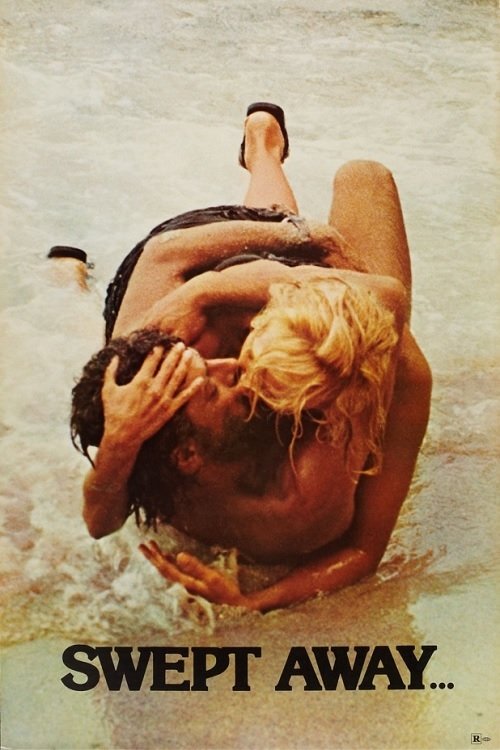
Swept Away
A spoiled rich woman and a brutish Communist deckhand become stranded alone on a desert island after venturing away from their cruise.
The film earned $6.0M at the global box office.
4 wins & 4 nominations


Plot Structure
Story beats plotted across runtime


Narrative Arc
Emotional journey through the story's key moments
Story Circle
Blueprint 15-beat structure
Arcplot Score Breakdown
Weighted: Precision (70%) + Arc (15%) + Theme (15%)
Swept Away (1974) showcases deliberately positioned narrative architecture, characteristic of Lina Wertmüller's storytelling approach. This structural analysis examines how the film's 15-point plot structure maps to proven narrative frameworks across 1 hour and 50 minutes. With an Arcplot score of 7.4, the film balances conventional beats with creative variation.
Characters
Cast & narrative archetypes

Raffaella Pavone Lanzetti
Gennarino Carunchio
Main Cast & Characters
Raffaella Pavone Lanzetti
Played by Mariangela Melato
A wealthy, spoiled capitalist woman who becomes stranded on an island with a communist sailor she previously mistreated.
Gennarino Carunchio
Played by Giancarlo Giannini
A communist sailor who reverses power dynamics when stranded on an island with his former employer's wealthy guest.
Structural Analysis
The Status Quo at 1 minutes (1% through the runtime) establishes Raffaella lounges on a luxury yacht in the Mediterranean, surrounded by wealthy friends, embodying idle bourgeois privilege as she complains about the service and berates the crew.. Significantly, this early placement immediately immerses viewers in the story world.
The inciting incident occurs at 13 minutes when When Raffaella demands Gennarino take her out in the dinghy to catch up with her friends, the motor breaks down and they find themselves adrift on the open sea, separated from the yacht and civilization.. At 12% through the film, this Disruption aligns precisely with traditional story structure. This beat shifts the emotional landscape, launching the protagonist into the central conflict.
The First Threshold at 28 minutes marks the transition into Act II, occurring at 25% of the runtime. This illustrates the protagonist's commitment to They wash ashore on a deserted island, and Gennarino makes the conscious decision to no longer serve Raffaella. He declares that here, without money or society, he is the one with power because he possesses the survival skills she lacks., moving from reaction to action.
At 55 minutes, the Midpoint arrives at 50% of the runtime—precisely centered, creating perfect narrative symmetry. Structural examination shows that this crucial beat Raffaella confesses she has fallen in love with Gennarino. What began as domination transforms into an intense, seemingly mutual passion. They consummate their relationship and live as lovers on the island—a false victory that ignores the unsustainability of their isolation., fundamentally raising what's at risk. The emotional intensity shifts, dividing the narrative into clear before-and-after phases.
The Collapse moment at 83 minutes (75% through) represents the emotional nadir. Here, A rescue boat spots them. Gennarino wants to remain on the island forever, but Raffaella hesitates. The approaching return to society signals the death of their fantasy—civilization will inevitably restore the class dynamics that define their incompatibility., demonstrates the protagonist at their lowest point. This beat's placement in the final quarter sets up the climactic reversal.
The Second Threshold at 88 minutes initiates the final act resolution at 80% of the runtime. They are rescued and returned to the mainland. Gennarino realizes the test will be whether Raffaella will leave her wealthy husband and choose him. He tells her to decide: meet him and run away together, or return to her old life forever., demonstrating the transformation achieved throughout the journey.
Emotional Journey
Swept Away's emotional architecture traces a deliberate progression across 15 carefully calibrated beats.
Narrative Framework
This structural analysis employs a 15-point narrative structure framework that maps key story moments. By mapping Swept Away against these established plot points, we can identify how Lina Wertmüller utilizes or subverts traditional narrative conventions. The plot point approach reveals not only adherence to structural principles but also creative choices that distinguish Swept Away within the comedy genre.
Comparative Analysis
Additional comedy films include The Bad Guys, Ella Enchanted and The Evening Star.
Plot Points by Act
Act I
SetupStatus Quo
Raffaella lounges on a luxury yacht in the Mediterranean, surrounded by wealthy friends, embodying idle bourgeois privilege as she complains about the service and berates the crew.
Theme
During a political argument on deck, a guest remarks that class distinctions are merely constructs of civilization that would crumble without society's rules—foreshadowing the film's central exploration of power dynamics stripped of social context.
Worldbuilding
Life aboard the yacht establishes the rigid class divide: Raffaella relentlessly humiliates Gennarino, mocking his Communist beliefs, his Sicilian accent, and his servile position, while he seethes with suppressed resentment toward her and her class.
Disruption
When Raffaella demands Gennarino take her out in the dinghy to catch up with her friends, the motor breaks down and they find themselves adrift on the open sea, separated from the yacht and civilization.
Resistance
Stranded at sea, Raffaella continues to treat Gennarino as her servant, demanding he row and find food, while he debates whether to maintain servitude or assert himself. Their survival becomes increasingly precarious as provisions dwindle.
Act II
ConfrontationFirst Threshold
They wash ashore on a deserted island, and Gennarino makes the conscious decision to no longer serve Raffaella. He declares that here, without money or society, he is the one with power because he possesses the survival skills she lacks.
Mirror World
On the island, a new dynamic emerges as Raffaella, desperate for food and survival, must depend entirely on Gennarino. Their relationship transforms from employer-servant to an inverted power structure that will evolve into a twisted romance.
Premise
Gennarino exacts revenge for years of class humiliation, forcing Raffaella to serve him, cook, and submit to his authority. The power inversion is brutal, yet gradually an intense, sadomasochistic attraction develops between them as civilized pretenses fall away.
Midpoint
Raffaella confesses she has fallen in love with Gennarino. What began as domination transforms into an intense, seemingly mutual passion. They consummate their relationship and live as lovers on the island—a false victory that ignores the unsustainability of their isolation.
Opposition
Their island idyll continues, but cracks appear. Raffaella professes complete submission and love, yet the audience senses unease. When a boat appears offshore, offering rescue, the question of whether their love can survive return to civilization looms ominously.
Collapse
A rescue boat spots them. Gennarino wants to remain on the island forever, but Raffaella hesitates. The approaching return to society signals the death of their fantasy—civilization will inevitably restore the class dynamics that define their incompatibility.
Crisis
Gennarino desperately proposes they hide and let the boat pass, or flee together to start a new life. Raffaella, torn between love and the comfort of her old life, struggles with her decision as their paradise crumbles around them.
Act III
ResolutionSecond Threshold
They are rescued and returned to the mainland. Gennarino realizes the test will be whether Raffaella will leave her wealthy husband and choose him. He tells her to decide: meet him and run away together, or return to her old life forever.
Synthesis
Back in civilization, the class walls immediately resurrect themselves. Raffaella is collected by her husband, returning to luxury and privilege. Gennarino waits at the appointed place for her to meet him, clinging to hope that their love was real.
Transformation
Raffaella does not come. Gennarino waits alone, ultimately abandoned. The final image shows him defeated, understanding that their love could not survive society's return—class, ultimately, proved more powerful than passion. The status quo has been devastatingly restored.