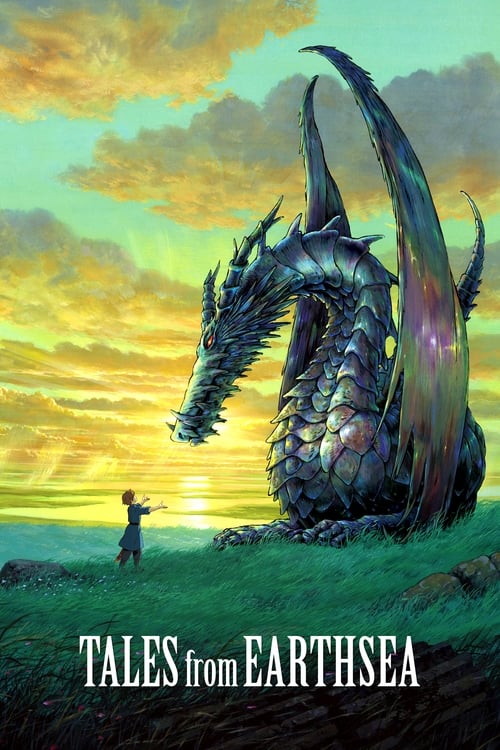
Tales from Earthsea
Something bizarre has come over the land. The kingdom is deteriorating. People are beginning to act strange... What's even more strange is that people are beginning to see dragons, which shouldn't enter the world of humans. Due to all these bizarre events, Ged, a wandering wizard, is investigating the cause. During his journey, he meets Prince Arren, a young distraught teenage boy. While Arren may look like a shy young teen, he has a severe dark side, which grants him strength, hatred, ruthlessness and has no mercy, especially when it comes to protecting Teru. For the witch Kumo this is a perfect opportunity. She can use the boy's "fears" against the very one who would help him, Ged.
Despite a mid-range budget of $22.0M, Tales from Earthsea became a financial success, earning $68.6M worldwide—a 212% return.


Plot Structure
Story beats plotted across runtime


Narrative Arc
Emotional journey through the story's key moments
Story Circle
Blueprint 15-beat structure
Arcplot Score Breakdown
Weighted: Precision (70%) + Arc (15%) + Theme (15%)
Tales from Earthsea (2006) exemplifies strategically placed narrative architecture, characteristic of Goro Miyazaki's storytelling approach. This structural analysis examines how the film's 15-point plot structure maps to proven narrative frameworks across 1 hour and 55 minutes. With an Arcplot score of 6.3, the film takes an unconventional approach to traditional narrative frameworks.
Characters
Cast & narrative archetypes

Prince Arren
Sparrowhawk (Ged)
Therru (Tehanu)
Cob
Tenar
Main Cast & Characters
Prince Arren
Played by Junichi Okada
Troubled young prince who murders his father and flees, struggling with his dark shadow self while seeking his true name.
Sparrowhawk (Ged)
Played by Bunta Sugawara
Powerful Archmage investigating the disruption of the world's balance, who becomes Arren's reluctant mentor and guide.
Therru (Tehanu)
Played by Aoi Teshima
Scarred young girl enslaved and abused, who befriends Arren and harbors a hidden power connected to dragons.
Cob
Played by Yūko Tanaka
Dark sorcerer seeking immortality who manipulates the world's equilibrium and preys on Arren's fears and shadow self.
Tenar
Played by Jun Fubuki
Former priestess who now lives a quiet life on a farm, offering shelter and wisdom to Sparrowhawk and his companions.
Structural Analysis
The Status Quo at 1 minutes (1% through the runtime) establishes Dragons fighting in stormy skies as the world's balance crumbles. The kingdom of Enlad is plagued by drought and pestilence, establishing a world where the equilibrium between life and death has been disrupted.. Of particular interest, this early placement immediately immerses viewers in the story world.
The inciting incident occurs at 14 minutes when Arren murders his father the King and steals his magical sword. This shocking act of patricide forces Arren to flee his kingdom, setting his journey into motion as a fugitive carrying immense guilt.. At 12% through the film, this Disruption aligns precisely with traditional story structure. This beat shifts the emotional landscape, launching the protagonist into the central conflict.
The First Threshold at 29 minutes marks the transition into Act II, occurring at 25% of the runtime. This indicates the protagonist's commitment to Arren chooses to accompany Sparrowhawk to Tenar's farm rather than continue wandering aimlessly. This decision to seek refuge and potentially face his demons marks his entry into the new world of Act 2., moving from reaction to action.
At 58 minutes, the Midpoint arrives at 50% of the runtime—precisely centered, creating perfect narrative symmetry. The analysis reveals that this crucial beat Arren's dark shadow-self emerges and nearly kills Therru. The truth of his patricide is revealed, and his inability to control his darkness becomes apparent. This false defeat shows that peaceful farm life cannot heal what is broken within him., fundamentally raising what's at risk. The emotional intensity shifts, dividing the narrative into clear before-and-after phases.
The Collapse moment at 86 minutes (75% through) represents the emotional nadir. Here, Sparrowhawk is captured and his magic bound by Cob. Arren, stripped of his will through his True Name, is forced to watch helplessly. Cob opens the door between life and death, and the world begins to unravel—the ultimate "whiff of death" as existence itself threatens to collapse., shows the protagonist at their lowest point. This beat's placement in the final quarter sets up the climactic reversal.
The Second Threshold at 92 minutes initiates the final act resolution at 80% of the runtime. Therru calls Arren by his True Name with love rather than domination, breaking Cob's spell. Arren realizes that accepting death—not fearing it—is the source of true life. He reclaims his will and his father's sword, choosing to fight., demonstrating the transformation achieved throughout the journey.
Emotional Journey
Tales from Earthsea's emotional architecture traces a deliberate progression across 15 carefully calibrated beats.
Narrative Framework
This structural analysis employs structural analysis methodology used to understand storytelling architecture. By mapping Tales from Earthsea against these established plot points, we can identify how Goro Miyazaki utilizes or subverts traditional narrative conventions. The plot point approach reveals not only adherence to structural principles but also creative choices that distinguish Tales from Earthsea within the animation genre.
Goro Miyazaki's Structural Approach
Among the 2 Goro Miyazaki films analyzed on Arcplot, the average structural score is 5.8, showcasing experimental approaches to narrative form. Tales from Earthsea represents one of the director's most structurally precise works. For comparative analysis, explore the complete Goro Miyazaki filmography.
Comparative Analysis
Additional animation films include The Bad Guys, Puss in Boots and Violet Evergarden: Eternity and the Auto Memory Doll. For more Goro Miyazaki analyses, see From Up on Poppy Hill.
Plot Points by Act
Act I
SetupStatus Quo
Dragons fighting in stormy skies as the world's balance crumbles. The kingdom of Enlad is plagued by drought and pestilence, establishing a world where the equilibrium between life and death has been disrupted.
Theme
The King speaks of the world's imbalance, stating that light and darkness, life and death must exist together. This establishes the central theme that one cannot embrace life while fearing death.
Worldbuilding
The world of Earthsea is established as one in crisis—crops failing, wizards losing power, dragons appearing in the east. Prince Arren is introduced as troubled, haunted by a shadow of himself, culminating in his inexplicable act of patricide.
Disruption
Arren murders his father the King and steals his magical sword. This shocking act of patricide forces Arren to flee his kingdom, setting his journey into motion as a fugitive carrying immense guilt.
Resistance
Arren wanders the wilderness, nearly killed by wolves before being rescued by the Archmage Sparrowhawk (Ged). They travel together as Sparrowhawk investigates the world's imbalance, while Arren struggles with his inner darkness and reveals his fear of death.
Act II
ConfrontationFirst Threshold
Arren chooses to accompany Sparrowhawk to Tenar's farm rather than continue wandering aimlessly. This decision to seek refuge and potentially face his demons marks his entry into the new world of Act 2.
Mirror World
Arren meets Therru, the scarred girl who lives with Tenar. Despite her disfigurement from being burned and abandoned, she embraces life fully. She represents what Arren needs to learn—accepting mortality gives life meaning.
Premise
Arren experiences peaceful farm life with Tenar and Therru. He learns to work the land, connects with Therru despite her initial hostility, and glimpses what a meaningful life could be. Meanwhile, the wizard Lord Cob's presence looms as Sparrowhawk investigates the source of the world's imbalance.
Midpoint
Arren's dark shadow-self emerges and nearly kills Therru. The truth of his patricide is revealed, and his inability to control his darkness becomes apparent. This false defeat shows that peaceful farm life cannot heal what is broken within him.
Opposition
Lord Cob captures Arren by exploiting his fear and learning his True Name, gaining complete control over him. Cob uses Arren as bait to lure Sparrowhawk, revealing his plan to open the door between life and death to achieve immortality. Therru searches for Arren while Tenar is also taken captive.
Collapse
Sparrowhawk is captured and his magic bound by Cob. Arren, stripped of his will through his True Name, is forced to watch helplessly. Cob opens the door between life and death, and the world begins to unravel—the ultimate "whiff of death" as existence itself threatens to collapse.
Crisis
With Sparrowhawk powerless and Arren enslaved, all seems lost. Therru arrives at Cob's castle alone to rescue them, representing the thematic truth that one who accepts death can act without fear. Arren witnesses her courage despite the hopeless situation.
Act III
ResolutionSecond Threshold
Therru calls Arren by his True Name with love rather than domination, breaking Cob's spell. Arren realizes that accepting death—not fearing it—is the source of true life. He reclaims his will and his father's sword, choosing to fight.
Synthesis
Arren confronts Lord Cob in the crumbling castle, no longer afraid of death. When Cob threatens Therru, she transforms into a dragon—revealing her true nature. Together, Arren and dragon-Therru defeat Cob, who disintegrates when the door between life and death closes, his immortality proving hollow.
Transformation
Arren decides to return home to face judgment for his father's murder, finally accepting responsibility. He and Therru part with the promise to meet again. Unlike the opening's stormy chaos, the world is at peace—Arren has found balance within himself by accepting both life and death.