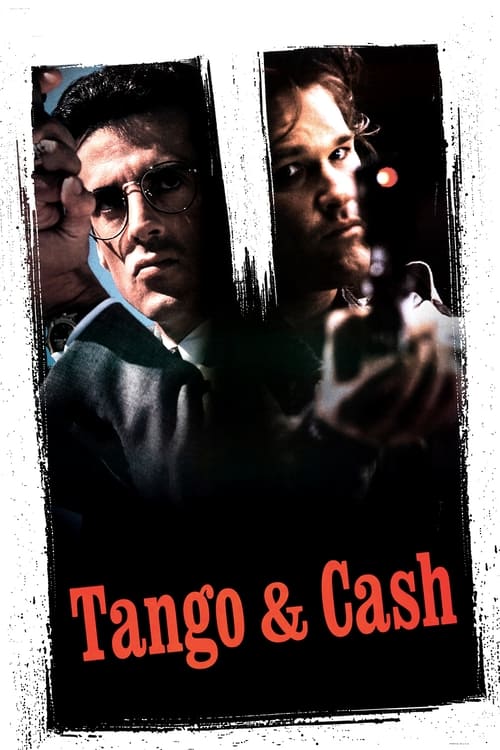
Tango & Cash
Ray Tango and Gabriel Cash are two successful narcotics detectives who can't stand each other. Crime lord Yves Perret, furious at the loss of income they have caused him, plots an elaborate revenge against them.
Working with a moderate budget of $55.0M, the film achieved a steady performer with $63.4M in global revenue (+15% profit margin).


Plot Structure
Story beats plotted across runtime


Narrative Arc
Emotional journey through the story's key moments
Story Circle
Blueprint 15-beat structure
Arcplot Score Breakdown
Weighted: Precision (70%) + Arc (15%) + Theme (15%)
Tango & Cash (1989) reveals carefully calibrated narrative architecture, characteristic of Andrei Konchalovsky's storytelling approach. This structural analysis examines how the film's 15-point plot structure maps to proven narrative frameworks across 1 hour and 44 minutes. With an Arcplot score of 7.9, the film showcases strong structural fundamentals.
Characters
Cast & narrative archetypes

Ray Tango
Gabe Cash
Yves Perret
Kiki Tango
Requin
Quantrill
Main Cast & Characters
Ray Tango
Played by Sylvester Stallone
A sophisticated, sharply-dressed LAPD narcotics detective known for his intelligence and refined approach to police work.
Gabe Cash
Played by Kurt Russell
A rough-edged, wisecracking LAPD detective who relies on street smarts and unconventional methods.
Yves Perret
Played by Jack Palance
A ruthless British crime lord who orchestrates an elaborate frame-up to eliminate the two detectives threatening his empire.
Kiki Tango
Played by Teri Hatcher
Ray Tango's sister who works as a dancer and becomes romantically involved with Cash.
Requin
Played by Brion James
Perret's cold and efficient second-in-command who executes his boss's deadly plans.
Quantrill
Played by Geoffrey Lewis
A corrupt FBI agent working for Perret who helps orchestrate the frame-up of Tango and Cash.
Structural Analysis
The Status Quo at 1 minutes (1% through the runtime) establishes Ray Tango intercepts a fuel tanker, busting a major drug operation with his signature style and precision. Establishes him as a sophisticated, by-the-book cop who gets results.. The analysis reveals that this early placement immediately immerses viewers in the story world.
The inciting incident occurs at 12 minutes when Tango and Cash are framed for murder when a federal agent is killed during what appears to be their drug deal. Both are arrested and their reputations destroyed.. At 11% through the film, this Disruption aligns precisely with traditional story structure. This beat shifts the emotional landscape, launching the protagonist into the central conflict.
The First Threshold at 25 minutes marks the transition into Act II, occurring at 24% of the runtime. This reveals the protagonist's commitment to Convicted and sentenced to prison, Tango and Cash make the choice to work together to survive and prove their innocence. They enter a deadly new world where Perret controls everything., moving from reaction to action.
At 50 minutes, the Midpoint arrives at 48% of the runtime—precisely centered, creating perfect narrative symmetry. Structural examination shows that this crucial beat Tango and Cash successfully escape from prison in spectacular fashion. False victory: they're free, but now fugitives with no evidence and everyone hunting them., fundamentally raising what's at risk. The emotional intensity shifts, dividing the narrative into clear before-and-after phases.
The Collapse moment at 77 minutes (74% through) represents the emotional nadir. Here, Kiki is kidnapped by Perret. The partnership seems to have cost them everything: their careers are destroyed, they're wanted criminals, and now an innocent woman will die because of their investigation., indicates the protagonist at their lowest point. This beat's placement in the final quarter sets up the climactic reversal.
The Second Threshold at 83 minutes initiates the final act resolution at 80% of the runtime. Armed with the full truth about Perret's operation and complete trust in each other, Tango and Cash synthesize their skills. They gear up and storm Perret's fortress as a unified force., demonstrating the transformation achieved throughout the journey.
Emotional Journey
Tango & Cash's emotional architecture traces a deliberate progression across 15 carefully calibrated beats.
Narrative Framework
This structural analysis employs a 15-point narrative structure framework that maps key story moments. By mapping Tango & Cash against these established plot points, we can identify how Andrei Konchalovsky utilizes or subverts traditional narrative conventions. The plot point approach reveals not only adherence to structural principles but also creative choices that distinguish Tango & Cash within the action genre.
Andrei Konchalovsky's Structural Approach
Among the 2 Andrei Konchalovsky films analyzed on Arcplot, the average structural score is 7.2, reflecting strong command of classical structure. Tango & Cash represents one of the director's most structurally precise works. For comparative analysis, explore the complete Andrei Konchalovsky filmography.
Comparative Analysis
Additional action films include The Bad Guys, Puss in Boots and Venom: The Last Dance. For more Andrei Konchalovsky analyses, see Runaway Train.
Plot Points by Act
Act I
SetupStatus Quo
Ray Tango intercepts a fuel tanker, busting a major drug operation with his signature style and precision. Establishes him as a sophisticated, by-the-book cop who gets results.
Theme
During early confrontations, the idea emerges that different methods can achieve the same goal. The theme explores whether opposing styles can coexist or must they unite.
Worldbuilding
Parallel introductions establish both cops' worlds: Tango as refined and cerebral, Cash as wild and instinctive. Both are top cops who despise each other. Crime lord Perret operates in the shadows, threatened by their success.
Disruption
Tango and Cash are framed for murder when a federal agent is killed during what appears to be their drug deal. Both are arrested and their reputations destroyed.
Resistance
The detectives resist cooperating, blaming each other. Their lawyer advises them to plead out, but both refuse to admit guilt. They debate their options while realizing they've been set up by someone powerful.
Act II
ConfrontationFirst Threshold
Convicted and sentenced to prison, Tango and Cash make the choice to work together to survive and prove their innocence. They enter a deadly new world where Perret controls everything.
Mirror World
In prison, the partnership becomes the thematic mirror: two opposites must truly unite. Their relationship will teach them that strength comes from combining different approaches rather than competing.
Premise
Buddy-cop prison survival: Tango and Cash navigate brutal prison life, facing assassination attempts orchestrated by Perret. They bond through shared danger, complementing each other's skills while planning escape.
Midpoint
Tango and Cash successfully escape from prison in spectacular fashion. False victory: they're free, but now fugitives with no evidence and everyone hunting them.
Opposition
As fugitives, pressure intensifies from all sides. Perret sends assassins. They seek evidence but face dead ends. Cash's sister Kiki becomes endangered. The cops hunting them close in while they struggle to prove the conspiracy.
Collapse
Kiki is kidnapped by Perret. The partnership seems to have cost them everything: their careers are destroyed, they're wanted criminals, and now an innocent woman will die because of their investigation.
Crisis
Dark moment of reckoning. Tango and Cash face the reality that playing by any rules won't work. They process their failure and find resolve: they must combine their approaches completely and go all-in.
Act III
ResolutionSecond Threshold
Armed with the full truth about Perret's operation and complete trust in each other, Tango and Cash synthesize their skills. They gear up and storm Perret's fortress as a unified force.
Synthesis
The finale assault on Perret's compound. Tango's strategy combined with Cash's improvisation creates an unstoppable team. They rescue Kiki, defeat Perret's forces, and expose the conspiracy, vindicating themselves.
Transformation
Tango and Cash stand together as partners and friends, their reputations restored. The closing image shows mutual respect replacing rivalry: two opposing forces now united and stronger for it.