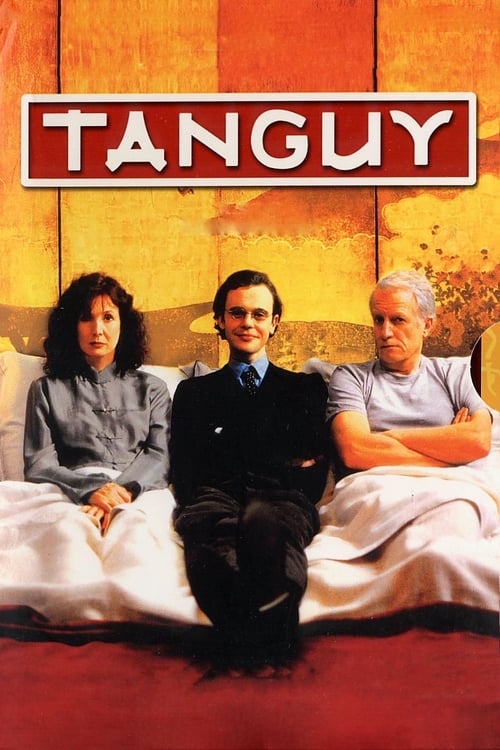
Tanguy
Tanguy is 28 years old and still living with his parents. They think it's time he moves out. He doesn't, so they hatch a plan.
The film earned $24.3M at the global box office.

Plot Structure
Story beats plotted across runtime


Narrative Arc
Emotional journey through the story's key moments
Story Circle
Blueprint 15-beat structure
Arcplot Score Breakdown
Weighted: Precision (70%) + Arc (15%) + Theme (15%)
Tanguy (2001) showcases strategically placed dramatic framework, characteristic of Étienne Chatiliez's storytelling approach. This structural analysis examines how the film's 15-point plot structure maps to proven narrative frameworks across 1 hour and 48 minutes. With an Arcplot score of 7.7, the film showcases strong structural fundamentals.
Characters
Cast & narrative archetypes

Tanguy Guetz
Édith Guetz
Paul Guetz
Marguerite
Main Cast & Characters
Tanguy Guetz
Played by Éric Berger
A 28-year-old Chinese philosophy teacher who lives comfortably with his parents and shows no interest in leaving home.
Édith Guetz
Played by Sabine Azéma
Tanguy's mother who becomes increasingly desperate to get her son to move out and resorts to elaborate schemes.
Paul Guetz
Played by André Dussollier
Tanguy's father, an intellectual who reluctantly joins his wife's efforts to push their son out of the nest.
Marguerite
Played by Hélène Duc
Tanguy's girlfriend who is also frustrated by his refusal to commit to independence or their relationship.
Structural Analysis
The Status Quo at 1 minutes (1% through the runtime) establishes Paul and Edith Guetz live comfortably in their bourgeois apartment with their 28-year-old son Tanguy, who shows no signs of leaving despite being a successful graduate student in Asian languages. The household operates with perfect routine and comfort.. Significantly, this early placement immediately immerses viewers in the story world.
The inciting incident occurs at 13 minutes when Edith reaches her breaking point after yet another dinner party where Tanguy charms everyone while she realizes she cannot continue living like this. She declares to Paul that Tanguy must leave - their son is ruining their lives and preventing them from enjoying their mature years.. At 12% through the film, this Disruption aligns precisely with traditional story structure. This beat shifts the emotional landscape, launching the protagonist into the central conflict.
The First Threshold at 27 minutes marks the transition into Act II, occurring at 25% of the runtime. This demonstrates the protagonist's commitment to Paul and Edith actively commit to "Operation Tanguy Must Go" - they will systematically make life at home unbearable to force him out. They cross from passive frustration into active psychological warfare against their own son., moving from reaction to action.
At 54 minutes, the Midpoint arrives at 50% of the runtime—precisely centered, creating perfect narrative symmetry. The analysis reveals that this crucial beat False defeat: The parents' most extreme sabotage attempt fails spectacularly. Tanguy not only doesn't leave but seems even more entrenched. Worse, Paul and Edith realize their schemes are damaging their own relationship and mental health more than affecting Tanguy. The stakes shift - they're destroying themselves., fundamentally raising what's at risk. The emotional intensity shifts, dividing the narrative into clear before-and-after phases.
The Collapse moment at 81 minutes (75% through) represents the emotional nadir. Here, Complete breakdown: Either the girlfriend leaves Tanguy, or the parents' marriage nearly dissolves, or Tanguy discovers the manipulation - the "death" of the family unit as they knew it. The schemes have achieved nothing but destruction. Everyone has lost., indicates the protagonist at their lowest point. This beat's placement in the final quarter sets up the climactic reversal.
The Second Threshold at 86 minutes initiates the final act resolution at 80% of the runtime. Breakthrough moment: Either Tanguy finally understands he must leave and chooses to grow up, or the parents find the right approach by combining honesty with love instead of manipulation. The synthesis of tough love with genuine care - what was missing all along was honest communication., demonstrating the transformation achieved throughout the journey.
Emotional Journey
Tanguy's emotional architecture traces a deliberate progression across 15 carefully calibrated beats.
Narrative Framework
This structural analysis employs systematic plot point analysis that identifies crucial turning points. By mapping Tanguy against these established plot points, we can identify how Étienne Chatiliez utilizes or subverts traditional narrative conventions. The plot point approach reveals not only adherence to structural principles but also creative choices that distinguish Tanguy within the comedy genre.
Comparative Analysis
Additional comedy films include The Bad Guys, Ella Enchanted and The Evening Star.
Plot Points by Act
Act I
SetupStatus Quo
Paul and Edith Guetz live comfortably in their bourgeois apartment with their 28-year-old son Tanguy, who shows no signs of leaving despite being a successful graduate student in Asian languages. The household operates with perfect routine and comfort.
Theme
A friend or family member comments on how wonderful it is that Tanguy is still home, suggesting "independence isn't everything" - but the comment lands with irony as Edith's face reveals her growing frustration with perpetual parenthood.
Worldbuilding
Establishment of the Guetz family dynamic: Tanguy is brilliant, charming, and utterly comfortable at home. Paul is a successful teacher proud of his son. Edith is increasingly desperate for her own life back. We see Tanguy's daily routines, his academic success, his relationship with girlfriend, and his parents' growing tension about their arrested empty-nest phase.
Disruption
Edith reaches her breaking point after yet another dinner party where Tanguy charms everyone while she realizes she cannot continue living like this. She declares to Paul that Tanguy must leave - their son is ruining their lives and preventing them from enjoying their mature years.
Resistance
Paul initially resists Edith's plan, debating whether they should push Tanguy out. Edith researches and plans strategies to make Tanguy want to leave. They consult friends, consider options, and Paul slowly comes around to supporting the scheme, though he's hesitant about deceiving their son.
Act II
ConfrontationFirst Threshold
Paul and Edith actively commit to "Operation Tanguy Must Go" - they will systematically make life at home unbearable to force him out. They cross from passive frustration into active psychological warfare against their own son.
Mirror World
Tanguy's girlfriend and his relationship storyline emerges as the emotional center - she represents the normal adult life he should be living. Her growing frustration with his refusal to commit or live independently mirrors the parents' struggle and embodies the theme of arrested development.
Premise
The comedic "fun and games" of Paul and Edith's escalating sabotage campaign: they stop doing his laundry, cook terrible food, play loud music, redecorate his room garishly, stage fights, and pretend to have financial troubles. Each scheme fails as Tanguy adapts with oblivious cheerfulness, finding solutions to every obstacle.
Midpoint
False defeat: The parents' most extreme sabotage attempt fails spectacularly. Tanguy not only doesn't leave but seems even more entrenched. Worse, Paul and Edith realize their schemes are damaging their own relationship and mental health more than affecting Tanguy. The stakes shift - they're destroying themselves.
Opposition
Desperation intensifies as the parents deploy increasingly unhinged tactics. Their marriage strains under the pressure. Tanguy remains oblivious or perhaps willfully ignorant. The girlfriend subplot escalates as she too pressures Tanguy. The parents face judgment from friends and family who discover the scheme.
Collapse
Complete breakdown: Either the girlfriend leaves Tanguy, or the parents' marriage nearly dissolves, or Tanguy discovers the manipulation - the "death" of the family unit as they knew it. The schemes have achieved nothing but destruction. Everyone has lost.
Crisis
In the emotional aftermath, Paul and Edith confront what they've become and what they've done. Tanguy processes his own revelation about his arrested life. Dark night of reckoning for all parties about dependency, parenthood, and growing up.
Act III
ResolutionSecond Threshold
Breakthrough moment: Either Tanguy finally understands he must leave and chooses to grow up, or the parents find the right approach by combining honesty with love instead of manipulation. The synthesis of tough love with genuine care - what was missing all along was honest communication.
Synthesis
Tanguy prepares to leave for real - perhaps accepting a position abroad or finally moving in with his girlfriend. The parents help him pack, there are tearful goodbyes mixed with relief. The family reconciles, acknowledging both the love and the dysfunction. Tanguy demonstrates real maturity for the first time.
Transformation
Final image mirrors the opening: Paul and Edith in their apartment, but now truly alone together. They look at each other with mix of relief, sadness, and rediscovered intimacy. The empty nest they fought for is finally theirs - bittersweet victory of successful parenting.