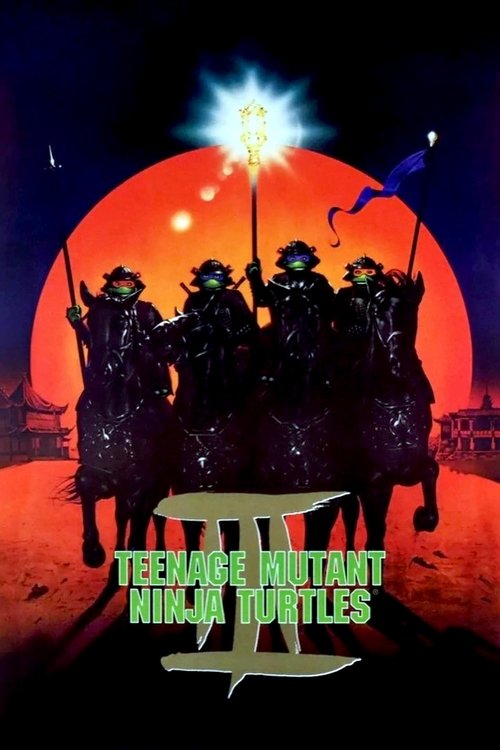
Teenage Mutant Ninja Turtles III
The four turtles travel back in time to the days of the legendary and deadly samurai in ancient Japan, where they train to perfect the art of becoming one. The turtles also assist a small village in an uprising.
Despite a mid-range budget of $21.0M, Teenage Mutant Ninja Turtles III became a solid performer, earning $42.3M worldwide—a 101% return.


Plot Structure
Story beats plotted across runtime


Narrative Arc
Emotional journey through the story's key moments
Story Circle
Blueprint 15-beat structure
Arcplot Score Breakdown
Weighted: Precision (70%) + Arc (15%) + Theme (15%)
Teenage Mutant Ninja Turtles III (1993) reveals precise dramatic framework, characteristic of Stuart Gillard's storytelling approach. This structural analysis examines how the film's 15-point plot structure maps to proven narrative frameworks across 1 hour and 35 minutes. With an Arcplot score of 6.8, the film balances conventional beats with creative variation.
Characters
Cast & narrative archetypes

Leonardo
Michelangelo
Donatello
Raphael
April O'Neil
Mitsu
Lord Norinaga
Walker
Master Splinter
Casey Jones
Main Cast & Characters
Leonardo
Played by Brian Tochi
The disciplined leader of the Ninja Turtles who must navigate feudal Japan and lead his brothers home.
Michelangelo
Played by Robbie Rist
The fun-loving, pizza-obsessed turtle who brings humor and heart to the time-displaced adventure.
Donatello
Played by Corey Feldman
The tech-savvy turtle who struggles with primitive feudal technology while helping solve the time-travel crisis.
Raphael
Played by Tim Kelleher
The hot-headed turtle whose warrior instincts serve him well in feudal Japan's conflicts.
April O'Neil
Played by Paige Turco
The investigative reporter who gets trapped in feudal Japan and helps coordinate the rescue mission.
Mitsu
Played by Vivian Wu
A brave Japanese rebel woman who fights against tyranny and forms a bond with the turtles.
Lord Norinaga
Played by Sab Shimono
The feudal warlord whose ambition and cruelty drive the conflict in 1603 Japan.
Walker
Played by Stuart Wilson
A British arms dealer who supplies Lord Norinaga with modern weapons for personal gain.
Master Splinter
Played by James Murray
The wise rat sensei who guides the turtles through their time-travel predicament.
Casey Jones
Played by Elias Koteas
April's boyfriend who gets accidentally swapped into feudal Japan in place of a samurai.
Structural Analysis
The Status Quo at 1 minutes (1% through the runtime) establishes The Turtles are in their sewer lair, bored and restless. Michelangelo dances while his brothers practice and argue, establishing their tight-knit but mundane existence underground.. The analysis reveals that this early placement immediately immerses viewers in the story world.
The inciting incident occurs at 12 minutes when April activates the scepter by reading its inscription aloud and is suddenly transported back to 1603 feudal Japan, swapped with Kenshin, Lord Norinaga's son. Her disappearance throws the Turtles into crisis.. At 12% through the film, this Disruption aligns precisely with traditional story structure. This beat shifts the emotional landscape, launching the protagonist into the central conflict.
The First Threshold at 23 minutes marks the transition into Act II, occurring at 24% of the runtime. This indicates the protagonist's commitment to The Turtles activate the scepter together and travel back to 1603 Japan, swapping places with four of Lord Norinaga's Honor Guard. They choose to leave their familiar world to save April., moving from reaction to action.
At 48 minutes, the Midpoint arrives at 50% of the runtime—precisely centered, creating perfect narrative symmetry. The analysis reveals that this crucial beat The Turtles successfully rescue April and reunite as a team in the rebel village. It appears they've accomplished their mission and can return home, a false victory as complications are about to mount., fundamentally raising what's at risk. The emotional intensity shifts, dividing the narrative into clear before-and-after phases.
The Collapse moment at 71 minutes (74% through) represents the emotional nadir. Here, Walker captures Mitsu and threatens to destroy the village completely. The scepter is in enemy hands, and the Turtles face the prospect of being stranded in time forever while the people who trusted them face annihilation., indicates the protagonist at their lowest point. This beat's placement in the final quarter sets up the climactic reversal.
The Second Threshold at 76 minutes initiates the final act resolution at 80% of the runtime. The Turtles realize they must fight for this village as if it were their own home, embracing Splinter's lesson that family is about people, not place. They commit to defeating Walker before worrying about going home., demonstrating the transformation achieved throughout the journey.
Emotional Journey
Teenage Mutant Ninja Turtles III's emotional architecture traces a deliberate progression across 15 carefully calibrated beats.
Narrative Framework
This structural analysis employs structural analysis methodology used to understand storytelling architecture. By mapping Teenage Mutant Ninja Turtles III against these established plot points, we can identify how Stuart Gillard utilizes or subverts traditional narrative conventions. The plot point approach reveals not only adherence to structural principles but also creative choices that distinguish Teenage Mutant Ninja Turtles III within the action genre.
Stuart Gillard's Structural Approach
Among the 3 Stuart Gillard films analyzed on Arcplot, the average structural score is 7.1, reflecting strong command of classical structure. Teenage Mutant Ninja Turtles III takes a more unconventional approach compared to the director's typical style. For comparative analysis, explore the complete Stuart Gillard filmography.
Comparative Analysis
Additional action films include The Bad Guys, Puss in Boots and Venom: The Last Dance. For more Stuart Gillard analyses, see RocketMan, Paradise.
Plot Points by Act
Act I
SetupStatus Quo
The Turtles are in their sewer lair, bored and restless. Michelangelo dances while his brothers practice and argue, establishing their tight-knit but mundane existence underground.
Theme
Splinter tells the Turtles that home is not a place but the people you're with, foreshadowing that family transcends location and time itself.
Worldbuilding
We meet the Turtles in their lair life, April arrives with the mysterious Japanese scepter she found at a flea market, and Donatello examines the artifact while April reads the inscriptions.
Disruption
April activates the scepter by reading its inscription aloud and is suddenly transported back to 1603 feudal Japan, swapped with Kenshin, Lord Norinaga's son. Her disappearance throws the Turtles into crisis.
Resistance
Donatello studies the scepter and determines they have 60 hours before it loses power. The Turtles debate whether to follow April, while Splinter counsels them. Casey Jones agrees to watch over Kenshin and the other Honor Guard who will swap with the Turtles.
Act II
ConfrontationFirst Threshold
The Turtles activate the scepter together and travel back to 1603 Japan, swapping places with four of Lord Norinaga's Honor Guard. They choose to leave their familiar world to save April.
Mirror World
The Turtles meet Mitsu, the rebel village leader who embodies the theme of fighting for family and home. She initially distrusts them but represents the human connection they'll form in this era.
Premise
The Turtles explore feudal Japan, rescue April from Walker's prison, interact with villagers who think they're demons, and help the rebels. Michelangelo bonds with a young boy named Yoshi while the others adapt to this strange world.
Midpoint
The Turtles successfully rescue April and reunite as a team in the rebel village. It appears they've accomplished their mission and can return home, a false victory as complications are about to mount.
Opposition
Walker intensifies his attack on the village, Lord Norinaga demands his son returned, and the scepter is stolen. Michelangelo becomes attached to Yoshi and the village, creating tension about leaving. The Turtles must help defend the village while their window to return home shrinks.
Collapse
Walker captures Mitsu and threatens to destroy the village completely. The scepter is in enemy hands, and the Turtles face the prospect of being stranded in time forever while the people who trusted them face annihilation.
Crisis
The Turtles grapple with their impossible choice: save themselves or help the villagers. Michelangelo's attachment to Yoshi and the village weighs heavily. They must decide what kind of heroes they truly are.
Act III
ResolutionSecond Threshold
The Turtles realize they must fight for this village as if it were their own home, embracing Splinter's lesson that family is about people, not place. They commit to defeating Walker before worrying about going home.
Synthesis
The Turtles lead the villagers in a climactic battle against Walker and Norinaga's forces. Leonardo defeats Walker, Kenshin reconciles with his father, and the Turtles recover the scepter. Everyone is returned to their proper time just before the scepter's power fades.
Transformation
Back in the sewer lair, the Turtles are reunited with Splinter and April. Michelangelo reveals Yoshi's ancestor's cap he kept as a memento. The family is together, understanding now that their bond transcends any world they inhabit.