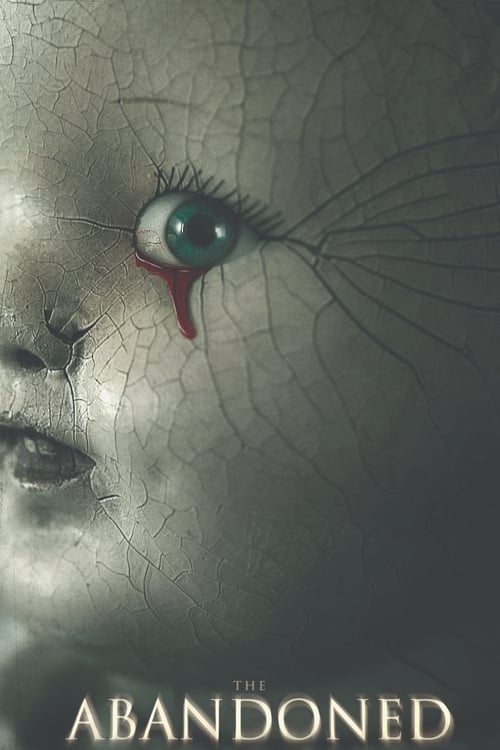
The Abandoned
Marie, a film producer, returns to her native Russia to find her birth parents. She quickly learns they are dead, and she has inherited their long-empty farmhouse. At the farm, she meets Nicolai, who claims to be her twin brother. Events take a terrifying turn when the two spot a pair of ghastly doppelgangers and the house itself seems to propel them toward a fate they should have met 40 years earlier.
Working with a tight budget of $3.0M, the film achieved a respectable showing with $4.5M in global revenue (+51% profit margin).


Plot Structure
Story beats plotted across runtime


Narrative Arc
Emotional journey through the story's key moments
Story Circle
Blueprint 15-beat structure
Arcplot Score Breakdown
Weighted: Precision (70%) + Arc (15%) + Theme (15%)
The Abandoned (2006) showcases deliberately positioned narrative design, characteristic of Nacho Cerdá's storytelling approach. This structural analysis examines how the film's 15-point plot structure maps to proven narrative frameworks across 1 hour and 39 minutes. With an Arcplot score of 7.5, the film showcases strong structural fundamentals.
Characters
Cast & narrative archetypes

Marie Jones
Nikolai
The Ghostly Mother
Main Cast & Characters
Marie Jones
Played by Anastasia Hille
An American film producer who travels to Russia to claim an inherited property, only to confront supernatural horror tied to her past.
Nikolai
Played by Karel Roden
Marie's twin brother who also arrives at the abandoned farmhouse, trapped in the same nightmarish loop.
The Ghostly Mother
Played by Valentin Ganev
The spectral figure of Marie and Nikolai's biological mother, who haunts the farmhouse.
Structural Analysis
The Status Quo at 1 minutes (1% through the runtime) establishes Marie arrives in Russia, a successful American film producer seeking information about her birth origins. She appears composed and professionally dressed, embodying her adopted Western life.. Significantly, this early placement immediately immerses viewers in the story world.
The inciting incident occurs at 11 minutes when Marie decides to visit the remote farmhouse despite warnings. Her guide refuses to wait for her, leaving her stranded in an isolated, decaying landscape as night approaches.. At 11% through the film, this Disruption aligns precisely with traditional story structure. This beat shifts the emotional landscape, launching the protagonist into the central conflict.
The First Threshold at 25 minutes marks the transition into Act II, occurring at 26% of the runtime. This indicates the protagonist's commitment to Marie and Nicolai see their own doppelgängers - ghostly versions of themselves. They choose to stay and uncover the truth rather than flee, crossing the threshold into the supernatural nightmare., moving from reaction to action.
At 50 minutes, the Midpoint arrives at 50% of the runtime—precisely centered, creating perfect narrative symmetry. The analysis reveals that this crucial beat Marie and Nicolai discover the horrifying truth: their mother killed them as babies to prevent them from becoming like their father, a violent monster. The stakes raise as they realize they may already be dead, reliving their deaths eternally., fundamentally raising what's at risk. The emotional intensity shifts, dividing the narrative into clear before-and-after phases.
The Collapse moment at 72 minutes (73% through) represents the emotional nadir. Here, Nicolai is killed by his doppelgänger, transforming into the undead creature himself. Marie witnesses her brother's death and transformation, representing the death of hope for escape or redemption., reveals the protagonist at their lowest point. This beat's placement in the final quarter sets up the climactic reversal.
The Second Threshold at 78 minutes initiates the final act resolution at 79% of the runtime. Marie realizes the only way to end the cycle is to accept her fate. She understands that she and Nicolai died as infants and have been reliving their deaths. She chooses to complete the loop rather than resist it., demonstrating the transformation achieved throughout the journey.
Emotional Journey
The Abandoned's emotional architecture traces a deliberate progression across 15 carefully calibrated beats.
Narrative Framework
This structural analysis employs a 15-point narrative structure framework that maps key story moments. By mapping The Abandoned against these established plot points, we can identify how Nacho Cerdá utilizes or subverts traditional narrative conventions. The plot point approach reveals not only adherence to structural principles but also creative choices that distinguish The Abandoned within the horror genre.
Comparative Analysis
Additional horror films include Thinner, A Nightmare on Elm Street and Mary Reilly.
Plot Points by Act
Act I
SetupStatus Quo
Marie arrives in Russia, a successful American film producer seeking information about her birth origins. She appears composed and professionally dressed, embodying her adopted Western life.
Theme
The notary tells Marie: "Some things are better left buried." This establishes the film's theme about confronting one's past and origins, no matter how dark.
Worldbuilding
Marie learns she was found as a baby near an abandoned Russian farmhouse. She inherited this property along with a twin brother. The notary provides minimal information, creating mystery about her origins.
Disruption
Marie decides to visit the remote farmhouse despite warnings. Her guide refuses to wait for her, leaving her stranded in an isolated, decaying landscape as night approaches.
Resistance
Marie explores the desolate farmhouse, discovering eerie remnants of the past. She encounters her twin brother Nicolai, who also came seeking answers. They debate whether to stay or leave as supernatural occurrences begin.
Act II
ConfrontationFirst Threshold
Marie and Nicolai see their own doppelgängers - ghostly versions of themselves. They choose to stay and uncover the truth rather than flee, crossing the threshold into the supernatural nightmare.
Mirror World
The relationship between Marie and Nicolai deepens as they realize they are bound together by their shared traumatic origin. Their doppelgängers represent their fated selves, mirroring the theme of inescapable destiny.
Premise
Marie and Nicolai explore the haunted farmhouse, experiencing increasingly disturbing visions of their violent past. They discover evidence of their mother's tragic fate and their father's dark nature. The house traps them in a temporal loop.
Midpoint
Marie and Nicolai discover the horrifying truth: their mother killed them as babies to prevent them from becoming like their father, a violent monster. The stakes raise as they realize they may already be dead, reliving their deaths eternally.
Opposition
The doppelgängers become more aggressive, hunting Marie and Nicolai through the house. The siblings try desperately to escape but find themselves trapped in repeating nightmarish scenarios. Their connection to their cursed bloodline strengthens.
Collapse
Nicolai is killed by his doppelgänger, transforming into the undead creature himself. Marie witnesses her brother's death and transformation, representing the death of hope for escape or redemption.
Crisis
Marie, now alone, confronts the devastating reality that she cannot escape her fate. She experiences visions of her mother's final desperate act and understands the curse is inescapable. She faces her darkest moment of existential horror.
Act III
ResolutionSecond Threshold
Marie realizes the only way to end the cycle is to accept her fate. She understands that she and Nicolai died as infants and have been reliving their deaths. She chooses to complete the loop rather than resist it.
Synthesis
Marie returns to the beginning of the temporal loop, now understanding the full tragic cycle. She witnesses the events from 1966 when she and Nicolai were murdered as babies. The narrative reveals the complete circular structure of their haunting.
Transformation
Marie becomes her own doppelgänger, completing the transformation. The film ends where it began - with the babies being abandoned in 1966, revealing that Marie's entire journey was a ghost's attempt to understand her own death. The cycle is eternal.