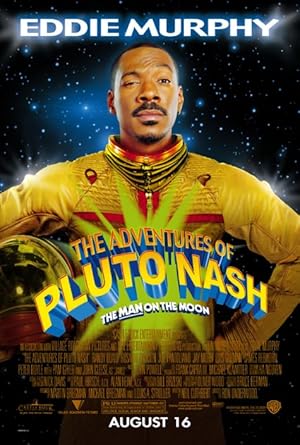
The Adventures of Pluto Nash
After his successful nightclub is blown to flaming bits, Pluto and his band travel across the moon looking for clues to the arsonist. Pluto, Bruno, and Dina search a seedy motel, Pluto's secret hideout, and the casino of the most powerful man on the moon for the evildoer, only to discover that his club's destruction might have been his own fault.
The film commercial failure against its substantial budget of $100.0M, earning $7.1M globally (-93% loss). While initial box office returns were modest, the film has gained appreciation for its distinctive approach within the action genre.
1 win & 12 nominations


Plot Structure
Story beats plotted across runtime


Narrative Arc
Emotional journey through the story's key moments
Story Circle
Blueprint 15-beat structure
Arcplot Score Breakdown
Weighted: Precision (70%) + Arc (15%) + Theme (15%)
The Adventures of Pluto Nash (2002) showcases carefully calibrated story structure, characteristic of Ron Underwood's storytelling approach. This structural analysis examines how the film's 15-point plot structure maps to proven narrative frameworks across 1 hour and 35 minutes. With an Arcplot score of 7.5, the film showcases strong structural fundamentals.
Characters
Cast & narrative archetypes

Pluto Nash
Dina Lake
Bruno
Rex Crater
Tony Francis
Rowland
Main Cast & Characters
Pluto Nash
Played by Eddie Murphy
A former smuggler turned nightclub owner on the Moon who must protect his business from gangsters trying to take over.
Dina Lake
Played by Rosario Dawson
An aspiring singer who becomes romantically involved with Pluto while caught up in his dangerous situation.
Bruno
Played by Randy Quaid
Pluto's loyal android bodyguard who provides protection and comic relief throughout their adventures.
Rex Crater
Played by Joe Pantoliano
The mysterious crime boss attempting to take over Pluto's club and control the Moon's underworld.
Tony Francis
Played by Jay Mohr
A mobster working for Rex Crater who pressures Pluto to sell his nightclub.
Rowland
Played by Luis Guzmán
A detective and old friend of Pluto who helps investigate the conspiracy on the Moon.
Structural Analysis
The Status Quo at 1 minutes (1% through the runtime) establishes Pluto Nash runs Club Pluto, a successful nightclub on the moon colony in 2087. He's living the dream he fought for, a self-made man who owns his own establishment.. Structural examination shows that this early placement immediately immerses viewers in the story world.
The inciting incident occurs at 10 minutes when Gangsters representing the mysterious Rex Crater make Pluto an offer to buy Club Pluto. When he refuses to sell, they blow up his nightclub, destroying his livelihood and forcing him into action.. At 11% through the film, this Disruption aligns precisely with traditional story structure. This beat shifts the emotional landscape, launching the protagonist into the central conflict.
The First Threshold at 23 minutes marks the transition into Act II, occurring at 24% of the runtime. This shows the protagonist's commitment to After another assassination attempt, Pluto actively chooses to hunt down Rex Crater and fight back rather than hide or leave the moon. He commits to the dangerous path of confronting the crime boss., moving from reaction to action.
At 47 minutes, the Midpoint arrives at 49% of the runtime—precisely centered, creating perfect narrative symmetry. Significantly, this crucial beat Pluto discovers that Rex Crater is building a massive casino empire and plans to monopolize the entire moon colony. The stakes raise from personal vendetta to saving the entire lunar community from corporate takeover. False defeat as the enemy seems too powerful., fundamentally raising what's at risk. The emotional intensity shifts, dividing the narrative into clear before-and-after phases.
The Collapse moment at 70 minutes (74% through) represents the emotional nadir. Here, Pluto is captured by Rex Crater's forces. His mother is threatened, Dina is in danger, and Bruno is damaged. Everything Pluto values is at risk and he faces the seeming death of his independence and dream., reveals the protagonist at their lowest point. This beat's placement in the final quarter sets up the climactic reversal.
The Second Threshold at 74 minutes initiates the final act resolution at 78% of the runtime. Pluto discovers that Rex Crater is actually his future self who time-traveled back, having become the corrupt businessman he once despised. This revelation gives Pluto clarity - he must stop his own dark future and reclaim his integrity., demonstrating the transformation achieved throughout the journey.
Emotional Journey
The Adventures of Pluto Nash's emotional architecture traces a deliberate progression across 15 carefully calibrated beats.
Narrative Framework
This structural analysis employs structural analysis methodology used to understand storytelling architecture. By mapping The Adventures of Pluto Nash against these established plot points, we can identify how Ron Underwood utilizes or subverts traditional narrative conventions. The plot point approach reveals not only adherence to structural principles but also creative choices that distinguish The Adventures of Pluto Nash within the action genre.
Ron Underwood's Structural Approach
Among the 5 Ron Underwood films analyzed on Arcplot, the average structural score is 7.2, reflecting strong command of classical structure. The Adventures of Pluto Nash represents one of the director's most structurally precise works. For comparative analysis, explore the complete Ron Underwood filmography.
Comparative Analysis
Additional action films include The Bad Guys, Puss in Boots and Venom: The Last Dance. For more Ron Underwood analyses, see Speechless, In The Mix and City Slickers.
Plot Points by Act
Act I
SetupStatus Quo
Pluto Nash runs Club Pluto, a successful nightclub on the moon colony in 2087. He's living the dream he fought for, a self-made man who owns his own establishment.
Theme
A character warns Pluto that everyone has a price and eventually you have to know when to cash out. Pluto refuses, stating some things aren't for sale - establishing the theme of integrity versus profit.
Worldbuilding
Establishment of lunar colony life, Pluto's nightclub operation, his relationship with his mother, and the criminal underworld. Introduction of Dina Lake as a lounge singer and the various colorful characters in Pluto's world.
Disruption
Gangsters representing the mysterious Rex Crater make Pluto an offer to buy Club Pluto. When he refuses to sell, they blow up his nightclub, destroying his livelihood and forcing him into action.
Resistance
Pluto debates what to do next, reluctantly teams up with Dina Lake who witnessed the bombing, and acquires Bruno the android bodyguard. They investigate who Rex Crater is and why he wants Pluto's property.
Act II
ConfrontationFirst Threshold
After another assassination attempt, Pluto actively chooses to hunt down Rex Crater and fight back rather than hide or leave the moon. He commits to the dangerous path of confronting the crime boss.
Mirror World
Pluto's relationship with Dina deepens as she represents what he's fighting for - authenticity and genuine connection rather than profit. She embodies the thematic question of what truly matters.
Premise
The fun of the lunar chase - Pluto, Dina, and Bruno navigate moon colony locations, have action sequences, comedic moments with the android bodyguard, and gradually uncover clues about Rex Crater's identity and plans.
Midpoint
Pluto discovers that Rex Crater is building a massive casino empire and plans to monopolize the entire moon colony. The stakes raise from personal vendetta to saving the entire lunar community from corporate takeover. False defeat as the enemy seems too powerful.
Opposition
Rex Crater's forces close in. Multiple attempts on Pluto's life intensify. His allies are threatened. The lunar authorities won't help. Every avenue seems blocked as the antagonist's power becomes overwhelming.
Collapse
Pluto is captured by Rex Crater's forces. His mother is threatened, Dina is in danger, and Bruno is damaged. Everything Pluto values is at risk and he faces the seeming death of his independence and dream.
Crisis
In captivity, Pluto hits his lowest emotional point, questioning whether fighting was worth it. He processes the cost of his principles and contemplates whether he should have just sold out from the beginning.
Act III
ResolutionSecond Threshold
Pluto discovers that Rex Crater is actually his future self who time-traveled back, having become the corrupt businessman he once despised. This revelation gives Pluto clarity - he must stop his own dark future and reclaim his integrity.
Synthesis
Pluto escapes, rallies his allies including repaired Bruno, and launches a final assault on Rex Crater's operation. The climactic confrontation where Pluto defeats his corrupt future self, dismantles the criminal empire, and saves the moon colony.
Transformation
Pluto rebuilds Club Pluto, having proven that integrity and community matter more than profit. With Dina by his side and his values intact, he represents the transformed hero who chose principles over selling out - the opposite of what Rex Crater became.