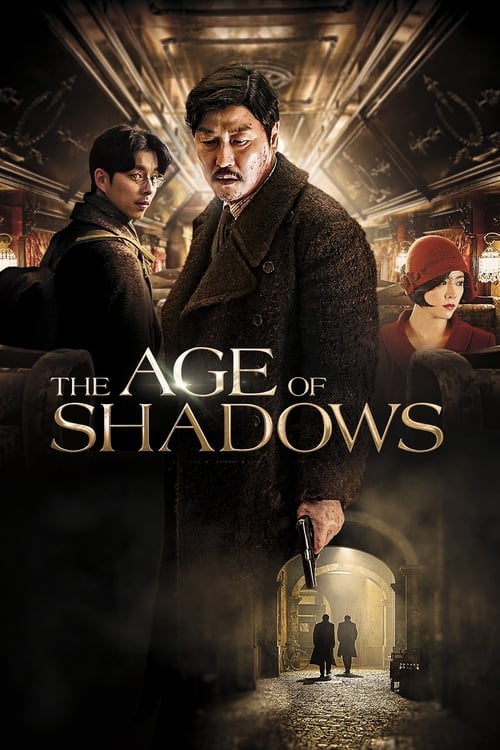
The Age of Shadows
Set in the late 1920s, The Age of Shadows follows the cat-and-mouse game that unfolds between a group of resistance fighters trying to bring in explosives from Shanghai to destroy key Japanese facilities in Seoul, and Japanese agents trying to stop them.
Despite its modest budget of $9.6M, The Age of Shadows became a solid performer, earning $53.2M worldwide—a 453% return. The film's fresh perspective engaged audiences, showing that strong storytelling can transcend budget limitations.
16 wins & 41 nominations
Plot Structure
Story beats plotted across runtime


Narrative Arc
Emotional journey through the story's key moments
Story Circle
Blueprint 15-beat structure
Arcplot Score Breakdown
Weighted: Precision (70%) + Arc (15%) + Theme (15%)
The Age of Shadows (2016) exhibits deliberately positioned narrative architecture, characteristic of Kim Jee-woon's storytelling approach. This structural analysis examines how the film's 15-point plot structure maps to proven narrative frameworks across 2 hours and 20 minutes. With an Arcplot score of 6.7, the film balances conventional beats with creative variation.
Characters
Cast & narrative archetypes

Lee Jung-chool
Kim Woo-jin
Yeon Gye-soon
Hashimoto
Jung Chae-san
Kim Jang-ok
Main Cast & Characters
Lee Jung-chool
Played by Song Kang-ho
A Korean police captain working for the Japanese colonial government who infiltrates the resistance while struggling with divided loyalties.
Kim Woo-jin
Played by Gong Yoo
A cunning resistance leader who works to smuggle explosives while attempting to turn Lee Jung-chool to the Korean cause.
Yeon Gye-soon
Played by Han Ji-min
A resistance operative and courier who becomes romantically involved with Lee Jung-chool while maintaining her revolutionary commitment.
Hashimoto
Played by Um Tae-goo
A ruthless Japanese police chief obsessed with crushing the Korean resistance through surveillance and brutal interrogation.
Jung Chae-san
Played by Lee Byung-hun
An older resistance leader and explosives expert who operates from Shanghai and leads the weapons smuggling operation.
Kim Jang-ok
Played by Park Hee-soon
A cheerful resistance member and explosives handler who provides comic relief while showing unwavering dedication to the cause.
Structural Analysis
The Status Quo at 1 minutes (1% through the runtime) establishes A resistance fighter flees across rooftops at night as Japanese police close in. Lee Jung-chool, a Korean captain working for the Japanese, leads the pursuit. The desperate chase ends in tragedy, establishing Jung-chool's position as a collaborator serving the colonial occupiers against his own people.. The analysis reveals that this early placement immediately immerses viewers in the story world.
The inciting incident occurs at 17 minutes when Japanese intelligence chief Higashi assigns Jung-chool to infiltrate the Heroic Corps resistance movement and get close to their leader Kim Woo-jin. Jung-chool must become a double agent, a mission that will force him to confront everything he has buried about his Korean identity.. At 12% through the film, this Disruption aligns precisely with traditional story structure. This beat shifts the emotional landscape, launching the protagonist into the central conflict.
The First Threshold at 35 minutes marks the transition into Act II, occurring at 25% of the runtime. This indicates the protagonist's commitment to Jung-chool makes the crucial choice to help the resistance smuggle explosives from Shanghai to Korea, actively participating in their mission rather than simply observing and reporting. This irreversible decision places him firmly in the resistance's operation, whether his loyalty is genuine or not., moving from reaction to action.
At 70 minutes, the Midpoint arrives at 50% of the runtime—precisely centered, creating perfect narrative symmetry. The analysis reveals that this crucial beat The train sequence reaches its climax when Japanese agents discover the explosives. A violent confrontation erupts, and several resistance members are killed or captured. Jung-chool's double game becomes infinitely more dangerous as Higashi grows suspicious and the surviving resistance members question whether there's a traitor among them., fundamentally raising what's at risk. The emotional intensity shifts, dividing the narrative into clear before-and-after phases.
The Collapse moment at 105 minutes (75% through) represents the emotional nadir. Here, Kim Woo-jin is captured and brutally tortured by the Japanese. Jung-chool is forced to witness his friend's suffering, unable to intervene without exposing himself. The man who showed him what true conviction looked like is being destroyed, and Jung-chool's years of collaboration have led directly to this moment., shows the protagonist at their lowest point. This beat's placement in the final quarter sets up the climactic reversal.
The Second Threshold at 112 minutes initiates the final act resolution at 80% of the runtime. Jung-chool makes his final choice: he will complete the resistance's mission himself. Using his position within Japanese intelligence, he plots to finish what Woo-jin started. His years of collaboration become his weapon—no one suspects the loyal captain as he prepares to strike from within., demonstrating the transformation achieved throughout the journey.
Emotional Journey
The Age of Shadows's emotional architecture traces a deliberate progression across 15 carefully calibrated beats.
Narrative Framework
This structural analysis employs structural analysis methodology used to understand storytelling architecture. By mapping The Age of Shadows against these established plot points, we can identify how Kim Jee-woon utilizes or subverts traditional narrative conventions. The plot point approach reveals not only adherence to structural principles but also creative choices that distinguish The Age of Shadows within the action genre.
Kim Jee-woon's Structural Approach
Among the 2 Kim Jee-woon films analyzed on Arcplot, the average structural score is 6.8, demonstrating varied approaches to story architecture. The Age of Shadows takes a more unconventional approach compared to the director's typical style. For comparative analysis, explore the complete Kim Jee-woon filmography.
Comparative Analysis
Additional action films include The Bad Guys, Puss in Boots and Venom: The Last Dance. For more Kim Jee-woon analyses, see I Saw the Devil.
Plot Points by Act
Act I
SetupStatus Quo
A resistance fighter flees across rooftops at night as Japanese police close in. Lee Jung-chool, a Korean captain working for the Japanese, leads the pursuit. The desperate chase ends in tragedy, establishing Jung-chool's position as a collaborator serving the colonial occupiers against his own people.
Theme
Kim Woo-jin tells Jung-chool: "A man who betrays his country can never find peace." This statement captures the film's central exploration of identity, loyalty, and whether redemption is possible for those who have compromised themselves under occupation.
Worldbuilding
The brutal reality of 1920s Japanese-occupied Korea is established. Jung-chool navigates between his Japanese superiors and Korean contacts. We see the underground resistance network, the antique shop fronts hiding revolutionary activities, and the pervasive atmosphere of surveillance and suspicion that defines life under colonial rule.
Disruption
Japanese intelligence chief Higashi assigns Jung-chool to infiltrate the Heroic Corps resistance movement and get close to their leader Kim Woo-jin. Jung-chool must become a double agent, a mission that will force him to confront everything he has buried about his Korean identity.
Resistance
Jung-chool debates his path, meeting secretly with resistance contacts while reporting to Higashi. He travels to Shanghai and begins building trust with Kim Woo-jin and the Heroic Corps. The resistance tests him repeatedly, uncertain whether he's truly sympathetic or a Japanese spy. His internal conflict between duty and conscience intensifies.
Act II
ConfrontationFirst Threshold
Jung-chool makes the crucial choice to help the resistance smuggle explosives from Shanghai to Korea, actively participating in their mission rather than simply observing and reporting. This irreversible decision places him firmly in the resistance's operation, whether his loyalty is genuine or not.
Mirror World
Jung-chool develops a genuine bond with Kim Woo-jin and resistance member Yeon Gye-soon. Their idealism and willingness to sacrifice everything for Korean independence awakens something dormant in Jung-chool. Through them, he glimpses what it means to live with conviction rather than survival-driven compromise.
Premise
The elaborate espionage game unfolds. Jung-chool walks a tightrope between the resistance and Japanese intelligence, feeding information to both sides. The centerpiece is the tense train journey from Shanghai carrying the hidden explosives, with Japanese agents, resistance fighters, and Jung-chool's uncertain loyalties all converging in confined spaces.
Midpoint
The train sequence reaches its climax when Japanese agents discover the explosives. A violent confrontation erupts, and several resistance members are killed or captured. Jung-chool's double game becomes infinitely more dangerous as Higashi grows suspicious and the surviving resistance members question whether there's a traitor among them.
Opposition
The walls close in from all sides. Higashi subjects Jung-chool to psychological pressure, demanding proof of loyalty. The resistance, decimated and paranoid, conducts their own investigation into who betrayed them. Jung-chool must navigate interrogations, torture of captured comrades, and mounting evidence that points toward his own complicity.
Collapse
Kim Woo-jin is captured and brutally tortured by the Japanese. Jung-chool is forced to witness his friend's suffering, unable to intervene without exposing himself. The man who showed him what true conviction looked like is being destroyed, and Jung-chool's years of collaboration have led directly to this moment.
Crisis
Jung-chool confronts the full weight of his choices. He sits alone, haunted by the faces of resistance members who trusted him, by Woo-jin's words about betrayal, by his own reflection as a man who sold his people for security. The question becomes whether he has any integrity left to reclaim.
Act III
ResolutionSecond Threshold
Jung-chool makes his final choice: he will complete the resistance's mission himself. Using his position within Japanese intelligence, he plots to finish what Woo-jin started. His years of collaboration become his weapon—no one suspects the loyal captain as he prepares to strike from within.
Synthesis
Jung-chool executes his plan with cold precision. He manipulates his access, eliminates key Japanese agents including Higashi, and ensures the remaining explosives reach their target. The colonial machinery he served for years becomes the instrument of his redemption, as he sacrifices everything to honor the resistance fighters who died believing in freedom.
Transformation
Jung-chool walks away from the destruction he has wrought, no longer a collaborator but a man who finally chose his people. The image mirrors his opening pursuit—but now he moves toward an uncertain future as a true Korean, having answered Woo-jin's challenge about whether a traitor can find peace.