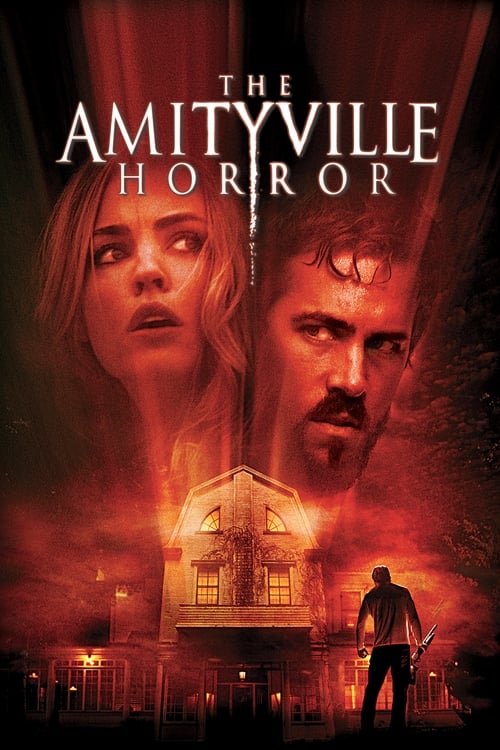
The Amityville Horror
George Lutz, his wife Kathy, and their three children have just moved into a beautiful, and improbably cheap, Dutch colonial mansion nestled in the sleepy coastal town of Amityville, Long Island. However, their dream home is concealing a horrific past and soon each member of the Lutz family is plagued with increasingly strange and violent visions and impulses.
Despite a respectable budget of $19.0M, The Amityville Horror became a commercial success, earning $107.5M worldwide—a 466% return.
2 wins & 4 nominations


Plot Structure
Story beats plotted across runtime


Narrative Arc
Emotional journey through the story's key moments
Story Circle
Blueprint 15-beat structure
Arcplot Score Breakdown
Weighted: Precision (70%) + Arc (15%) + Theme (15%)
The Amityville Horror (2005) reveals deliberately positioned dramatic framework, characteristic of Andrew Douglas's storytelling approach. This structural analysis examines how the film's 15-point plot structure maps to proven narrative frameworks across 1 hour and 30 minutes. With an Arcplot score of 7.5, the film showcases strong structural fundamentals.
Characters
Cast & narrative archetypes

George Lutz
Kathy Lutz
Billy Lutz
Chelsea Lutz
Michael Lutz
Father Callaway
Main Cast & Characters
George Lutz
Played by Ryan Reynolds
Stepfather who moves his family into a haunted house and becomes increasingly violent and possessed.
Kathy Lutz
Played by Melissa George
Mother who fights to protect her children from the malevolent forces and her husband's transformation.
Billy Lutz
Played by Jesse James
Kathy's eldest son who becomes a target of the house's dark influence.
Chelsea Lutz
Played by Chloë Grace Moretz
Young daughter who develops an imaginary friend named Jodie connected to the house's evil.
Michael Lutz
Played by Jimmy Bennett
Middle child who experiences disturbing phenomena in the house.
Father Callaway
Played by Philip Baker Hall
Priest who attempts to bless the house but is violently repelled by the evil forces within.
Structural Analysis
The Status Quo at 1 minutes (1% through the runtime) establishes November 13, 1974: Ronald DeFeo Jr. Stalks through the Amityville house at night, methodically murdering his entire family with a shotgun while they sleep, establishing the house's horrific legacy.. The analysis reveals that this early placement immediately immerses viewers in the story world.
The inciting incident occurs at 11 minutes when Despite knowing about the murders, George and Kathy decide to purchase the Amityville house at a drastically reduced price, choosing to overlook the horrific history in favor of their dream home.. At 12% through the film, this Disruption aligns precisely with traditional story structure. This beat shifts the emotional landscape, launching the protagonist into the central conflict.
The First Threshold at 23 minutes marks the transition into Act II, occurring at 25% of the runtime. This illustrates the protagonist's commitment to George descends into the basement and discovers the hidden red room, an ancient torture chamber beneath the house. He becomes inexplicably drawn to it, marking his first direct contact with the house's evil., moving from reaction to action.
At 45 minutes, the Midpoint arrives at 50% of the runtime—precisely centered, creating perfect narrative symmetry. Notably, this crucial beat George nearly kills the family dog and becomes fully possessed during a nightmare, attempting to harm his family. Kathy realizes her husband is becoming someone else entirely, mirroring Ronald DeFeo's transformation before the murders., fundamentally raising what's at risk. The emotional intensity shifts, dividing the narrative into clear before-and-after phases.
The Collapse moment at 68 minutes (75% through) represents the emotional nadir. Here, George, now fully under the house's control, traps his family inside. He drags Billy to the boathouse with murderous intent, preparing to recreate the DeFeo massacre. Kathy realizes her husband may be lost to the evil forever., illustrates the protagonist at their lowest point. This beat's placement in the final quarter sets up the climactic reversal.
The Second Threshold at 72 minutes initiates the final act resolution at 80% of the runtime. Kathy confronts the possessed George on the boathouse roof, reaching through to her husband with declarations of love for their family. Her unwavering commitment begins to break the house's hold on him., demonstrating the transformation achieved throughout the journey.
Emotional Journey
The Amityville Horror's emotional architecture traces a deliberate progression across 15 carefully calibrated beats.
Narrative Framework
This structural analysis employs proven narrative structure principles that track dramatic progression. By mapping The Amityville Horror against these established plot points, we can identify how Andrew Douglas utilizes or subverts traditional narrative conventions. The plot point approach reveals not only adherence to structural principles but also creative choices that distinguish The Amityville Horror within the horror genre.
Comparative Analysis
Additional horror films include Thinner, A Nightmare on Elm Street and Mary Reilly.
Plot Points by Act
Act I
SetupStatus Quo
November 13, 1974: Ronald DeFeo Jr. stalks through the Amityville house at night, methodically murdering his entire family with a shotgun while they sleep, establishing the house's horrific legacy.
Theme
The realtor reveals the house's dark history to the Lutzes, stating that Ronald DeFeo claimed voices in the house told him to kill his family, introducing the theme that evil can corrupt even loving family bonds.
Worldbuilding
The Lutz family is introduced: George, a hardworking contractor, and Kathy with her three children from a previous marriage. They discover the beautiful but affordable colonial house on Ocean Avenue and learn its murderous past.
Disruption
Despite knowing about the murders, George and Kathy decide to purchase the Amityville house at a drastically reduced price, choosing to overlook the horrific history in favor of their dream home.
Resistance
The family moves into the house. Father Callaway arrives to bless the home but is attacked by supernatural flies and becomes violently ill, fleeing the house. The young daughter Chelsea begins talking to an imaginary friend named Jodie.
Act II
ConfrontationFirst Threshold
George descends into the basement and discovers the hidden red room, an ancient torture chamber beneath the house. He becomes inexplicably drawn to it, marking his first direct contact with the house's evil.
Mirror World
Chelsea's relationship with the ghost Jodie deepens as she reveals Jodie was one of the murdered DeFeo children. Jodie begins to manipulate Chelsea, representing how the house corrupts innocence and family bonds.
Premise
Supernatural events escalate: George becomes obsessed with chopping wood, grows increasingly cold and hostile, and experiences violent visions. The babysitter is terrorized and locked in a closet by Jodie. Kathy witnesses disturbing phenomena throughout the house.
Midpoint
George nearly kills the family dog and becomes fully possessed during a nightmare, attempting to harm his family. Kathy realizes her husband is becoming someone else entirely, mirroring Ronald DeFeo's transformation before the murders.
Opposition
George's transformation accelerates as he becomes violent and abusive. Father Callaway attempts to help but is nearly killed in a motorcycle accident caused by the house's influence. Research reveals the house was built over an ancient torture site.
Collapse
George, now fully under the house's control, traps his family inside. He drags Billy to the boathouse with murderous intent, preparing to recreate the DeFeo massacre. Kathy realizes her husband may be lost to the evil forever.
Crisis
Kathy desperately searches for George and the children as the house unleashes its full supernatural fury. She descends into the red room and witnesses visions of the torture and evil committed there across centuries.
Act III
ResolutionSecond Threshold
Kathy confronts the possessed George on the boathouse roof, reaching through to her husband with declarations of love for their family. Her unwavering commitment begins to break the house's hold on him.
Synthesis
George fights against the possession, choosing his family over the house's commands. The family flees the house together as it rages around them. They escape in their boat as dawn breaks, never looking back at 112 Ocean Avenue.
Transformation
The Lutz family escapes on the water as the sun rises, leaving the Amityville house behind forever. Title cards reveal they never returned for their belongings, and the family remained together, having survived the evil through love.