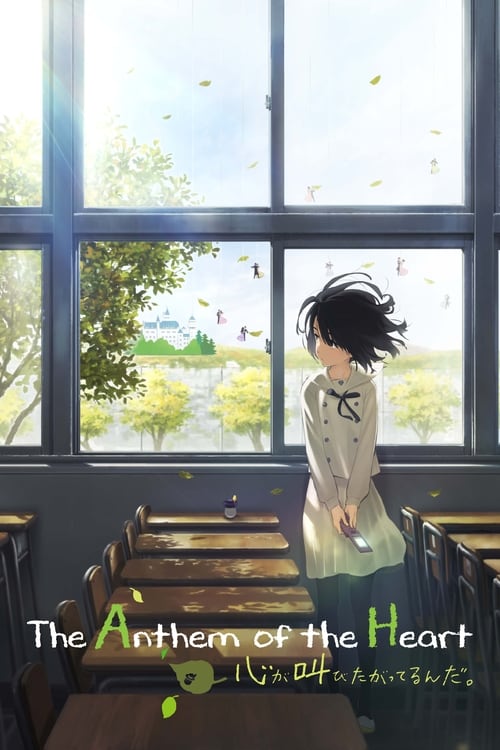
The Anthem of the Heart
A young girl had her voice magically taken away so that she would never hurt people with it, but her outlook changes when she encounters music and friendship. Will Naruse be able to convey the anthem of her heart?
The film earned $8.9M at the global box office.

Plot Structure
Story beats plotted across runtime


Narrative Arc
Emotional journey through the story's key moments
Story Circle
Blueprint 15-beat structure
Arcplot Score Breakdown
Weighted: Precision (70%) + Arc (15%) + Theme (15%)
The Anthem of the Heart (2015) exhibits deliberately positioned narrative architecture, characteristic of Tatsuyuki Nagai's storytelling approach. This structural analysis examines how the film's 15-point plot structure maps to proven narrative frameworks across 1 hour and 59 minutes. With an Arcplot score of 7.4, the film balances conventional beats with creative variation.
Characters
Cast & narrative archetypes

Jun Naruse
Takumi Sakagami
Natsuki Nitō
Daiki Tasaki
Main Cast & Characters
Jun Naruse
Played by Inori Minase
A high school girl cursed to speak her feelings, causing her immense pain and leading her to stop talking. She struggles with guilt from her childhood actions.
Takumi Sakagami
Played by Kōki Uchiyama
A former baseball star who quit after an injury. He becomes involved in the musical project and helps Jun open up.
Natsuki Nitō
Played by Sora Amamiya
A cheerleader and Takumi's ex-girlfriend who struggles with her feelings and expectations from others.
Daiki Tasaki
Played by Yoshimasa Hosoya
A serious student and class representative who joins the musical project. He has a secret crush on Natsuki.
Structural Analysis
The Status Quo at 2 minutes (1% through the runtime) establishes Young Jun is a cheerful, talkative girl who loves her father and believes in fairy tale castles. She chatters excitedly in the car, full of innocent joy.. Notably, this early placement immediately immerses viewers in the story world.
The inciting incident occurs at 14 minutes when Jun is arbitrarily selected by the teacher to be part of the Community Outreach Committee for a musical performance, forcing her into social interaction she's avoided for years.. At 12% through the film, this Disruption aligns precisely with traditional story structure. This beat shifts the emotional landscape, launching the protagonist into the central conflict.
The First Threshold at 30 minutes marks the transition into Act II, occurring at 25% of the runtime. This indicates the protagonist's commitment to Jun discovers she can sing without physical pain—unlike speaking. She chooses to participate in the musical, agreeing to play the lead role and express herself through song., moving from reaction to action.
At 60 minutes, the Midpoint arrives at 50% of the runtime—precisely centered, creating perfect narrative symmetry. Notably, this crucial beat Jun successfully performs a practice run of the musical, singing her heart out. She feels truly alive for the first time in years—a false victory, as interpersonal conflicts are brewing beneath the surface., fundamentally raising what's at risk. The emotional intensity shifts, dividing the narrative into clear before-and-after phases.
The Collapse moment at 88 minutes (74% through) represents the emotional nadir. Here, The musical is cancelled after a confrontation. Jun's hope of expressing herself dies. She retreats into silence, believing her curse was right—her attempts to communicate only hurt people. Emotional devastation., shows the protagonist at their lowest point. This beat's placement in the final quarter sets up the climactic reversal.
The Second Threshold at 95 minutes initiates the final act resolution at 79% of the runtime. Takumi and the others realize Jun wasn't the problem—their own inability to communicate honestly was. They decide to revive the musical and be truthful with each other and Jun., demonstrating the transformation achieved throughout the journey.
Emotional Journey
The Anthem of the Heart's emotional architecture traces a deliberate progression across 15 carefully calibrated beats.
Narrative Framework
This structural analysis employs structural analysis methodology used to understand storytelling architecture. By mapping The Anthem of the Heart against these established plot points, we can identify how Tatsuyuki Nagai utilizes or subverts traditional narrative conventions. The plot point approach reveals not only adherence to structural principles but also creative choices that distinguish The Anthem of the Heart within the animation genre.
Tatsuyuki Nagai's Structural Approach
Among the 2 Tatsuyuki Nagai films analyzed on Arcplot, the average structural score is 7.3, reflecting strong command of classical structure. The Anthem of the Heart represents one of the director's most structurally precise works. For comparative analysis, explore the complete Tatsuyuki Nagai filmography.
Comparative Analysis
Additional animation films include The Bad Guys, Puss in Boots and Violet Evergarden: Eternity and the Auto Memory Doll. For more Tatsuyuki Nagai analyses, see Her Blue Sky.
Plot Points by Act
Act I
SetupStatus Quo
Young Jun is a cheerful, talkative girl who loves her father and believes in fairy tale castles. She chatters excitedly in the car, full of innocent joy.
Theme
The Egg Fairy curses Jun: "Your words hurt people, so you must never speak again." The theme of communication's power to harm and heal is established.
Worldbuilding
Establishing Jun as a selective mute high school student isolated from peers, her family broken by her childhood revelation. She communicates through text messages and keeps to herself.
Disruption
Jun is arbitrarily selected by the teacher to be part of the Community Outreach Committee for a musical performance, forcing her into social interaction she's avoided for years.
Resistance
Jun resists participation, trying to escape the committee. She meets her teammates: Takumi (former baseball ace with injured arm), Natsuki (cheerleader), and Daiki (class representative). Initial awkward dynamics.
Act II
ConfrontationFirst Threshold
Jun discovers she can sing without physical pain—unlike speaking. She chooses to participate in the musical, agreeing to play the lead role and express herself through song.
Mirror World
Takumi becomes Jun's partner in the musical and begins adapting a story for her. Their collaboration represents the theme: finding alternate ways to communicate and connect with others.
Premise
The committee works together on the musical. Jun begins opening up through rehearsals, bonding with teammates. Romance triangle develops between Jun, Takumi, and Natsuki. Jun experiences joy in expression through music.
Midpoint
Jun successfully performs a practice run of the musical, singing her heart out. She feels truly alive for the first time in years—a false victory, as interpersonal conflicts are brewing beneath the surface.
Opposition
Romantic tensions escalate. Natsuki's jealousy grows. Takumi's unresolved feelings for Natsuki create friction. Jun's mother disapproves of the musical. The team fractures as personal conflicts interfere with the production.
Collapse
The musical is cancelled after a confrontation. Jun's hope of expressing herself dies. She retreats into silence, believing her curse was right—her attempts to communicate only hurt people. Emotional devastation.
Crisis
Jun isolates herself completely, falling into despair. The team members separately process their guilt and regret. The dark night before anyone can move forward.
Act III
ResolutionSecond Threshold
Takumi and the others realize Jun wasn't the problem—their own inability to communicate honestly was. They decide to revive the musical and be truthful with each other and Jun.
Synthesis
The team reunites and convinces Jun to perform. They stage the musical as planned. Jun sings her story, confronting her trauma. The performance becomes a true expression of authentic emotion, healing relationships.
Transformation
Jun speaks aloud for the first time in years, thanking everyone. She has transformed from a girl silenced by fear into someone who can communicate authentically, understanding that honest words can heal.