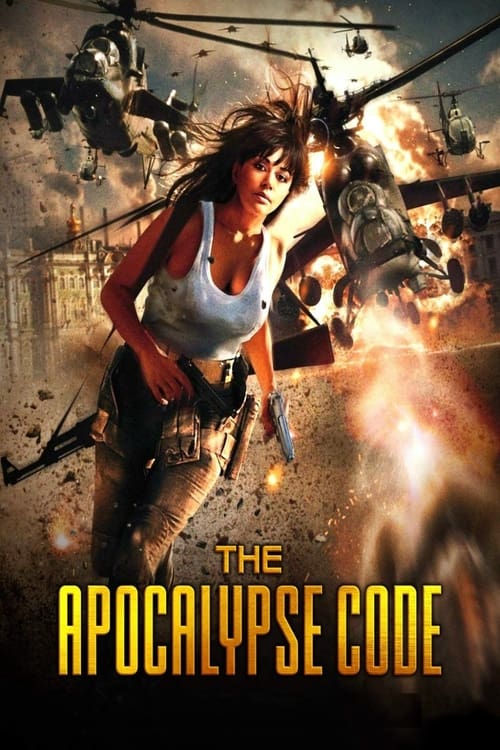
The Apocalypse Code
Terrorist Jaffad Ben Zayidi steals four nuclear bombs from a sunken American submarine and hides them in four major cities throughout the world. The charges can be activated by an 11-digit code. Zayidi dies and his accomplice, nicknamed "The Executioner," is about to blow up the bombs. The Executioner is chased by FSB, whose agent Marie has previously infiltrated Zayidi's team.
The film earned $10.4M at the global box office.

Plot Structure
Story beats plotted across runtime


Narrative Arc
Emotional journey through the story's key moments
Story Circle
Blueprint 15-beat structure
Arcplot Score Breakdown
Weighted: Precision (70%) + Arc (15%) + Theme (15%)
The Apocalypse Code (2007) showcases carefully calibrated dramatic framework, characteristic of Vadim Shmelyov's storytelling approach. This structural analysis examines how the film's 15-point plot structure maps to proven narrative frameworks across 1 hour and 50 minutes. With an Arcplot score of 7.8, the film showcases strong structural fundamentals.
Structural Analysis
The Status Quo at 1 minutes (1% through the runtime) establishes Marie works as a marine archaeologist, living a quiet academic life dedicated to underwater historical research and scientific pursuits.. The analysis reveals that this early placement immediately immerses viewers in the story world.
The inciting incident occurs at 13 minutes when Marie discovers an ancient artifact during a dive that triggers a violent attack by mysterious armed men who kill her colleague and attempt to seize her research.. At 12% through the film, this Disruption aligns precisely with traditional story structure. This beat shifts the emotional landscape, launching the protagonist into the central conflict.
The First Threshold at 27 minutes marks the transition into Act II, occurring at 25% of the runtime. This illustrates the protagonist's commitment to Marie actively chooses to partner with Gleb to decode the artifact's meaning, leaving her safe academic world to enter the dangerous realm of international espionage and religious extremism., moving from reaction to action.
At 55 minutes, the Midpoint arrives at 50% of the runtime—precisely centered, creating perfect narrative symmetry. Significantly, this crucial beat Marie decodes the final location of a weapon of mass destruction, but the terrorist leader reveals he's been tracking them all along - they've led him exactly where he needs to go. False victory becomes defeat., fundamentally raising what's at risk. The emotional intensity shifts, dividing the narrative into clear before-and-after phases.
The Collapse moment at 82 minutes (75% through) represents the emotional nadir. Here, Gleb is shot protecting Marie, seemingly killed. Marie is captured by the terrorists who activate the doomsday device. Her pursuit of truth has led to apocalyptic consequences and cost the life of someone she loved., indicates the protagonist at their lowest point. This beat's placement in the final quarter sets up the climactic reversal.
The Second Threshold at 88 minutes initiates the final act resolution at 80% of the runtime. Marie discovers Gleb survived and learns the final piece: the artifact contains not just prophecy but the code to disable the weapon. She synthesizes academic knowledge with Gleb's tactical expertise for one final mission., demonstrating the transformation achieved throughout the journey.
Emotional Journey
The Apocalypse Code's emotional architecture traces a deliberate progression across 15 carefully calibrated beats.
Narrative Framework
This structural analysis employs proven narrative structure principles that track dramatic progression. By mapping The Apocalypse Code against these established plot points, we can identify how Vadim Shmelyov utilizes or subverts traditional narrative conventions. The plot point approach reveals not only adherence to structural principles but also creative choices that distinguish The Apocalypse Code within the action genre.
Comparative Analysis
Additional action films include The Bad Guys, Puss in Boots and Venom: The Last Dance.
Plot Points by Act
Act I
SetupStatus Quo
Marie works as a marine archaeologist, living a quiet academic life dedicated to underwater historical research and scientific pursuits.
Theme
A colleague warns Marie that "some secrets are buried for a reason" - establishing the theme of dangerous knowledge and whether truth is worth the cost.
Worldbuilding
Introduction to Marie's academic world, her research team, the underwater archaeological site, and hints of religious artifacts with potential explosive significance.
Disruption
Marie discovers an ancient artifact during a dive that triggers a violent attack by mysterious armed men who kill her colleague and attempt to seize her research.
Resistance
Marie debates whether to involve authorities or continue alone. She meets Gleb, a security consultant, who explains the artifact's connection to a terrorist conspiracy and biblical prophecy.
Act II
ConfrontationFirst Threshold
Marie actively chooses to partner with Gleb to decode the artifact's meaning, leaving her safe academic world to enter the dangerous realm of international espionage and religious extremism.
Mirror World
Marie's relationship with Gleb deepens as he represents the world of action and moral ambiguity - a counterpoint to her academic certainty and belief in pure truth.
Premise
Marie and Gleb race across locations decoding clues, experiencing thrilling chases, close calls with terrorists, and uncovering layers of the apocalyptic conspiracy linking ancient prophecies to modern terror plots.
Midpoint
Marie decodes the final location of a weapon of mass destruction, but the terrorist leader reveals he's been tracking them all along - they've led him exactly where he needs to go. False victory becomes defeat.
Opposition
The terrorists gain ground, Marie's academic assumptions prove dangerously naive, trust between her and Gleb fractures when his hidden agenda surfaces, and innocent people die because of the knowledge she unlocked.
Collapse
Gleb is shot protecting Marie, seemingly killed. Marie is captured by the terrorists who activate the doomsday device. Her pursuit of truth has led to apocalyptic consequences and cost the life of someone she loved.
Crisis
Alone and devastated, Marie confronts the dark reality that knowledge without wisdom is destructive. She processes guilt over her colleague's death, Gleb's apparent death, and her role in enabling catastrophe.
Act III
ResolutionSecond Threshold
Marie discovers Gleb survived and learns the final piece: the artifact contains not just prophecy but the code to disable the weapon. She synthesizes academic knowledge with Gleb's tactical expertise for one final mission.
Synthesis
Marie and Gleb infiltrate the terrorist stronghold. Marie uses her scholarly expertise to decode the deactivation sequence while Gleb handles tactical combat. Together they stop the apocalypse and defeat the terrorist leader.
Transformation
Marie returns to teaching but now trains students in the ethical responsibility of knowledge. She's transformed from naive academic to someone who understands that truth requires wisdom, courage, and sometimes sacrifice.