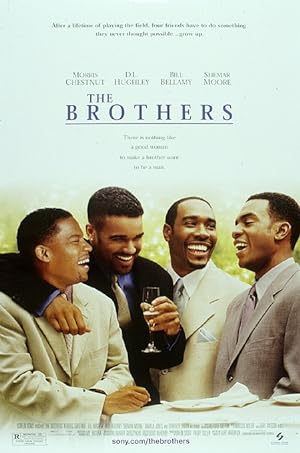
The Brothers
"The Brothers" traces the journey of four African-American men as they take on love, sex, friendship and two of life's most terrifying prospects honesty and commitment. Smart, successful and sexy, Jackson Smith, Brian Palmer, Derrick West and Terry White are "The Brothers" lifelong friends banded together to weather love's innate terrors and occasional triumphs in this brazenly comic yet painfully true exploration of the battle between the sexes. Amidst the career track, basketball and bar hopping, "The Brothers" love women, as many as possible, but shocking revelation tests the foursome's friendship and changes their dating habits forever.
Despite its small-scale budget of $6.0M, The Brothers became a commercial success, earning $27.9M worldwide—a 365% return. The film's bold vision connected with viewers, demonstrating that strong storytelling can transcend budget limitations.
1 win & 8 nominations


Plot Structure
Story beats plotted across runtime


Narrative Arc
Emotional journey through the story's key moments
Story Circle
Blueprint 15-beat structure
Arcplot Score Breakdown
Weighted: Precision (70%) + Arc (15%) + Theme (15%)
The Brothers (2001) showcases meticulously timed story structure, characteristic of Gary Hardwick's storytelling approach. This structural analysis examines how the film's 15-point plot structure maps to proven narrative frameworks across 1 hour and 46 minutes. With an Arcplot score of 7.6, the film showcases strong structural fundamentals.
Characters
Cast & narrative archetypes

Jackson Smith
Denise Johnson
Brian Palmer
Terry White
Sheila West
Jesse Caldwell
Cherie Smith
Main Cast & Characters
Jackson Smith
Played by Morris Chestnut
A successful lawyer engaged to Denise who struggles with commitment fears after his friend's infidelity is exposed.
Denise Johnson
Played by Shemar Moore
Jackson's strong-willed fiancée who questions their relationship when his commitment issues surface.
Brian Palmer
Played by D.L. Hughley
A womanizing dermatologist whose infidelity is exposed at his wedding rehearsal, triggering the central conflict.
Terry White
Played by Bill Bellamy
The most stable and committed of the four friends, married with children and serving as the group's moral center.
Sheila West
Played by Gabrielle Union
Brian's fiancée who discovers his infidelity at their wedding rehearsal and must decide whether to forgive him.
Jesse Caldwell
Played by Jenifer Lewis
The youngest and most immature of the four friends, commitment-phobic and perpetually single.
Cherie Smith
Played by Tamala Jones
Terry's wife who represents the rewards of committed partnership and offers wisdom to the other women.
Structural Analysis
The Status Quo at 1 minutes (1% through the runtime) establishes The four best friends - Jackson, Brian, Derrick, and Terry - are introduced in their comfortable bachelor lifestyle, playing basketball and enjoying their commitment-free relationships.. Notably, this early placement immediately immerses viewers in the story world.
The inciting incident occurs at 13 minutes when Jackson announces that he's getting married to Denise, shocking the entire group. This threatens their bachelor pact and way of life.. At 12% through the film, this Disruption aligns precisely with traditional story structure. This beat shifts the emotional landscape, launching the protagonist into the central conflict.
The First Threshold at 27 minutes marks the transition into Act II, occurring at 25% of the runtime. This indicates the protagonist's commitment to Brian chooses to pursue a genuine relationship with Sheila despite his fears, marking his entry into the world of real commitment. The other men also begin opening themselves up to their respective love interests., moving from reaction to action.
At 53 minutes, the Midpoint arrives at 50% of the runtime—precisely centered, creating perfect narrative symmetry. Structural examination shows that this crucial beat A major revelation or conflict occurs that raises the stakes - either Jackson's relationship is threatened, or one of the men's past behavior catches up with him, showing that their old ways won't work in this new world of commitment., fundamentally raising what's at risk. The emotional intensity shifts, dividing the narrative into clear before-and-after phases.
The Collapse moment at 80 minutes (75% through) represents the emotional nadir. Here, The relationships fall apart. The men's inability to fully commit or their past betrayals are exposed, causing the women to walk away. The bachelor lifestyle that once seemed appealing now feels empty and lonely., illustrates the protagonist at their lowest point. This beat's placement in the final quarter sets up the climactic reversal.
The Second Threshold at 85 minutes initiates the final act resolution at 80% of the runtime. The men have a breakthrough realization about what truly matters. They understand that real manhood isn't about avoiding commitment but about having the courage to be vulnerable and fight for love. They decide to win back their women., demonstrating the transformation achieved throughout the journey.
Emotional Journey
The Brothers's emotional architecture traces a deliberate progression across 15 carefully calibrated beats.
Narrative Framework
This structural analysis employs proven narrative structure principles that track dramatic progression. By mapping The Brothers against these established plot points, we can identify how Gary Hardwick utilizes or subverts traditional narrative conventions. The plot point approach reveals not only adherence to structural principles but also creative choices that distinguish The Brothers within the comedy genre.
Comparative Analysis
Additional comedy films include The Bad Guys, Ella Enchanted and The Evening Star.
Plot Points by Act
Act I
SetupStatus Quo
The four best friends - Jackson, Brian, Derrick, and Terry - are introduced in their comfortable bachelor lifestyle, playing basketball and enjoying their commitment-free relationships.
Theme
During a conversation at the bar, one of the friends states "A man's gotta do what a man's gotta do," establishing the film's exploration of what manhood and commitment really mean.
Worldbuilding
We learn about each man's life: Jackson is a successful doctor avoiding commitment, Brian is a lawyer who enjoys the bachelor life, Derrick is a commitment-phobe, and Terry is the smooth-talking player. Their tight-knit friendship and shared philosophy on relationships is established.
Disruption
Jackson announces that he's getting married to Denise, shocking the entire group. This threatens their bachelor pact and way of life.
Resistance
The men debate the merits of marriage versus bachelorhood. Each man begins to examine his own relationship patterns. Denise's friends (particularly Sheila) are introduced, creating tension and challenging the men's commitment-phobic worldview.
Act II
ConfrontationFirst Threshold
Brian chooses to pursue a genuine relationship with Sheila despite his fears, marking his entry into the world of real commitment. The other men also begin opening themselves up to their respective love interests.
Mirror World
The developing relationships with Sheila, Jesse, and the other women represent the thematic counterpoint to the men's bachelor philosophy, showing what mature love and partnership can offer.
Premise
The "fun and games" of the men navigating new relationships while trying to maintain their bachelor identities. Romantic moments mixed with comedy as they struggle with vulnerability, jealousy, and the challenges of commitment.
Midpoint
A major revelation or conflict occurs that raises the stakes - either Jackson's relationship is threatened, or one of the men's past behavior catches up with him, showing that their old ways won't work in this new world of commitment.
Opposition
The men's flaws and commitment issues intensify the conflicts in their relationships. Past indiscretions surface, trust is tested, and the women begin questioning whether these men can truly change. The pressure to be better men increases.
Collapse
The relationships fall apart. The men's inability to fully commit or their past betrayals are exposed, causing the women to walk away. The bachelor lifestyle that once seemed appealing now feels empty and lonely.
Crisis
The men face the consequences of their actions and confront what they've lost. They reflect on their fear of commitment and realize that their old way of thinking has cost them real love and happiness.
Act III
ResolutionSecond Threshold
The men have a breakthrough realization about what truly matters. They understand that real manhood isn't about avoiding commitment but about having the courage to be vulnerable and fight for love. They decide to win back their women.
Synthesis
The men take action to prove they've changed. Grand gestures, honest conversations, and genuine apologies. Jackson's wedding becomes the setting where all the relationships are tested and resolved. Each man must prove his transformation is real.
Transformation
The final image shows the men transformed - no longer commitment-phobic bachelors but men capable of real partnership. Jackson's wedding succeeds, and the other men are shown in committed, healthy relationships, having evolved beyond their former selves.