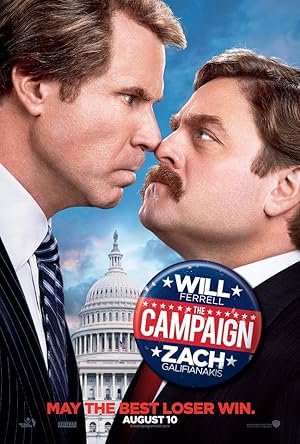
The Campaign
When Cam Brady (D-NC), a four-term Congressman, becomes a liability, the Motch brothers (think Koch brothers) recruit Marty Huggins, the son of a Republican heavy hitter, to run against him and be their vehicle to establish factories in the district that will import cheap Chinese labor. Trouble is, Marty is a lightweight, so his makeover falls to consultant Tim Wattley. The race tightens as Cam constantly shoots himself in the foot, while the prospect of winning also changes Marty and his family's dynamics. Meanwhile, Cam plays dirty, and Marty cottons on to the Moches' grand plan. What options do the rich have to get their way?
Working with a substantial budget of $95.0M, the film achieved a modest success with $104.9M in global revenue (+10% profit margin).
2 wins & 4 nominations


Plot Structure
Story beats plotted across runtime


Narrative Arc
Emotional journey through the story's key moments
Story Circle
Blueprint 15-beat structure
Arcplot Score Breakdown
Weighted: Precision (70%) + Arc (15%) + Theme (15%)
The Campaign (2012) demonstrates deliberately positioned dramatic framework, characteristic of Jay Roach's storytelling approach. This structural analysis examines how the film's 15-point plot structure maps to proven narrative frameworks across 1 hour and 25 minutes. With an Arcplot score of 7.6, the film showcases strong structural fundamentals.
Characters
Cast & narrative archetypes

Cam Brady
Marty Huggins
Glenn Motch
Wade Motch
Tim Wattley
Mitzi Huggins
Rose Brady
Mitch
Main Cast & Characters
Cam Brady
Played by Will Ferrell
Incumbent congressman running for his fifth term, a smooth-talking politician who takes his seat for granted until facing real competition.
Marty Huggins
Played by Zach Galifianakis
Naive tourism director recruited to run against Brady, transforms from awkward pushover into a legitimate political candidate.
Glenn Motch
Played by John Lithgow
Wealthy industrialist who bankrolls Marty's campaign to gain political influence for his business interests.
Wade Motch
Played by Dan Aykroyd
Glenn's brother and business partner, equally manipulative in using politics for corporate gain.
Tim Wattley
Played by Dylan McDermott
Ruthless campaign manager hired by the Motch brothers to transform Marty into a winning candidate.
Mitzi Huggins
Played by Sarah Baker
Marty's loyal wife who supports him through his political transformation and personal struggles.
Rose Brady
Played by Katherine LaNasa
Cam's wife who grows increasingly disillusioned with her husband's infidelity and moral compromises.
Mitch
Played by Jason Sudeikis
Cam's long-time campaign manager who tries to manage his candidate's self-destructive behavior.
Structural Analysis
The Status Quo at 1 minutes (1% through the runtime) establishes Cam Brady celebrates his unopposed re-election campaign as a popular four-term congressman in North Carolina's 14th district, living a comfortable life of political privilege and complacency.. Significantly, this early placement immediately immerses viewers in the story world.
The inciting incident occurs at 9 minutes when Cam leaves a sexually explicit voicemail on the wrong phone—a religious family's answering machine. The scandal goes public, destroying his "family values" image and making him vulnerable for the first time.. At 11% through the film, this Disruption aligns precisely with traditional story structure. This beat shifts the emotional landscape, launching the protagonist into the central conflict.
The First Threshold at 20 minutes marks the transition into Act II, occurring at 24% of the runtime. This demonstrates the protagonist's commitment to Marty officially enters the race at his campaign launch event, complete with makeover and scripted messaging. Cam realizes he has real opposition for the first time. The campaign war begins., moving from reaction to action.
At 42 minutes, the Midpoint arrives at 49% of the runtime—precisely centered, creating perfect narrative symmetry. Significantly, this crucial beat Cam orchestrates a false-flag operation to frame Marty, but it backfires spectacularly. Polls show Marty pulling ahead. Cam realizes his old playbook isn't working—the stakes are now real and he's losing., fundamentally raising what's at risk. The emotional intensity shifts, dividing the narrative into clear before-and-after phases.
The Collapse moment at 63 minutes (74% through) represents the emotional nadir. Here, Cam's sex tape is released publicly. His wife leaves him, his children reject him, and his campaign appears dead. His political career and personal life have completely imploded—a metaphorical death of his old self., demonstrates the protagonist at their lowest point. This beat's placement in the final quarter sets up the climactic reversal.
The Second Threshold at 67 minutes initiates the final act resolution at 79% of the runtime. Cam discovers the truth about the Motch brothers' plan to bring Chinese laborers to the district. He realizes the election isn't about him vs. Marty—it's about fighting corruption. He chooses principle over winning., demonstrating the transformation achieved throughout the journey.
Emotional Journey
The Campaign's emotional architecture traces a deliberate progression across 15 carefully calibrated beats.
Narrative Framework
This structural analysis employs structural analysis methodology used to understand storytelling architecture. By mapping The Campaign against these established plot points, we can identify how Jay Roach utilizes or subverts traditional narrative conventions. The plot point approach reveals not only adherence to structural principles but also creative choices that distinguish The Campaign within the comedy genre.
Jay Roach's Structural Approach
Among the 10 Jay Roach films analyzed on Arcplot, the average structural score is 7.4, reflecting strong command of classical structure. The Campaign represents one of the director's most structurally precise works. For comparative analysis, explore the complete Jay Roach filmography.
Comparative Analysis
Additional comedy films include The Bad Guys, Ella Enchanted and The Evening Star. For more Jay Roach analyses, see Austin Powers: International Man of Mystery, Meet the Fockers and Meet the Parents.
Plot Points by Act
Act I
SetupStatus Quo
Cam Brady celebrates his unopposed re-election campaign as a popular four-term congressman in North Carolina's 14th district, living a comfortable life of political privilege and complacency.
Theme
The Motch brothers discuss how politicians are puppets: "We don't need a leader, we need someone we can control." Theme of authenticity vs. manipulation in democracy is established.
Worldbuilding
Cam's world of campaign cynicism is established: his affairs, superficial family life, reliance on campaign manager Mitch, and the political machine that supports him. The Motch brothers search for a candidate they can control.
Disruption
Cam leaves a sexually explicit voicemail on the wrong phone—a religious family's answering machine. The scandal goes public, destroying his "family values" image and making him vulnerable for the first time.
Resistance
The Motch brothers recruit Marty Huggins, a naive tourism director, to run against Cam. Marty debates entering politics, gets a ruthless campaign manager (Tim Wattley), and is transformed from genuine eccentric to manufactured candidate.
Act II
ConfrontationFirst Threshold
Marty officially enters the race at his campaign launch event, complete with makeover and scripted messaging. Cam realizes he has real opposition for the first time. The campaign war begins.
Mirror World
Marty's genuine connection with his family (particularly scenes with his wife and father) contrasts with Cam's superficial family relations, establishing the thematic mirror: authenticity vs. performance in both politics and life.
Premise
The fun and games of campaign warfare: attack ads, debate gaffes, dirty tricks, baby-punching incident, snake-handling, and increasingly absurd stunts. Both candidates abandon principles for poll numbers.
Midpoint
Cam orchestrates a false-flag operation to frame Marty, but it backfires spectacularly. Polls show Marty pulling ahead. Cam realizes his old playbook isn't working—the stakes are now real and he's losing.
Opposition
Both campaigns spiral into darker territory. Cam's marriage crumbles, his family turns against him. Marty becomes increasingly corrupted by his handlers. The Motch brothers' control tightens. Personal costs mount for both men.
Collapse
Cam's sex tape is released publicly. His wife leaves him, his children reject him, and his campaign appears dead. His political career and personal life have completely imploded—a metaphorical death of his old self.
Crisis
Cam hits bottom and reflects on who he's become. Marty also realizes he's lost himself to his handlers. Both men sit in darkness, contemplating the cost of their ambition and what truly matters.
Act III
ResolutionSecond Threshold
Cam discovers the truth about the Motch brothers' plan to bring Chinese laborers to the district. He realizes the election isn't about him vs. Marty—it's about fighting corruption. He chooses principle over winning.
Synthesis
Cam and Marty unite to expose the Motch brothers at the final debate. They abandon their handlers, speak authentically, and put the district's interests above their own ambitions. The people respond to genuine leadership.
Transformation
Election night: both candidates have transformed from puppets to authentic leaders. Regardless of who wins, they've reclaimed their integrity, reconnected with family, and reminded voters that democracy requires genuine participation, not manipulation.