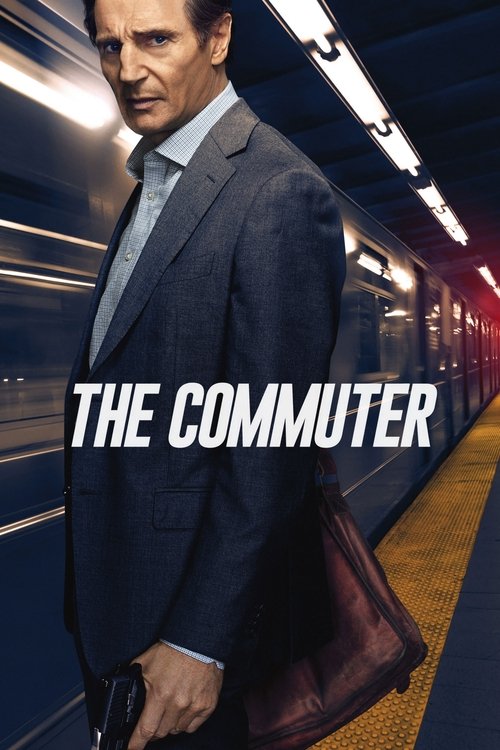
The Commuter
A businessman, on his daily commute home, gets unwittingly caught up in a criminal conspiracy that threatens not only his life but the lives of those around him.
Despite a mid-range budget of $30.0M, The Commuter became a box office success, earning $119.9M worldwide—a 300% return.


Plot Structure
Story beats plotted across runtime


Narrative Arc
Emotional journey through the story's key moments
Story Circle
Blueprint 15-beat structure
Arcplot Score Breakdown
Weighted: Precision (70%) + Arc (15%) + Theme (15%)
The Commuter (2018) reveals precise dramatic framework, characteristic of Jaume Collet-Serra's storytelling approach. This structural analysis examines how the film's 15-point plot structure maps to proven narrative frameworks across 1 hour and 44 minutes. With an Arcplot score of 7.0, the film balances conventional beats with creative variation.
Characters
Cast & narrative archetypes

Michael MacCauley
Joanna
Alex Murphy
Karen MacCauley
Walt
Tony
Sofia
Main Cast & Characters
Michael MacCauley
Played by Liam Neeson
An insurance salesman and former cop forced to find a hidden passenger on his daily commute train or face deadly consequences.
Joanna
Played by Vera Farmiga
A mysterious woman who manipulates Michael into a deadly game aboard the train.
Alex Murphy
Played by Patrick Wilson
Michael's former police partner who becomes entangled in the conspiracy.
Karen MacCauley
Played by Elizabeth McGovern
Michael's supportive wife who is unaware of the danger her husband faces.
Walt
Played by Jonathan Banks
A fellow daily commuter and acquaintance of Michael who boards the train regularly.
Tony
Played by Andy Nyman
A young man on the train who becomes a suspect in Michael's forced investigation.
Sofia
Played by Florence Pugh
A mysterious passenger who may hold the key to the conspiracy Michael is investigating.
Structural Analysis
The Status Quo at 1 minutes (1% through the runtime) establishes Montage of Michael MacCauley's daily routine over 10 years - waking up, kissing his wife Karen, taking the same commuter train to his insurance job in Manhattan. The repetition establishes his ordinary, stable middle-class life.. Notably, this early placement immediately immerses viewers in the story world.
The inciting incident occurs at 13 minutes when On the train home, a mysterious woman named Joanna sits across from Michael and poses a hypothetical question: would he do one small thing for $100,000? She reveals the money is real and hidden in the bathroom - he just needs to identify a passenger named "Prynne" before the last stop.. At 13% through the film, this Disruption is delayed, allowing extended setup of the story world. This beat shifts the emotional landscape, launching the protagonist into the central conflict.
The First Threshold at 26 minutes marks the transition into Act II, occurring at 25% of the runtime. This reveals the protagonist's commitment to Michael commits to finding Prynne when he receives a threatening call showing his family is being watched. He can't call police, can't leave the train, and realizes refusing means his family dies. He actively chooses to begin hunting through the passengers to find the mystery person., moving from reaction to action.
At 53 minutes, the Midpoint arrives at 51% of the runtime—precisely centered, creating perfect narrative symmetry. The analysis reveals that this crucial beat Michael discovers that Prynne is a witness to a murder involving corrupt cops and powerful conspirators. The passenger he identifies will be killed. This isn't a simple task - he's being used as an unwitting accomplice to murder. The game changes from finding someone to protecting them., fundamentally raising what's at risk. The emotional intensity shifts, dividing the narrative into clear before-and-after phases.
The Collapse moment at 78 minutes (75% through) represents the emotional nadir. Here, Michael discovers his friend Murphy has been working with the conspirators all along - the ultimate betrayal. Murphy confronts him and reveals the depth of the corruption. A passenger Michael was trying to protect is killed. Michael is framed as the train hijacker on the news, turning everyone against him., shows the protagonist at their lowest point. This beat's placement in the final quarter sets up the climactic reversal.
The Second Threshold at 83 minutes initiates the final act resolution at 80% of the runtime. Michael reveals the truth to all the passengers - there's a witness on this train, there's a bomb, and they're all in danger together. He asks them to stand with him and protect whoever Prynne is. The passengers unite, choosing collective courage over individual survival. Michael embraces his identity as a protector., demonstrating the transformation achieved throughout the journey.
Emotional Journey
The Commuter's emotional architecture traces a deliberate progression across 15 carefully calibrated beats.
Narrative Framework
This structural analysis employs a 15-point narrative structure framework that maps key story moments. By mapping The Commuter against these established plot points, we can identify how Jaume Collet-Serra utilizes or subverts traditional narrative conventions. The plot point approach reveals not only adherence to structural principles but also creative choices that distinguish The Commuter within the action genre.
Jaume Collet-Serra's Structural Approach
Among the 10 Jaume Collet-Serra films analyzed on Arcplot, the average structural score is 7.0, reflecting strong command of classical structure. The Commuter takes a more unconventional approach compared to the director's typical style. For comparative analysis, explore the complete Jaume Collet-Serra filmography.
Comparative Analysis
Additional action films include The Bad Guys, Puss in Boots and Venom: The Last Dance. For more Jaume Collet-Serra analyses, see Black Adam, House of Wax and Jungle Cruise.
Plot Points by Act
Act I
SetupStatus Quo
Montage of Michael MacCauley's daily routine over 10 years - waking up, kissing his wife Karen, taking the same commuter train to his insurance job in Manhattan. The repetition establishes his ordinary, stable middle-class life.
Theme
Michael's friend and former police partner Alex Murphy remarks about how Michael traded in his badge for a desk job, questioning whether the safe choice was the right one. The theme of identity and moral choices is established - what defines us when everything is stripped away?
Worldbuilding
Michael's world is established: his loving family (wife Karen, son Danny heading to college), his daily commute routine, his friendships with regular passengers, his financial pressures, and his past as a cop. He is unexpectedly laid off from his insurance job after 10 years, devastating him as he worries about Danny's tuition.
Disruption
On the train home, a mysterious woman named Joanna sits across from Michael and poses a hypothetical question: would he do one small thing for $100,000? She reveals the money is real and hidden in the bathroom - he just needs to identify a passenger named "Prynne" before the last stop.
Resistance
Michael debates the offer internally. He finds the cash in the bathroom as promised. He tries to call Joanna's bluff and leave the train, but discovers he's being watched - a man threatens his family with photos of Karen and Danny. He realizes he's trapped and must play along while trying to figure out what's really happening.
Act II
ConfrontationFirst Threshold
Michael commits to finding Prynne when he receives a threatening call showing his family is being watched. He can't call police, can't leave the train, and realizes refusing means his family dies. He actively chooses to begin hunting through the passengers to find the mystery person.
Mirror World
Michael encounters Sofia, a young nurse traveling on the train, who represents innocence and the moral stakes. Their conversations throughout remind him of what's worth protecting. She embodies the theme - an ordinary person deserving protection from powerful corrupt forces.
Premise
Michael uses his ex-cop investigative skills to profile passengers, looking for anyone who doesn't belong. He interrogates travelers using pretexts, checks bags, and pieces together clues. The confined train becomes his hunting ground as he races against time, eliminating suspects one by one while maintaining his cover.
Midpoint
Michael discovers that Prynne is a witness to a murder involving corrupt cops and powerful conspirators. The passenger he identifies will be killed. This isn't a simple task - he's being used as an unwitting accomplice to murder. The game changes from finding someone to protecting them.
Opposition
Michael's old partner Murphy is revealed to be part of the conspiracy. The conspirators send an assassin onto the train. Michael fights the killer in brutal close combat. Passengers become suspicious of Michael. He tries to warn everyone but is painted as a threat himself. The train is rigged with a bomb.
Collapse
Michael discovers his friend Murphy has been working with the conspirators all along - the ultimate betrayal. Murphy confronts him and reveals the depth of the corruption. A passenger Michael was trying to protect is killed. Michael is framed as the train hijacker on the news, turning everyone against him.
Crisis
Michael faces the impossible choice: give up Prynne to save the other passengers from the bomb, or refuse and let everyone die. His reputation is destroyed, his friend betrayed him, and his family remains in danger. He must decide what kind of man he truly is.
Act III
ResolutionSecond Threshold
Michael reveals the truth to all the passengers - there's a witness on this train, there's a bomb, and they're all in danger together. He asks them to stand with him and protect whoever Prynne is. The passengers unite, choosing collective courage over individual survival. Michael embraces his identity as a protector.
Synthesis
The train derails in spectacular fashion but Michael works to save passengers. He confronts Murphy in a final showdown. The witness is protected and extracted. Police arrive and the conspiracy is exposed when the witness's testimony leads to arrests. Michael's name is cleared and his heroism recognized.
Transformation
Michael reunites with his family, now hailed as a hero. He is offered his police badge back - the job he gave up years ago. Unlike the opening montage of routine drudgery, Michael has rediscovered his identity and purpose. He's no longer just a commuter going through the motions; he's a man who proved his values under pressure.