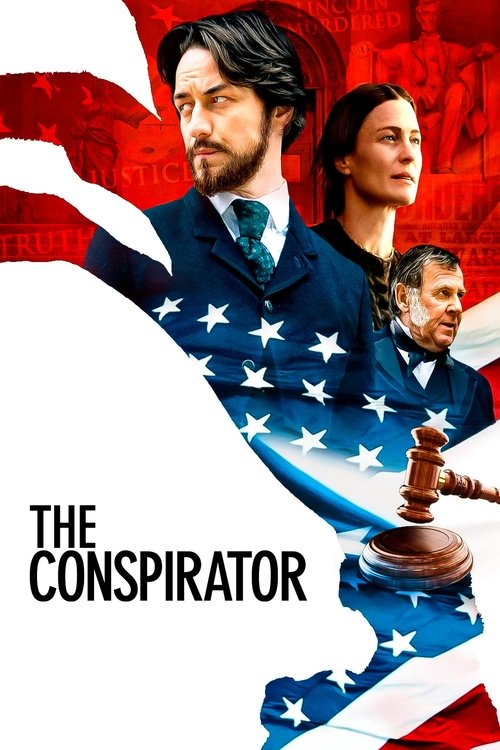
The Conspirator
N/A
The film underperformed commercially against its respectable budget of $25.0M, earning $15.5M globally (-38% loss). While initial box office returns were modest, the film has gained appreciation for its unconventional structure within the documentary genre.


Plot Structure
Story beats plotted across runtime


Narrative Arc
Emotional journey through the story's key moments
Story Circle
Blueprint 15-beat structure
Arcplot Score Breakdown
Weighted: Precision (70%) + Arc (15%) + Theme (15%)
The Conspirator (2011) exemplifies precise dramatic framework, characteristic of Robert Redford's storytelling approach. This structural analysis examines how the film's 15-point plot structure maps to proven narrative frameworks across 2 hours and 2 minutes. With an Arcplot score of 7.6, the film showcases strong structural fundamentals.
Characters
Cast & narrative archetypes

Frederick Aiken
Mary Surratt
Reverdy Johnson
Joseph Holt
Edwin Stanton
John Surratt Jr.
Anna Surratt
Sarah Weston
Main Cast & Characters
Frederick Aiken
Played by James McAvoy
A Union war hero and lawyer reluctantly assigned to defend Mary Surratt, who must challenge his own prejudices to seek justice.
Mary Surratt
Played by Robin Wright
A boarding house owner accused of conspiring in Lincoln's assassination, who maintains her innocence while facing a military tribunal.
Reverdy Johnson
Played by Tom Wilkinson
A distinguished lawyer and mentor to Aiken who recognizes the injustice of the trial but cannot defend Mary due to political pressures.
Joseph Holt
Played by Danny Huston
The prosecuting Judge Advocate who leads the government's case with relentless determination to secure convictions.
Edwin Stanton
Played by Kevin Kline
The Secretary of War who orchestrates the military tribunal to ensure swift and harsh justice for the conspirators.
John Surratt Jr.
Played by Johnny Simmons
Mary's son and actual conspirator who flees the country, leaving his mother to face the consequences.
Anna Surratt
Played by Evan Rachel Wood
Mary's devoted daughter who desperately tries to save her mother and pleads with authorities for mercy.
Sarah Weston
Played by Alexis Bledel
Aiken's fiancée who becomes increasingly concerned about his obsession with the case and its impact on their future.
Structural Analysis
The Status Quo at 1 minutes (1% through the runtime) establishes Frederick Aiken, a Union war hero and lawyer, celebrates the end of the Civil War with fellow soldiers. He is shown as an idealistic young man devoted to the Union cause and the law.. Structural examination shows that this early placement immediately immerses viewers in the story world.
The inciting incident occurs at 14 minutes when Senator Johnson asks Aiken to defend Mary Surratt, the alleged conspirator whose boarding house was used to plot Lincoln's assassination. Aiken is horrified at the prospect of defending someone he views as a traitor.. At 11% through the film, this Disruption aligns precisely with traditional story structure. This beat shifts the emotional landscape, launching the protagonist into the central conflict.
The First Threshold at 30 minutes marks the transition into Act II, occurring at 25% of the runtime. This reveals the protagonist's commitment to Aiken makes the conscious choice to truly defend Mary Surratt when he realizes the military tribunal is rigged and she will not receive a fair trial. He commits to fighting for her constitutional rights despite public hatred., moving from reaction to action.
At 61 minutes, the Midpoint arrives at 50% of the runtime—precisely centered, creating perfect narrative symmetry. Notably, this crucial beat False defeat: The tribunal denies Aiken's motion to move the trial to civilian court. Judge Advocate Joseph Holt makes clear the verdict is predetermined. Aiken realizes the system is completely stacked against them and legal arguments will not save Mary., fundamentally raising what's at risk. The emotional intensity shifts, dividing the narrative into clear before-and-after phases.
The Collapse moment at 90 minutes (74% through) represents the emotional nadir. Here, The tribunal finds Mary Surratt guilty and sentences her to death by hanging. Aiken's desperate defense has failed. The whiff of death is literal - an innocent woman will die, and with her, the constitutional principles Aiken fought to uphold., indicates the protagonist at their lowest point. This beat's placement in the final quarter sets up the climactic reversal.
The Second Threshold at 98 minutes initiates the final act resolution at 81% of the runtime. Aiken discovers that five tribunal members recommended clemency for Mary, but President Johnson ignored it. This revelation clarifies that the fight was never about winning Mary's case - it was about exposing injustice and standing for principle regardless of outcome., demonstrating the transformation achieved throughout the journey.
Emotional Journey
The Conspirator's emotional architecture traces a deliberate progression across 15 carefully calibrated beats.
Narrative Framework
This structural analysis employs proven narrative structure principles that track dramatic progression. By mapping The Conspirator against these established plot points, we can identify how Robert Redford utilizes or subverts traditional narrative conventions. The plot point approach reveals not only adherence to structural principles but also creative choices that distinguish The Conspirator within the documentary genre.
Robert Redford's Structural Approach
Among the 9 Robert Redford films analyzed on Arcplot, the average structural score is 7.2, reflecting strong command of classical structure. The Conspirator represents one of the director's most structurally precise works. For comparative analysis, explore the complete Robert Redford filmography.
Comparative Analysis
Additional documentary films include Black Butterflies, Bambi: A Tale of Life in the Woods and Eternal You. For more Robert Redford analyses, see Quiz Show, Lions for Lambs and The Company You Keep.
Plot Points by Act
Act I
SetupStatus Quo
Frederick Aiken, a Union war hero and lawyer, celebrates the end of the Civil War with fellow soldiers. He is shown as an idealistic young man devoted to the Union cause and the law.
Theme
Senator Reverdy Johnson tells Aiken: "The Constitution was not designed for the times when we want to use it most." Establishes the central theme of justice versus expediency in times of national crisis.
Worldbuilding
Lincoln is assassinated at Ford's Theatre. The nation plunges into grief and rage. The military tribunal system is established to try the conspirators. Aiken's comfortable world as a war hero and aspiring lawyer is established before the disruption.
Disruption
Senator Johnson asks Aiken to defend Mary Surratt, the alleged conspirator whose boarding house was used to plot Lincoln's assassination. Aiken is horrified at the prospect of defending someone he views as a traitor.
Resistance
Aiken reluctantly agrees but resists fully committing. He meets Mary Surratt in prison, initially believing her guilty. Senator Johnson mentors him on the principles of justice. Aiken debates whether to truly defend her or go through the motions.
Act II
ConfrontationFirst Threshold
Aiken makes the conscious choice to truly defend Mary Surratt when he realizes the military tribunal is rigged and she will not receive a fair trial. He commits to fighting for her constitutional rights despite public hatred.
Mirror World
Aiken's relationship with Mary Surratt deepens as he begins to see her humanity. Her unwavering dignity and faith, despite persecution, mirrors the constitutional principles he claims to believe in. She becomes the embodiment of the theme.
Premise
Aiken fights the military tribunal system, attempting to prove Mary's innocence and expose the unfair trial procedures. He investigates witnesses, challenges prosecution tactics, and battles against public opinion and systemic injustice. The "courtroom drama" the audience came for.
Midpoint
False defeat: The tribunal denies Aiken's motion to move the trial to civilian court. Judge Advocate Joseph Holt makes clear the verdict is predetermined. Aiken realizes the system is completely stacked against them and legal arguments will not save Mary.
Opposition
Pressure intensifies from all sides. Aiken loses his job, his fiancée leaves him, and he becomes a social pariah. The prosecution coerces false testimony. Mary's son John Surratt, the real conspirator, remains in hiding. Every legal avenue closes.
Collapse
The tribunal finds Mary Surratt guilty and sentences her to death by hanging. Aiken's desperate defense has failed. The whiff of death is literal - an innocent woman will die, and with her, the constitutional principles Aiken fought to uphold.
Crisis
Aiken sits in darkness, devastated by the verdict. He questions whether his ideals mean anything in a world where justice can be so easily perverted. Mary prepares for death with quiet dignity, forgiving her persecutors.
Act III
ResolutionSecond Threshold
Aiken discovers that five tribunal members recommended clemency for Mary, but President Johnson ignored it. This revelation clarifies that the fight was never about winning Mary's case - it was about exposing injustice and standing for principle regardless of outcome.
Synthesis
Aiken makes final desperate appeals to President Johnson and Secretary Stanton, demanding they honor the clemency recommendation. He visits Mary one last time. Mary is executed with the other conspirators. Aiken bears witness, ensuring her death is not invisible.
Transformation
Epilogue text reveals that Mary Surratt was the first woman executed by the U.S. government, and that years later the Supreme Court ruled military tribunals unconstitutional for civilians. Aiken, though he lost, was right. His transformation: from idealist to principled defender of justice even in defeat.