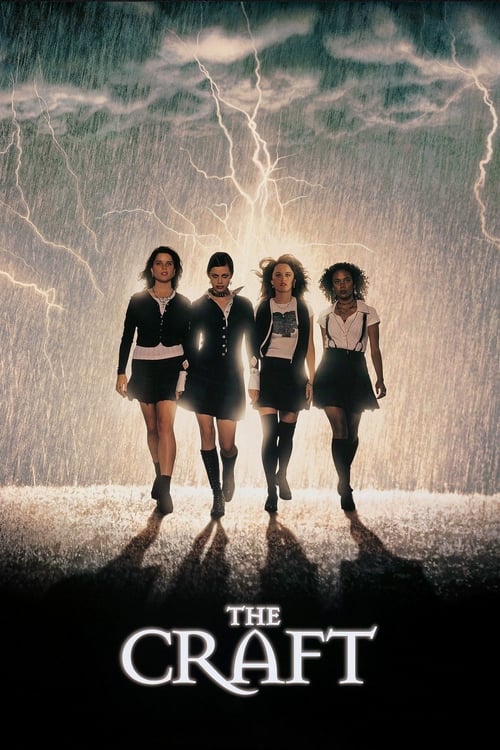
The Craft
A Catholic school newcomer falls in with a clique of teen witches who wield their powers against all who dare to cross them -- be they teachers, rivals or meddlesome parents.
Working with a moderate budget of $15.0M, the film achieved a steady performer with $24.8M in global revenue (+65% profit margin).
1 win & 7 nominations


Plot Structure
Story beats plotted across runtime


Narrative Arc
Emotional journey through the story's key moments
Story Circle
Blueprint 15-beat structure
Arcplot Score Breakdown
Weighted: Precision (70%) + Arc (15%) + Theme (15%)
The Craft (1996) exemplifies strategically placed dramatic framework, characteristic of Andrew Fleming's storytelling approach. This structural analysis examines how the film's 15-point plot structure maps to proven narrative frameworks across 1 hour and 41 minutes. With an Arcplot score of 6.7, the film balances conventional beats with creative variation.
Characters
Cast & narrative archetypes

Sarah Bailey
Nancy Downs
Bonnie Harper
Rochelle Zimmerman
Chris Hooker
Lirio
Main Cast & Characters
Sarah Bailey
Played by Robin Tunney
A troubled teenage girl with natural psychic abilities who joins a coven of witches at her new school.
Nancy Downs
Played by Fairuza Balk
The volatile leader of the coven who becomes dangerously obsessed with power and dark magic.
Bonnie Harper
Played by Neve Campbell
An insecure witch with severe burn scars who seeks magical healing and confidence.
Rochelle Zimmerman
Played by Rachel True
A witch who faces racist bullying and uses magic to seek revenge against her tormentor.
Chris Hooker
Played by Skeet Ulrich
A popular but cruel jock who spreads vicious rumors about Sarah, leading to magical consequences.
Lirio
Played by Assumpta Serna
The eccentric owner of an occult shop who provides guidance and supplies to the young witches.
Structural Analysis
The Status Quo at 1 minutes (1% through the runtime) establishes Sarah Bailey arrives at her new Catholic school in Los Angeles, an outsider trying to fit in after moving from San Francisco. She's isolated, dealing with her mother's death and her own emerging supernatural abilities.. Notably, this early placement immediately immerses viewers in the story world.
The inciting incident occurs at 13 minutes when Nancy, Bonnie, and Rochelle invite Sarah to join their coven. "We need a fourth for our circle," Nancy says. Sarah is offered belonging and power, the two things she's been searching for since arriving at the school.. At 13% through the film, this Disruption is delayed, allowing extended setup of the story world. This beat shifts the emotional landscape, launching the protagonist into the central conflict.
The First Threshold at 25 minutes marks the transition into Act II, occurring at 25% of the runtime. This shows the protagonist's commitment to Sarah actively chooses to invoke Manon, the spirit of magic, during the beach ritual. The four girls call the corners and Sarah completes the circle. She commits fully to witchcraft and the coven, crossing into the supernatural world with intention., moving from reaction to action.
At 51 minutes, the Midpoint arrives at 50% of the runtime—precisely centered, creating perfect narrative symmetry. The analysis reveals that this crucial beat Nancy invokes Manon fully, asking for "all the power of Manon." She becomes drunk with power, her eyes changing. False victory turns to false defeat - they have ultimate power, but Nancy has crossed a line into dangerous territory. Chris spreads lies about Sarah, showing the corruption of forced love., fundamentally raising what's at risk. The emotional intensity shifts, dividing the narrative into clear before-and-after phases.
The Collapse moment at 76 minutes (75% through) represents the emotional nadir. Here, Sarah attempts suicide by slitting her wrists in the bathtub after the relentless supernatural attacks from the coven. The literal "whiff of death" - she nearly dies. Her father finds her just in time. Sarah has lost everything: her friends, her power, her will to live., reveals the protagonist at their lowest point. This beat's placement in the final quarter sets up the climactic reversal.
The Second Threshold at 81 minutes initiates the final act resolution at 80% of the runtime. Sarah returns home and discovers her true power - she is "the natural witch," a legacy from her mother. She binds Nancy's power using her own inherent magic, realizing she doesn't need the group or external sources. She synthesizes her natural gift with the wisdom of restraint., demonstrating the transformation achieved throughout the journey.
Emotional Journey
The Craft's emotional architecture traces a deliberate progression across 15 carefully calibrated beats.
Narrative Framework
This structural analysis employs proven narrative structure principles that track dramatic progression. By mapping The Craft against these established plot points, we can identify how Andrew Fleming utilizes or subverts traditional narrative conventions. The plot point approach reveals not only adherence to structural principles but also creative choices that distinguish The Craft within the horror genre.
Andrew Fleming's Structural Approach
Among the 7 Andrew Fleming films analyzed on Arcplot, the average structural score is 7.0, demonstrating varied approaches to story architecture. The Craft takes a more unconventional approach compared to the director's typical style. For comparative analysis, explore the complete Andrew Fleming filmography.
Comparative Analysis
Additional horror films include Thinner, A Nightmare on Elm Street and Mary Reilly. For more Andrew Fleming analyses, see Hamlet 2, Threesome and Dick.
Plot Points by Act
Act I
SetupStatus Quo
Sarah Bailey arrives at her new Catholic school in Los Angeles, an outsider trying to fit in after moving from San Francisco. She's isolated, dealing with her mother's death and her own emerging supernatural abilities.
Theme
Lirio, the occult shop owner, warns Nancy: "True magic is neither black nor white - it's both because nature is both. Loving and terrible. If you're going to practice magic, you must be responsible." The theme of power and responsibility is established.
Worldbuilding
Sarah meets the three outcast witches - Nancy, Bonnie, and Rochelle. We see the bullying they endure, their fascination with witchcraft, and Sarah's natural power when she makes a pencil stand up. The social hierarchy and magical rules are established.
Disruption
Nancy, Bonnie, and Rochelle invite Sarah to join their coven. "We need a fourth for our circle," Nancy says. Sarah is offered belonging and power, the two things she's been searching for since arriving at the school.
Resistance
The girls perform increasingly powerful rituals. Sarah hesitates about going deeper into witchcraft, remembering her mother's warnings. They visit Lirio's shop for supplies. The girls debate how far to take their power, with Nancy pushing for more and Sarah uncertain.
Act II
ConfrontationFirst Threshold
Sarah actively chooses to invoke Manon, the spirit of magic, during the beach ritual. The four girls call the corners and Sarah completes the circle. She commits fully to witchcraft and the coven, crossing into the supernatural world with intention.
Mirror World
Chris Hooker shows genuine interest in Sarah, creating a romantic subplot. This relationship will mirror the theme - Sarah uses magic to make him love her, learning that forcing connection without authenticity leads to corruption and harm.
Premise
The "fun and games" of having real power. Sarah gets Chris to love her, Rochelle gets revenge on her racist bully, Bonnie heals her scars, and Nancy gets her abusive stepfather's money. They glamour themselves, levitate, and enjoy their newfound abilities. Magic works and it's intoxicating.
Midpoint
Nancy invokes Manon fully, asking for "all the power of Manon." She becomes drunk with power, her eyes changing. False victory turns to false defeat - they have ultimate power, but Nancy has crossed a line into dangerous territory. Chris spreads lies about Sarah, showing the corruption of forced love.
Opposition
Nancy becomes increasingly unstable and cruel. Sarah tries to stop using magic and break Chris's love spell. The coven turns on Sarah when she questions their abuse of power. Nancy kills Chris and makes it look like suicide. Sarah's hair falls out, snakes appear - the other three curse her for betraying them.
Collapse
Sarah attempts suicide by slitting her wrists in the bathtub after the relentless supernatural attacks from the coven. The literal "whiff of death" - she nearly dies. Her father finds her just in time. Sarah has lost everything: her friends, her power, her will to live.
Crisis
Sarah recovers in the hospital, processing her dark night of the soul. She realizes she must face Nancy and take responsibility for unleashing these forces. Lirio visits and helps Sarah understand that she has natural power - she doesn't need the coven. Sarah must find strength within herself.
Act III
ResolutionSecond Threshold
Sarah returns home and discovers her true power - she is "the natural witch," a legacy from her mother. She binds Nancy's power using her own inherent magic, realizing she doesn't need the group or external sources. She synthesizes her natural gift with the wisdom of restraint.
Synthesis
Sarah performs a binding ritual to stop Nancy. The supernatural showdown occurs at Sarah's house - Nancy attacks with all of Manon's power while Sarah defends using her natural abilities and wisdom. Sarah invokes Manon properly, with respect and responsibility, and defeats Nancy by reflecting her power back. Nancy ends up institutionalized.
Transformation
Sarah visits Nancy in the psychiatric hospital. Nancy, still delusional with power, threatens her. Sarah demonstrates her true strength by walking away calmly, having learned that real power is restraint and wisdom. She warns Bonnie and Rochelle that if they harm anyone, she'll know. Sarah is transformed - powerful but responsible.