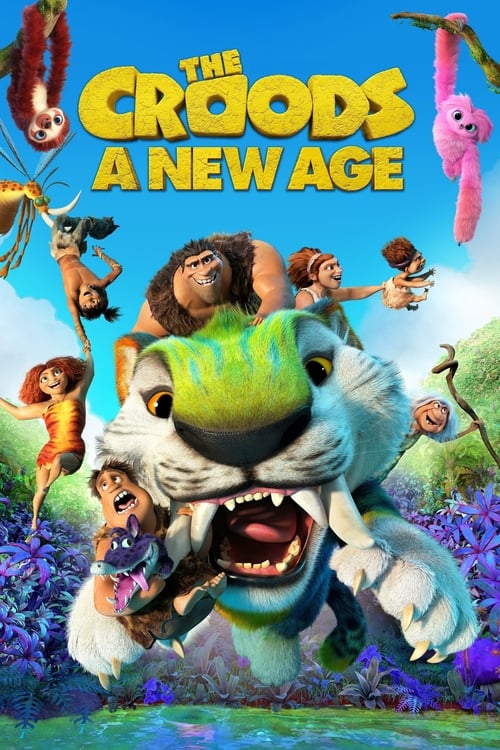
The Croods: A New Age
Searching for a safer habitat, the prehistoric Crood family discovers an idyllic, walled-in paradise that meets all of its needs. Unfortunately, they must also learn to live with the Bettermans -- a family that's a couple of steps above the Croods on the evolutionary ladder. As tensions between the new neighbors start to rise, a new threat soon propels both clans on an epic adventure that forces them to embrace their differences, draw strength from one another, and survive together.
Despite a mid-range budget of $65.0M, The Croods: A New Age became a commercial success, earning $215.9M worldwide—a 232% return.


Plot Structure
Story beats plotted across runtime


Narrative Arc
Emotional journey through the story's key moments
Story Circle
Blueprint 15-beat structure
Arcplot Score Breakdown
Weighted: Precision (70%) + Arc (15%) + Theme (15%)
The Croods: A New Age (2020) exhibits strategically placed narrative design, characteristic of Joel Crawford's storytelling approach. This structural analysis examines how the film's 15-point plot structure maps to proven narrative frameworks across 1 hour and 35 minutes. With an Arcplot score of 7.3, the film balances conventional beats with creative variation.
Characters
Cast & narrative archetypes

Eep Crood
Guy
Grug Crood
Phil Betterman
Hope Betterman
Dawn Betterman
Ugga Crood
Thunk Crood
Gran
Main Cast & Characters
Eep Crood
Played by Emma Stone
The adventurous eldest daughter of the Crood family, eager to explore beyond her father's protective rules and forge her own path.
Guy
Played by Ryan Reynolds
Eep's inventive and forward-thinking boyfriend who bridges the gap between the primitive Croods and the advanced Bettermans.
Grug Crood
Played by Nicolas Cage
The overprotective patriarch of the Crood family who struggles to adapt to change and accept that his daughter is growing up.
Phil Betterman
Played by Peter Dinklage
The sophisticated and refined father of the Betterman family who lives in an advanced treehouse compound and has history with Guy.
Hope Betterman
Played by Leslie Mann
The warm and nurturing mother of the Betterman family who tries to maintain harmony between the two families.
Dawn Betterman
Played by Kelly Marie Tran
The sheltered and energetic daughter of the Bettermans who has never left the family compound and forms a bond with Eep.
Ugga Crood
Played by Catherine Keener
The strong and practical matriarch of the Crood family who provides balance between Grug's protectiveness and her children's needs.
Thunk Crood
Played by Clark Duke
The good-natured but dim-witted son of the Crood family who becomes friends with Dawn.
Gran
Played by Cloris Leachman
Ugga's feisty and tough-as-nails mother who provides comic relief with her wild behavior and lack of filter.
Structural Analysis
The Status Quo at 1 minutes (1% through the runtime) establishes The Croods continue their nomadic survival lifestyle, now joined by the Bettermans' son Guy. Eep and Guy are in love, but their closeness creates tension with Eep's overprotective father Grug, who struggles with feeling replaced and fears losing his family.. Of particular interest, this early placement immediately immerses viewers in the story world.
The inciting incident occurs at 10 minutes when The Croods discover a massive wall surrounding a lush paradise. They breach it and find the Betterman farm - a civilized, advanced community with sophisticated tools, agriculture, and shelter. This is "Tomorrow" that Guy has been seeking, but neither family expected to find Guy's parents.. At 11% through the film, this Disruption aligns precisely with traditional story structure. This beat shifts the emotional landscape, launching the protagonist into the central conflict.
The First Threshold at 23 minutes marks the transition into Act II, occurring at 24% of the runtime. This indicates the protagonist's commitment to The Bettermans drug Grug, Ugga, and Gran, then trap them outside the wall on a dangerous cliffside platform. Phil reveals his plan to keep Guy and Eep apart. The family is forcibly separated, and the Croods must now survive in hostile territory while the kids remain in the farm, unaware of the betrayal., moving from reaction to action.
At 47 minutes, the Midpoint arrives at 50% of the runtime—precisely centered, creating perfect narrative symmetry. Notably, this crucial beat False victory: The trapped Croods defeat the punch-monkeys and seemingly find a way back to the farm. Simultaneously, Eep and Guy share a romantic moment, and it appears both groups are about to reunite. However, the Bettermans' deception is about to be fully exposed, raising the stakes., fundamentally raising what's at risk. The emotional intensity shifts, dividing the narrative into clear before-and-after phases.
The Collapse moment at 67 minutes (70% through) represents the emotional nadir. Here, The punch-monkey tribe attacks the farm in overwhelming numbers, breaching the wall. In the chaos, Phil is seriously injured trying to protect the family. The farm - representing safety, civilization, and "Tomorrow" - is completely destroyed. Both families lose everything, and it's Grug and Phil's failures that led to this catastrophe., illustrates the protagonist at their lowest point. This beat's placement in the final quarter sets up the climactic reversal.
The Second Threshold at 73 minutes initiates the final act resolution at 77% of the runtime. Grug and Phil apologize to their families and each other, acknowledging they must change. They form a united plan: combine the Croods' primal strength with the Bettermans' intelligence to defeat the punch-monkeys. Both families synthesize their approaches - tradition and progress, family and independence, safety and freedom., demonstrating the transformation achieved throughout the journey.
Emotional Journey
The Croods: A New Age's emotional architecture traces a deliberate progression across 15 carefully calibrated beats.
Narrative Framework
This structural analysis employs structural analysis methodology used to understand storytelling architecture. By mapping The Croods: A New Age against these established plot points, we can identify how Joel Crawford utilizes or subverts traditional narrative conventions. The plot point approach reveals not only adherence to structural principles but also creative choices that distinguish The Croods: A New Age within the animation genre.
Joel Crawford's Structural Approach
Among the 2 Joel Crawford films analyzed on Arcplot, the average structural score is 7.3, reflecting strong command of classical structure. The Croods: A New Age exemplifies the director's characteristic narrative technique. For comparative analysis, explore the complete Joel Crawford filmography.
Comparative Analysis
Additional animation films include The Bad Guys, Puss in Boots and Violet Evergarden: Eternity and the Auto Memory Doll. For more Joel Crawford analyses, see Puss in Boots: The Last Wish.
Plot Points by Act
Act I
SetupStatus Quo
The Croods continue their nomadic survival lifestyle, now joined by the Bettermans' son Guy. Eep and Guy are in love, but their closeness creates tension with Eep's overprotective father Grug, who struggles with feeling replaced and fears losing his family.
Theme
Guy tells Eep about "Tomorrow," a better place where they can settle down and build a life together. This introduces the theme of progress vs. tradition, independence vs. family, and finding a new way forward that honors both.
Worldbuilding
We see the Croods' primitive survival tactics contrasted with Guy's more evolved ideas. Grug feels threatened by Guy's influence on Eep and tries to be more innovative himself, failing comically. The family dynamics are established: Grug's need for control, Eep's desire for independence, and the family's general resistance to change.
Disruption
The Croods discover a massive wall surrounding a lush paradise. They breach it and find the Betterman farm - a civilized, advanced community with sophisticated tools, agriculture, and shelter. This is "Tomorrow" that Guy has been seeking, but neither family expected to find Guy's parents.
Resistance
The Bettermans - Phil and Hope - welcome the Croods with ulterior motives. They reveal they raised Guy after his parents died and want him back without the "primitive" Croods. The Croods debate staying versus leaving. Grug distrusts this new world, while the family is seduced by comfort and civilization. Cultural clash comedy ensues.
Act II
ConfrontationFirst Threshold
The Bettermans drug Grug, Ugga, and Gran, then trap them outside the wall on a dangerous cliffside platform. Phil reveals his plan to keep Guy and Eep apart. The family is forcibly separated, and the Croods must now survive in hostile territory while the kids remain in the farm, unaware of the betrayal.
Mirror World
Eep discovers her parents are missing and confronts the Bettermans. Phil and Hope manipulate her, claiming Grug chose to leave because he can't adapt. This deepens Eep's internal conflict - she loves her family but also craves the independence and "better life" the farm represents.
Premise
Two parallel journeys: The trapped Croods struggle to survive against a vicious punch-monkey tribe, with Grug learning to trust others and work as a team. Meanwhile, Eep, Guy, and the younger Croods enjoy farm life but grow suspicious of Phil and Hope's controlling behavior. Eep begins to see that "Tomorrow" might mean losing her family.
Midpoint
False victory: The trapped Croods defeat the punch-monkeys and seemingly find a way back to the farm. Simultaneously, Eep and Guy share a romantic moment, and it appears both groups are about to reunite. However, the Bettermans' deception is about to be fully exposed, raising the stakes.
Opposition
The Croods break back into the farm. Eep learns the truth about her parents' disappearance and confronts the Bettermans. Phil and Hope's fear-based parenting is exposed - they built the wall to protect Guy from the dangerous world. A massive argument erupts about freedom, safety, and control. Dawn, the Bettermans' daughter, rebels. The families fracture completely.
Collapse
The punch-monkey tribe attacks the farm in overwhelming numbers, breaching the wall. In the chaos, Phil is seriously injured trying to protect the family. The farm - representing safety, civilization, and "Tomorrow" - is completely destroyed. Both families lose everything, and it's Grug and Phil's failures that led to this catastrophe.
Crisis
The families retreat to a cave as the punch-monkeys hunt them. Grug and Phil each confront their failures as fathers - Grug's inability to let go, Phil's overprotectiveness. Both realize they pushed their children away by trying to control them. Eep and Guy comfort each other, understanding they need both family and independence.
Act III
ResolutionSecond Threshold
Grug and Phil apologize to their families and each other, acknowledging they must change. They form a united plan: combine the Croods' primal strength with the Bettermans' intelligence to defeat the punch-monkeys. Both families synthesize their approaches - tradition and progress, family and independence, safety and freedom.
Synthesis
The unified families execute an elaborate plan using the Croods' brute force and the Bettermans' inventions. They lure the punch-monkeys into a trap, using teamwork and creativity. Grug lets Eep lead, Phil trusts the others, and everyone contributes their unique strengths. They defeat the tribe and reclaim their agency, building a new community together.
Transformation
The two families build a new farm together - one without walls. Grug blesses Eep and Guy's relationship, letting her go while keeping her close. Phil and Hope embrace risk and openness. The closing image shows both families living together in harmony, combining primitive and civilized, honoring family while allowing independence. "Tomorrow" is achieved through unity, not isolation.