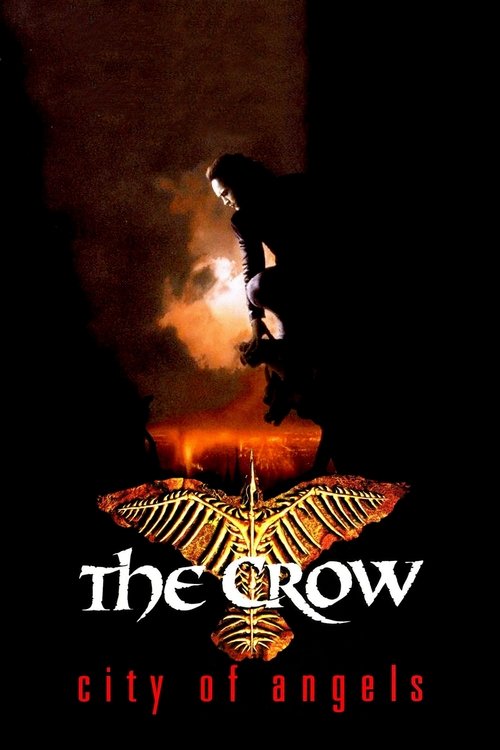
The Crow: City of Angels
A murder victim is brought back to life by a mysterious crow. With the help of a beautiful woman, he exacts revenge on his killers – only to realize his enemy has discovered the one weakness that can destroy him forever.
Working with a small-scale budget of $13.0M, the film achieved a steady performer with $25.3M in global revenue (+95% profit margin).


Plot Structure
Story beats plotted across runtime


Narrative Arc
Emotional journey through the story's key moments
Story Circle
Blueprint 15-beat structure
Arcplot Score Breakdown
Weighted: Precision (70%) + Arc (15%) + Theme (15%)
The Crow: City of Angels (1996) reveals meticulously timed narrative architecture, characteristic of Tim Pope's storytelling approach. This structural analysis examines how the film's 15-point plot structure maps to proven narrative frameworks across 1 hour and 24 minutes. With an Arcplot score of 6.7, the film balances conventional beats with creative variation.
Characters
Cast & narrative archetypes

Ashe Corven
Sarah
Judah Earl
Curve
Nemo
Kali
Spider Monkey
Main Cast & Characters
Ashe Corven
Played by Vincent Perez
A mechanic murdered with his son who returns from the dead seeking vengeance against those who killed them.
Sarah
Played by Mia Kirshner
A tattoo artist and street survivor who becomes Ashe's guide in the living world.
Judah Earl
Played by Richard Brooks
A powerful crime lord who uses pain as currency and orchestrates death for his own mystical purposes.
Curve
Played by Iggy Pop
A sadistic member of Judah's gang who participated in the murder of Ashe and his son.
Nemo
Played by Thomas Jane
A blind prophet figure who dispenses wisdom and operates in the criminal underworld.
Kali
Played by Thuy Trang
Judah's primary enforcer and lover, a deadly woman who participates in murders for power.
Spider Monkey
Played by Vincent Castellanos
A gang member responsible for the deaths of Ashe and Danny Corven.
Structural Analysis
The Status Quo at 1 minutes (1% through the runtime) establishes Sarah paints in her loft, haunted by visions of a crow and the dead. The decayed, dystopian Los Angeles establishes a world where death and darkness reign.. Of particular interest, this early placement immediately immerses viewers in the story world.
The inciting incident occurs at 11 minutes when Ashe Corven rises from the harbor waters, resurrected by the crow. His peaceful afterlife is shattered as he returns to the world of the living, driven by the need for vengeance.. At 13% through the film, this Disruption is delayed, allowing extended setup of the story world. This beat shifts the emotional landscape, launching the protagonist into the central conflict.
The First Threshold at 22 minutes marks the transition into Act II, occurring at 26% of the runtime. This demonstrates the protagonist's commitment to Ashe fully embraces his role as the avenging crow, making the choice to hunt down his killers. He leaves Sarah's sanctuary to begin his systematic execution of Judah's gang., moving from reaction to action.
At 42 minutes, the Midpoint arrives at 50% of the runtime—precisely centered, creating perfect narrative symmetry. Of particular interest, this crucial beat Ashe confronts and kills Kali, one of Judah's key enforcers, in a false victory. He believes he is close to completing his vengeance, but Judah has become aware of the supernatural threat and begins planning a counter-attack., fundamentally raising what's at risk. The emotional intensity shifts, dividing the narrative into clear before-and-after phases.
The Collapse moment at 62 minutes (74% through) represents the emotional nadir. Here, Judah captures and kills the crow, severing Ashe's connection to his supernatural power. Ashe becomes mortal and vulnerable, shot and wounded. Sarah is kidnapped by Judah's men - everything Ashe fought for crumbles., illustrates the protagonist at their lowest point. This beat's placement in the final quarter sets up the climactic reversal.
The Second Threshold at 68 minutes initiates the final act resolution at 81% of the runtime. Ashe realizes that his love for Danny and his connection to Sarah matter more than supernatural power. He chooses to face Judah as a mortal man, driven by human love rather than undead vengeance., demonstrating the transformation achieved throughout the journey.
Emotional Journey
The Crow: City of Angels's emotional architecture traces a deliberate progression across 15 carefully calibrated beats.
Narrative Framework
This structural analysis employs a 15-point narrative structure framework that maps key story moments. By mapping The Crow: City of Angels against these established plot points, we can identify how Tim Pope utilizes or subverts traditional narrative conventions. The plot point approach reveals not only adherence to structural principles but also creative choices that distinguish The Crow: City of Angels within the action genre.
Comparative Analysis
Additional action films include The Bad Guys, Puss in Boots and Venom: The Last Dance.
Plot Points by Act
Act I
SetupStatus Quo
Sarah paints in her loft, haunted by visions of a crow and the dead. The decayed, dystopian Los Angeles establishes a world where death and darkness reign.
Theme
Sarah speaks of the crow bringing souls back when something so terrible happens that the soul cannot rest. The theme of love transcending death and demanding justice is established.
Worldbuilding
The nightmare of Los Angeles unfolds: Judah Earl's criminal empire controls the Day of the Dead festivities. Flashbacks reveal Ashe and Danny's murder at the docks after witnessing a drug operation.
Disruption
Ashe Corven rises from the harbor waters, resurrected by the crow. His peaceful afterlife is shattered as he returns to the world of the living, driven by the need for vengeance.
Resistance
Sarah finds Ashe confused and disoriented. She becomes his guide, explaining the crow's purpose and helping him remember his death. She paints his face with the iconic makeup, preparing him for his mission of vengeance.
Act II
ConfrontationFirst Threshold
Ashe fully embraces his role as the avenging crow, making the choice to hunt down his killers. He leaves Sarah's sanctuary to begin his systematic execution of Judah's gang.
Mirror World
The deepening connection between Sarah and Ashe represents the thematic mirror. She sees in him what she saw in Eric Draven - a soul driven by love, not just vengeance. Their bond offers him something beyond revenge.
Premise
Ashe hunts Judah's lieutenants one by one during the Day of the Dead celebrations. He kills Curve at a nightclub, then Nemo and Spider Monkey. Each death brings flashbacks of Danny and the brutality of their murders.
Midpoint
Ashe confronts and kills Kali, one of Judah's key enforcers, in a false victory. He believes he is close to completing his vengeance, but Judah has become aware of the supernatural threat and begins planning a counter-attack.
Opposition
Judah Earl, versed in dark magic, discovers the crow is the source of Ashe's power. He sets a trap using Sibyl, his blind seer. The hunters become the hunted as Judah's forces close in on both Ashe and Sarah.
Collapse
Judah captures and kills the crow, severing Ashe's connection to his supernatural power. Ashe becomes mortal and vulnerable, shot and wounded. Sarah is kidnapped by Judah's men - everything Ashe fought for crumbles.
Crisis
Ashe, now mortal and bleeding, faces the darkness of his situation. Without his powers and with Sarah captured, he must find the strength to continue. He wrestles with despair and the memory of his son.
Act III
ResolutionSecond Threshold
Ashe realizes that his love for Danny and his connection to Sarah matter more than supernatural power. He chooses to face Judah as a mortal man, driven by human love rather than undead vengeance.
Synthesis
Ashe storms Judah's tower during the climax of the Day of the Dead. He fights through Judah's remaining forces. In the final confrontation, Judah has consumed the crow's power, but Ashe's pure grief and love prove stronger. He defeats Judah and saves Sarah.
Transformation
Ashe's spirit is finally at peace, reunited with Danny in the afterlife. Sarah watches the crow fly into the dawn sky. The closing image mirrors the opening but transforms despair into spiritual resolution - love has conquered death.