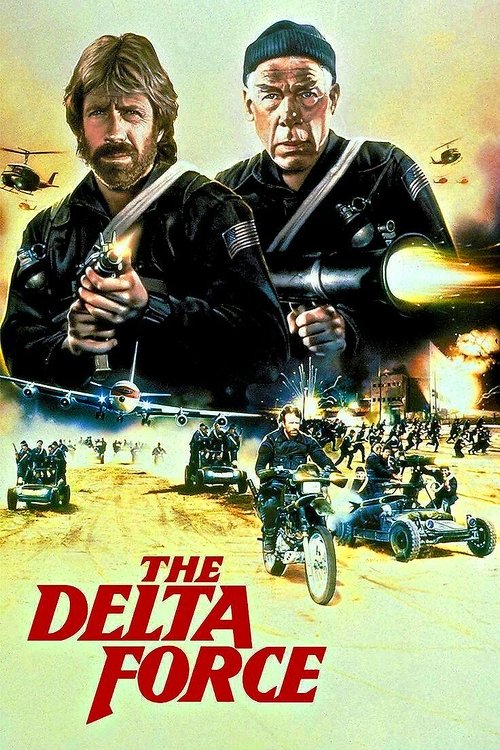
The Delta Force
A 707 aircraft jetliner, en route from Athens to Rome and then to New York City, is hijacked by Lebanese terrorists, who demand that the pilot take them to Beirut. What the terrorists don't realize is that an elite team of commandos have been called in to eliminate all terrorists on the jetliner.
Working with a tight budget of $9.0M, the film achieved a respectable showing with $17.8M in global revenue (+97% profit margin).


Plot Structure
Story beats plotted across runtime


Narrative Arc
Emotional journey through the story's key moments
Story Circle
Blueprint 15-beat structure
Arcplot Score Breakdown
Weighted: Precision (70%) + Arc (15%) + Theme (15%)
The Delta Force (1986) demonstrates carefully calibrated dramatic framework, characteristic of Menahem Golan's storytelling approach. This structural analysis examines how the film's 15-point plot structure maps to proven narrative frameworks across 2 hours and 9 minutes. With an Arcplot score of 7.6, the film showcases strong structural fundamentals.
Characters
Cast & narrative archetypes

Major Scott McCoy
Colonel Nick Alexander
Abdul Rafai
Captain Campbell
Father William O'Malley
Ben Kaplan
Debra Levenson
Harry Goldman
Main Cast & Characters
Major Scott McCoy
Played by Chuck Norris
Elite Delta Force operative and team leader who comes out of retirement to rescue hijacked plane hostages.
Colonel Nick Alexander
Played by Lee Marvin
Seasoned Delta Force commander and McCoy's partner who leads the rescue operation.
Abdul Rafai
Played by Robert Forster
Ruthless terrorist leader who hijacks the airliner and brutalizes passengers.
Captain Campbell
Played by Bo Svenson
ATW flight captain forced to cooperate with hijackers while protecting his passengers.
Father William O'Malley
Played by George Kennedy
Catholic priest aboard the hijacked plane who provides spiritual support to terrified passengers.
Ben Kaplan
Played by Martin Balsam
Elderly Jewish passenger singled out and tormented by the hijackers.
Debra Levenson
Played by Joey Bishop
Flight attendant who maintains composure while caring for passengers during the hijacking.
Harry Goldman
Played by Shelley Winters
Passenger whose heart condition becomes critical during the hijacking ordeal.
Structural Analysis
The Status Quo at 1 minutes (1% through the runtime) establishes The failed 1980 Operation Eagle Claw rescue mission in Iran. Helicopters crash in the desert, soldiers die, and Major Scott McCoy resigns in disgust. A traumatic opening establishing the cost of failed military operations.. Of particular interest, this early placement immediately immerses viewers in the story world.
The inciting incident occurs at 15 minutes when Lebanese terrorists led by Abdul Rafai hijack ATW Flight 282 shortly after takeoff from Athens. Armed men storm the cockpit and take control of the plane, holding passengers hostage.. At 12% through the film, this Disruption aligns precisely with traditional story structure. This beat shifts the emotional landscape, launching the protagonist into the central conflict.
The First Threshold at 32 minutes marks the transition into Act II, occurring at 25% of the runtime. This reveals the protagonist's commitment to Major Scott McCoy agrees to rejoin Delta Force for the rescue mission. Despite his bitter memories of the Iran disaster, he makes the active choice to return to duty and lead the team into danger., moving from reaction to action.
At 65 minutes, the Midpoint arrives at 50% of the runtime—precisely centered, creating perfect narrative symmetry. Of particular interest, this crucial beat The terrorists execute Navy diver Robert Stethem, dumping his body on the tarmac as a message. This false defeat raises the stakes dramatically - the terrorists are willing to kill, and time is running out for the remaining hostages., fundamentally raising what's at risk. The emotional intensity shifts, dividing the narrative into clear before-and-after phases.
The Collapse moment at 95 minutes (74% through) represents the emotional nadir. Here, Intel reveals hostages are being moved and may be killed or traded to other terrorist groups. The mission seems hopeless with hostages in multiple fortified locations across Beirut. Alexander and McCoy face the specter of another failed rescue., illustrates the protagonist at their lowest point. This beat's placement in the final quarter sets up the climactic reversal.
The Second Threshold at 103 minutes initiates the final act resolution at 80% of the runtime. Intelligence pinpoints all hostage locations. McCoy synthesizes the tactical situation and orders the coordinated assault to begin. Delta Force launches their attack, committed to succeed where Eagle Claw failed., demonstrating the transformation achieved throughout the journey.
Emotional Journey
The Delta Force's emotional architecture traces a deliberate progression across 15 carefully calibrated beats.
Narrative Framework
This structural analysis employs a 15-point narrative structure framework that maps key story moments. By mapping The Delta Force against these established plot points, we can identify how Menahem Golan utilizes or subverts traditional narrative conventions. The plot point approach reveals not only adherence to structural principles but also creative choices that distinguish The Delta Force within the action genre.
Comparative Analysis
Additional action films include The Bad Guys, Puss in Boots and Venom: The Last Dance.
Plot Points by Act
Act I
SetupStatus Quo
The failed 1980 Operation Eagle Claw rescue mission in Iran. Helicopters crash in the desert, soldiers die, and Major Scott McCoy resigns in disgust. A traumatic opening establishing the cost of failed military operations.
Theme
Colonel Nick Alexander tells McCoy that sometimes you have to go back and finish what you started. The theme of redemption and completing unfinished business is established - America will not abandon its citizens to terrorists.
Worldbuilding
We meet the diverse group of passengers boarding ATW Flight 282 in Athens - a group of American tourists including Holocaust survivors, a priest, Navy divers, and families. The ordinary world of commercial air travel is established.
Disruption
Lebanese terrorists led by Abdul Rafai hijack ATW Flight 282 shortly after takeoff from Athens. Armed men storm the cockpit and take control of the plane, holding passengers hostage.
Resistance
The hijacking unfolds as terrorists brutalize passengers, forcing the plane to Beirut then Algiers. Meanwhile, Colonel Alexander works to reactivate Delta Force and locate the reluctant McCoy, who has retired to civilian life.
Act II
ConfrontationFirst Threshold
Major Scott McCoy agrees to rejoin Delta Force for the rescue mission. Despite his bitter memories of the Iran disaster, he makes the active choice to return to duty and lead the team into danger.
Mirror World
The terrorists separate Jewish passengers from the others, led by the elderly Holocaust survivor who reveals his concentration camp tattoo. This subplot parallels the theme of standing against tyranny and never forgetting atrocities.
Premise
Delta Force mobilizes and begins tactical preparation. The team loads specialized equipment including McCoy's armed motorcycle. Meanwhile, negotiations stall as terrorists make impossible demands and the plane moves between locations.
Midpoint
The terrorists execute Navy diver Robert Stethem, dumping his body on the tarmac as a message. This false defeat raises the stakes dramatically - the terrorists are willing to kill, and time is running out for the remaining hostages.
Opposition
Hostages are dispersed to multiple locations in Beirut, making rescue nearly impossible. Delta Force arrives in the region but faces the challenge of locating hostages scattered across a hostile city controlled by militant factions.
Collapse
Intel reveals hostages are being moved and may be killed or traded to other terrorist groups. The mission seems hopeless with hostages in multiple fortified locations across Beirut. Alexander and McCoy face the specter of another failed rescue.
Crisis
Delta Force regroups and refines their assault plan. McCoy processes the weight of command and the ghosts of the Iran failure. The team prepares for a multi-target simultaneous assault that must succeed.
Act III
ResolutionSecond Threshold
Intelligence pinpoints all hostage locations. McCoy synthesizes the tactical situation and orders the coordinated assault to begin. Delta Force launches their attack, committed to succeed where Eagle Claw failed.
Synthesis
Delta Force executes a spectacular multi-pronged rescue. McCoy's motorcycle assault, building raids, and the airport takeover unfold simultaneously. Terrorists are eliminated, hostages freed, and the team fights their way to the waiting plane.
Transformation
The rescued hostages and Delta Force land safely in Israel to cheering crowds. McCoy and the team are celebrated as heroes. The failed mission of 1980 has been redeemed - America can and will rescue its citizens from terrorism.