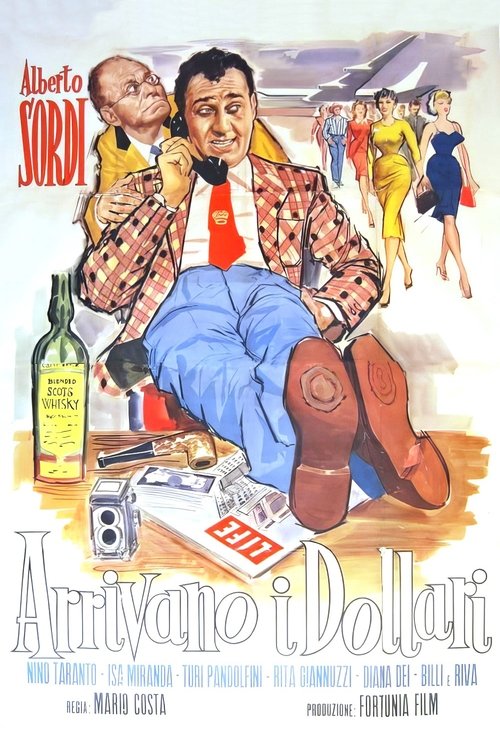
The Dollars Are Coming!
A widow goes to Italy from South Africa to find out whether or not her late husband's five nephews are worthy of his inheritance...
The film earned $258.4M at the global box office.
Plot Structure
Story beats plotted across runtime


Narrative Arc
Emotional journey through the story's key moments
Story Circle
Blueprint 15-beat structure
Arcplot Score Breakdown
Weighted: Precision (70%) + Arc (15%) + Theme (15%)
The Dollars Are Coming! (1957) showcases meticulously timed narrative design, characteristic of Mario Costa's storytelling approach. This structural analysis examines how the film's 15-point plot structure maps to proven narrative frameworks across 1 hour and 22 minutes. With an Arcplot score of 7.1, the film balances conventional beats with creative variation.
Structural Analysis
The Status Quo at 1 minutes (1% through the runtime) establishes Establishing shots of a struggling small town where residents live modestly, showing the protagonist's ordinary life of financial hardship and simple routines.. Structural examination shows that this early placement immediately immerses viewers in the story world.
The inciting incident occurs at 9 minutes when News arrives that money is coming to town - perhaps an inheritance, a business opportunity, or government funds. This announcement disrupts the status quo and creates excitement and possibility.. At 11% through the film, this Disruption aligns precisely with traditional story structure. This beat shifts the emotional landscape, launching the protagonist into the central conflict.
The First Threshold at 21 minutes marks the transition into Act II, occurring at 25% of the runtime. This shows the protagonist's commitment to The protagonist makes an active decision to pursue the money or engage with the opportunity, committing to a plan that will change their life and launching them into the adventure of Act 2., moving from reaction to action.
At 41 minutes, the Midpoint arrives at 51% of the runtime—precisely centered, creating perfect narrative symmetry. Notably, this crucial beat False victory: the money arrives or the protagonist appears to have secured it. Everything seems wonderful, but this apparent success masks brewing problems - greed, changed relationships, or a catch to the windfall., fundamentally raising what's at risk. The emotional intensity shifts, dividing the narrative into clear before-and-after phases.
The Collapse moment at 61 minutes (75% through) represents the emotional nadir. Here, All is lost: the money is gone, stolen, or revealed to be worthless. Alternatively, the protagonist loses something more valuable - a relationship, their integrity, or community standing. The dream dies., indicates the protagonist at their lowest point. This beat's placement in the final quarter sets up the climactic reversal.
The Second Threshold at 65 minutes initiates the final act resolution at 79% of the runtime. The protagonist realizes that true wealth lies in community, relationships, and integrity. Armed with this wisdom, they devise a plan to restore what really matters, combining their original values with new understanding., demonstrating the transformation achieved throughout the journey.
Emotional Journey
The Dollars Are Coming!'s emotional architecture traces a deliberate progression across 15 carefully calibrated beats.
Narrative Framework
This structural analysis employs proven narrative structure principles that track dramatic progression. By mapping The Dollars Are Coming! against these established plot points, we can identify how Mario Costa utilizes or subverts traditional narrative conventions. The plot point approach reveals not only adherence to structural principles but also creative choices that distinguish The Dollars Are Coming! within the comedy genre.
Comparative Analysis
Additional comedy films include The Bad Guys, Ella Enchanted and The Evening Star.
Plot Points by Act
Act I
SetupStatus Quo
Establishing shots of a struggling small town where residents live modestly, showing the protagonist's ordinary life of financial hardship and simple routines.
Theme
A secondary character remarks that "money can't buy happiness" or "the best things in life are free," establishing the thematic tension between material wealth and true contentment.
Worldbuilding
Introduction to the town's residents, their financial struggles, community dynamics, and the protagonist's relationships with family and neighbors. Establishes the stakes of their poverty.
Disruption
News arrives that money is coming to town - perhaps an inheritance, a business opportunity, or government funds. This announcement disrupts the status quo and creates excitement and possibility.
Resistance
The community debates what to do with the incoming money. Various townspeople offer advice and schemes. The protagonist hesitates, unsure whether to trust this opportunity or how to proceed.
Act II
ConfrontationFirst Threshold
The protagonist makes an active decision to pursue the money or engage with the opportunity, committing to a plan that will change their life and launching them into the adventure of Act 2.
Mirror World
A romantic interest or mentor figure appears who represents a different value system - perhaps someone who has money but isn't happy, or lacks money but is content, embodying the thematic question.
Premise
The fun of pursuing the money: comic misadventures, schemes that go awry, the protagonist learning to navigate this new world of potential wealth, and the community transforming around the prospect of dollars.
Midpoint
False victory: the money arrives or the protagonist appears to have secured it. Everything seems wonderful, but this apparent success masks brewing problems - greed, changed relationships, or a catch to the windfall.
Opposition
The money causes problems: relationships strain, greed emerges, con artists appear, or the protagonist realizes wealth has complicated their life. The antagonistic forces - whether people or circumstances - close in.
Collapse
All is lost: the money is gone, stolen, or revealed to be worthless. Alternatively, the protagonist loses something more valuable - a relationship, their integrity, or community standing. The dream dies.
Crisis
The protagonist faces their darkest hour, reflecting on what they've lost and what truly matters. They process the lesson that money isn't everything and reconnect with their core values.
Act III
ResolutionSecond Threshold
The protagonist realizes that true wealth lies in community, relationships, and integrity. Armed with this wisdom, they devise a plan to restore what really matters, combining their original values with new understanding.
Synthesis
The protagonist executes their plan to restore community harmony, rebuild damaged relationships, or find a way to use remaining resources for genuine good rather than personal gain. The finale resolves all conflicts.
Transformation
Closing image mirrors the opening but shows transformation: the town may still be modest, but the community is stronger, relationships are deeper, and the protagonist has learned that true wealth isn't measured in dollars.