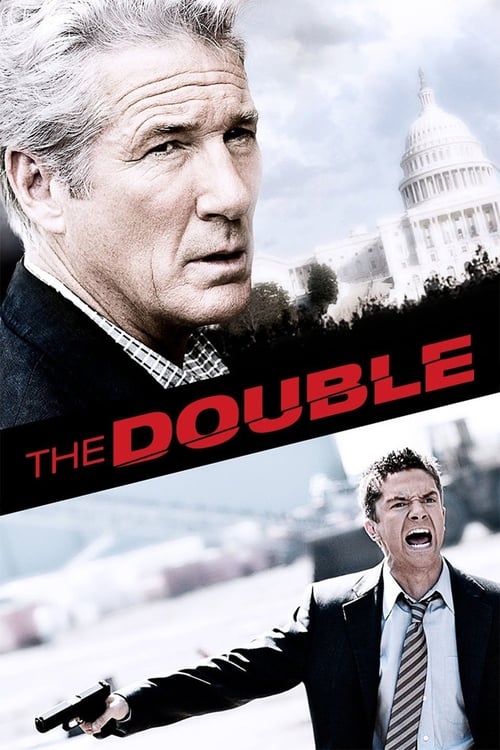
The Double
The mysterious murder of a US senator bearing the distinctive trademark of the legendary Soviet assassin 'Cassius', forces retired CIA operative, Paul Shepherson to team with rookie FBI agent, Ben Geary to solve the crime. Having spent his career chasing Cassius, Shepherdson is convinced his nemesis is long dead, but is pushed to take on the case by his former supervisor, Tom Highland. Geary, who wrote his Master's thesis on Shepherdson's pursuit of the Soviet killer, is certain that Cassius has resurfaced.
The film commercial failure against its moderate budget of $17.0M, earning $4.7M globally (-72% loss). While initial box office returns were modest, the film has gained appreciation for its distinctive approach within the action genre.






Plot Structure
Story beats plotted across runtime


Narrative Arc
Emotional journey through the story's key moments
Story Circle
Blueprint 15-beat structure
Arcplot Score Breakdown
Weighted: Precision (70%) + Arc (15%) + Theme (15%)
The Double (2011) demonstrates precise dramatic framework, characteristic of Michael Brandt's storytelling approach. This structural analysis examines how the film's 13-point plot structure maps to proven narrative frameworks across 1 hour and 38 minutes. With an Arcplot score of 6.8, the film balances conventional beats with creative variation.
Structural Analysis
The Status Quo at 1 minutes (1% through the runtime) establishes Ben Geary, a young FBI agent, arrives at a murder scene of a senator. He's eager, ambitious, and trying to prove himself in his career.. The analysis reveals that this early placement immediately immerses viewers in the story world.
The inciting incident occurs at 12 minutes when The FBI brings in Paul Shepherdson, a retired CIA operative and the only person who ever got close to Cassius, to consult on the case. Ben's investigation is no longer his own.. At 13% through the film, this Disruption is delayed, allowing extended setup of the story world. This beat shifts the emotional landscape, launching the protagonist into the central conflict.
At 50 minutes, the Midpoint arrives at 51% of the runtime—precisely centered, creating perfect narrative symmetry. Of particular interest, this crucial beat Ben discovers shocking evidence suggesting Paul Shepherdson might actually BE Cassius. The hunter becomes the hunted. Everything Ben thought he knew is called into question., fundamentally raising what's at risk. The emotional intensity shifts, dividing the narrative into clear before-and-after phases.
The Collapse moment at 74 minutes (76% through) represents the emotional nadir. Here, Natalie is killed, murdered by the real assassin. Ben's personal life is destroyed. He realizes he's been manipulated and that the truth is far more complex than he imagined., reveals the protagonist at their lowest point. This beat's placement in the final quarter sets up the climactic reversal.
The Synthesis at 78 minutes initiates the final act resolution at 80% of the runtime. Ben and Paul team up to identify and confront the true conspiracy within the CIA. They expose the mole who has been orchestrating the murders and framing Paul. Final confrontation with the real villain., demonstrating the transformation achieved throughout the journey.
Emotional Journey
The Double's emotional architecture traces a deliberate progression across 13 carefully calibrated beats.
Narrative Framework
This structural analysis employs structural analysis methodology used to understand storytelling architecture. By mapping The Double against these established plot points, we can identify how Michael Brandt utilizes or subverts traditional narrative conventions. The plot point approach reveals not only adherence to structural principles but also creative choices that distinguish The Double within the action genre.
Comparative Analysis
Additional action films include The Ministry of Ungentlemanly Warfare, The Bad Guys and Lake Placid.
Plot Points by Act
Act I
SetupStatus Quo
Ben Geary, a young FBI agent, arrives at a murder scene of a senator. He's eager, ambitious, and trying to prove himself in his career.
Theme
A senior agent warns Ben about trusting appearances and the duplicitous nature of the spy game: "Nothing is ever what it seems in this business."
Worldbuilding
Establishment of the murder investigation and Ben's world. The senator's killing bears the signature of Cassius, a legendary Soviet assassin believed dead for 20 years. Ben has studied Cassius extensively.
Disruption
The FBI brings in Paul Shepherdson, a retired CIA operative and the only person who ever got close to Cassius, to consult on the case. Ben's investigation is no longer his own.
Resistance
Ben and Paul clash over investigative approach. Paul is evasive and seems to be hiding something. Ben debates whether to trust Paul while they investigate leads together on Cassius's possible return.
Act II
ConfrontationMirror World
Ben develops a connection with his girlfriend Natalie, who represents normalcy and trust. Their relationship serves as a counterpoint to the world of deception he's entering.
Premise
The cat-and-mouse game intensifies. Ben and Paul investigate together while Ben secretly investigates Paul. More murders occur with Cassius's signature. Ben uncovers clues about Paul's past.
Midpoint
Ben discovers shocking evidence suggesting Paul Shepherdson might actually BE Cassius. The hunter becomes the hunted. Everything Ben thought he knew is called into question.
Opposition
Ben tries to prove Paul is Cassius while Paul seems to stay one step ahead. Another murder occurs. Ben's superiors doubt him. Paul appears to be manipulating events. The real conspiracy deepens.
Collapse
Natalie is killed, murdered by the real assassin. Ben's personal life is destroyed. He realizes he's been manipulated and that the truth is far more complex than he imagined.
Crisis
Ben grieves and processes the loss. He confronts Paul in anguish. The emotional weight of the conspiracy and its human cost overwhelms him. He must decide whether to continue.
Act III
ResolutionSynthesis
Ben and Paul team up to identify and confront the true conspiracy within the CIA. They expose the mole who has been orchestrating the murders and framing Paul. Final confrontation with the real villain.
Transformation
Ben, now hardened and disillusioned, understands the moral complexity of the spy world. He has lost his innocence and his love. He's become the cynical agent he once wasn't—transformed by betrayal and loss.