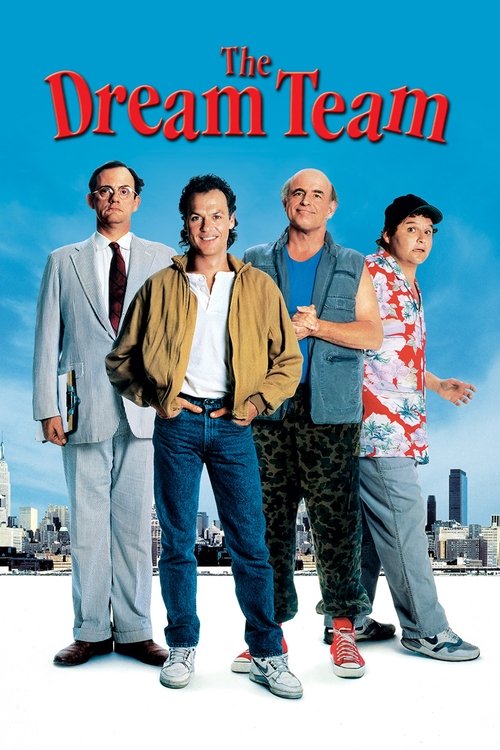
The Dream Team
Four mental patients on a field trip in New York City must save their caring chaperone, who ends up being taken to a hospital in a coma after accidentally witnessing a murder, before the killers can find him and finish the job.
Despite its modest budget of $14.0M, The Dream Team became a commercial success, earning $28.9M worldwide—a 106% return.


Plot Structure
Story beats plotted across runtime


Narrative Arc
Emotional journey through the story's key moments
Story Circle
Blueprint 15-beat structure
Arcplot Score Breakdown
Weighted: Precision (70%) + Arc (15%) + Theme (15%)
The Dream Team (1989) exhibits carefully calibrated narrative architecture, characteristic of Howard Zieff's storytelling approach. This structural analysis examines how the film's 15-point plot structure maps to proven narrative frameworks across 1 hour and 53 minutes. With an Arcplot score of 7.0, the film balances conventional beats with creative variation.
Characters
Cast & narrative archetypes

Billy Caufield
Henry Sikorsky
Jack McDermott
Albert Ianuzzi
Dr. Jeff Weitzman
Riley
Main Cast & Characters
Billy Caufield
Played by Michael Keaton
A pathological liar with delusions of being a doctor, charming but disconnected from reality.
Henry Sikorsky
Played by Christopher Lloyd
An obsessive-compulsive neat freak with extreme anxiety about cleanliness and order.
Jack McDermott
Played by Peter Boyle
A violent paranoid schizophrenic who believes he is Jesus Christ and sees conspiracies everywhere.
Albert Ianuzzi
Played by Stephen Furst
A deeply depressed, catatonic patient who rarely speaks and believes he is worthless.
Dr. Jeff Weitzman
Played by Dennis Boutsikaris
The compassionate psychiatrist treating the four patients who gets injured, catalyzing the adventure.
Riley
Played by Philip Bosco
A corrupt detective who murdered his partner and frames Dr. Weitzman for the crime.
Structural Analysis
The Status Quo at 1 minutes (1% through the runtime) establishes Four psychiatric patients in group therapy at a mental institution. Billy is violent and delusional, Henry is obsessive-compulsive, Jack thinks he's Jesus Christ, and Albert is pathologically afraid of leaving the hospital. Dr. Weitzman leads their therapy sessions.. The analysis reveals that this early placement immediately immerses viewers in the story world.
The inciting incident occurs at 13 minutes when The group witnesses Dr. Weitzman being attacked and kidnapped by corrupt cops. He's beaten severely in an alley. The four patients are now alone in New York City without supervision, and their doctor has been taken.. At 11% through the film, this Disruption aligns precisely with traditional story structure. This beat shifts the emotional landscape, launching the protagonist into the central conflict.
The First Threshold at 27 minutes marks the transition into Act II, occurring at 24% of the runtime. This demonstrates the protagonist's commitment to Billy makes the active decision: "We're gonna save Doc." Despite their fears and limitations, they choose to stay in New York and rescue Dr. Weitzman themselves rather than returning to the safety of the institution. They cross into the real world as a team., moving from reaction to action.
At 57 minutes, the Midpoint arrives at 50% of the runtime—precisely centered, creating perfect narrative symmetry. Significantly, this crucial beat False victory: The group successfully tracks down a lead on Dr. Weitzman's location and feels confident they can rescue him. They're working together effectively and gaining confidence. But this puts them on the radar of the corrupt cops, raising the stakes significantly., fundamentally raising what's at risk. The emotional intensity shifts, dividing the narrative into clear before-and-after phases.
The Collapse moment at 84 minutes (74% through) represents the emotional nadir. Here, The group is captured/separated, or they discover Dr. Weitzman has been severely beaten and may die. Their worst fears are confirmed - they're just crazy people in over their heads. They almost got their doctor killed. The mission seems impossible and they feel hopeless., shows the protagonist at their lowest point. This beat's placement in the final quarter sets up the climactic reversal.
The Second Threshold at 90 minutes initiates the final act resolution at 80% of the runtime. Breakthrough realization: Their "craziness" is actually their strength. Billy's aggression, Jack's fearlessness, Albert's caution, Henry's attention to detail - these aren't weaknesses. They synthesize what they learned about themselves with a new plan to save Dr. Weitzman using their unique abilities as advantages., demonstrating the transformation achieved throughout the journey.
Emotional Journey
The Dream Team's emotional architecture traces a deliberate progression across 15 carefully calibrated beats.
Narrative Framework
This structural analysis employs structural analysis methodology used to understand storytelling architecture. By mapping The Dream Team against these established plot points, we can identify how Howard Zieff utilizes or subverts traditional narrative conventions. The plot point approach reveals not only adherence to structural principles but also creative choices that distinguish The Dream Team within the comedy genre.
Howard Zieff's Structural Approach
Among the 4 Howard Zieff films analyzed on Arcplot, the average structural score is 7.0, reflecting strong command of classical structure. The Dream Team takes a more unconventional approach compared to the director's typical style. For comparative analysis, explore the complete Howard Zieff filmography.
Comparative Analysis
Additional comedy films include The Bad Guys, Ella Enchanted and The Evening Star. For more Howard Zieff analyses, see Private Benjamin, My Girl 2 and My Girl.
Plot Points by Act
Act I
SetupStatus Quo
Four psychiatric patients in group therapy at a mental institution. Billy is violent and delusional, Henry is obsessive-compulsive, Jack thinks he's Jesus Christ, and Albert is pathologically afraid of leaving the hospital. Dr. Weitzman leads their therapy sessions.
Theme
Dr. Weitzman tells the group: "You're not crazy, you're just different. The world needs different." The theme explores whether society defines sanity, and if these "crazy" people might be more capable than anyone thinks.
Worldbuilding
Establishes each patient's personality and quirks. Billy's anger issues and baseball obsession, Jack's Christ delusions, Albert's extreme anxiety, Henry's compulsions. Dr. Weitzman convinces the hospital administration to let him take the four on a supervised field trip to a Yankees game in New York City.
Disruption
The group witnesses Dr. Weitzman being attacked and kidnapped by corrupt cops. He's beaten severely in an alley. The four patients are now alone in New York City without supervision, and their doctor has been taken.
Resistance
The patients debate what to do. Should they go to the police? Return to the hospital? Find Dr. Weitzman themselves? They're terrified and out of their element. Albert wants to go back immediately. They struggle to function in the real world - getting lost, panicking in crowds, dealing with their various conditions.
Act II
ConfrontationFirst Threshold
Billy makes the active decision: "We're gonna save Doc." Despite their fears and limitations, they choose to stay in New York and rescue Dr. Weitzman themselves rather than returning to the safety of the institution. They cross into the real world as a team.
Mirror World
The group encounters Riley, a sympathetic police detective who doesn't initially realize they're psychiatric patients. He represents the "normal" world that might actually accept them if they prove themselves capable. This relationship will teach them they're more competent than they believe.
Premise
The "fish out of water" fun the audience came for. Four mental patients navigate New York City, using their unique perspectives to solve problems. They dodge hospital authorities, interact with the public, and slowly realize they're more capable than anyone thought. Comic situations arise from their conditions, but they keep making progress.
Midpoint
False victory: The group successfully tracks down a lead on Dr. Weitzman's location and feels confident they can rescue him. They're working together effectively and gaining confidence. But this puts them on the radar of the corrupt cops, raising the stakes significantly.
Opposition
The corrupt cops realize the patients witnessed the kidnapping and begin hunting them. The hospital sends people to retrieve them. The patients' mental conditions start working against them under pressure - Billy's violence escalates, Jack's delusions intensify, Albert's anxiety peaks, Henry's compulsions slow them down. Everything gets harder.
Collapse
The group is captured/separated, or they discover Dr. Weitzman has been severely beaten and may die. Their worst fears are confirmed - they're just crazy people in over their heads. They almost got their doctor killed. The mission seems impossible and they feel hopeless.
Crisis
Dark night of the soul. The patients face their core fears and limitations. Are they really just crazy? Should they give up and go back to the hospital where it's safe? They process the trauma and their apparent failure.
Act III
ResolutionSecond Threshold
Breakthrough realization: Their "craziness" is actually their strength. Billy's aggression, Jack's fearlessness, Albert's caution, Henry's attention to detail - these aren't weaknesses. They synthesize what they learned about themselves with a new plan to save Dr. Weitzman using their unique abilities as advantages.
Synthesis
The finale. The four patients execute their plan, using their "crazy" traits strategically. They outsmart the corrupt cops, rescue Dr. Weitzman, and expose the criminal conspiracy. Each character gets a moment to shine using what makes them different. They prove they're heroes, not victims.
Transformation
Final image mirrors the opening therapy session, but now the four patients sit with newfound confidence and self-respect. They saved their doctor and proved their worth to themselves and society. They're still "different," but now they know different isn't less-than. Dr. Weitzman smiles proudly at his team.